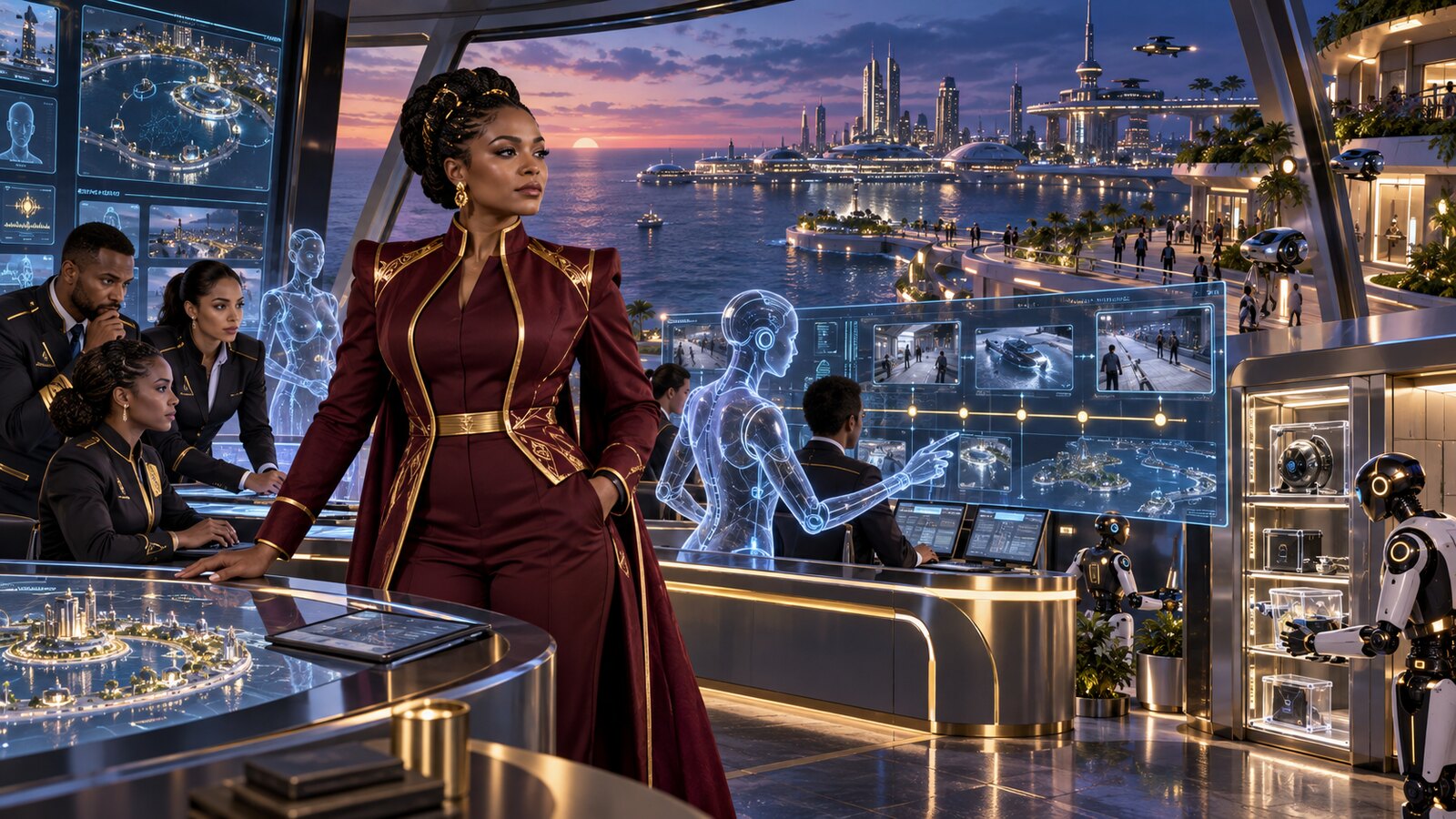

What if the most extraordinary sea destination in the world was also a working research engine? Scaler Queen Offshore does not separate wonder from knowledge. It turns carefully designed ocean experiences into recurring support for science.
This is Part 8 of the Scaler Queen Offshore CreativeVerse development series: a conceptual research-and-infrastructure world, not a claim about a currently constructed facility.
The earlier parts established technology villages, an exhibition city centre, a startup marketplace and a premium shopping district. Sea Tourism now connects those systems to the public. Visitors do not arrive simply to be entertained. They enter a living environment where hospitality, research, education and commerce reinforce one another.
The destination beneath the surface
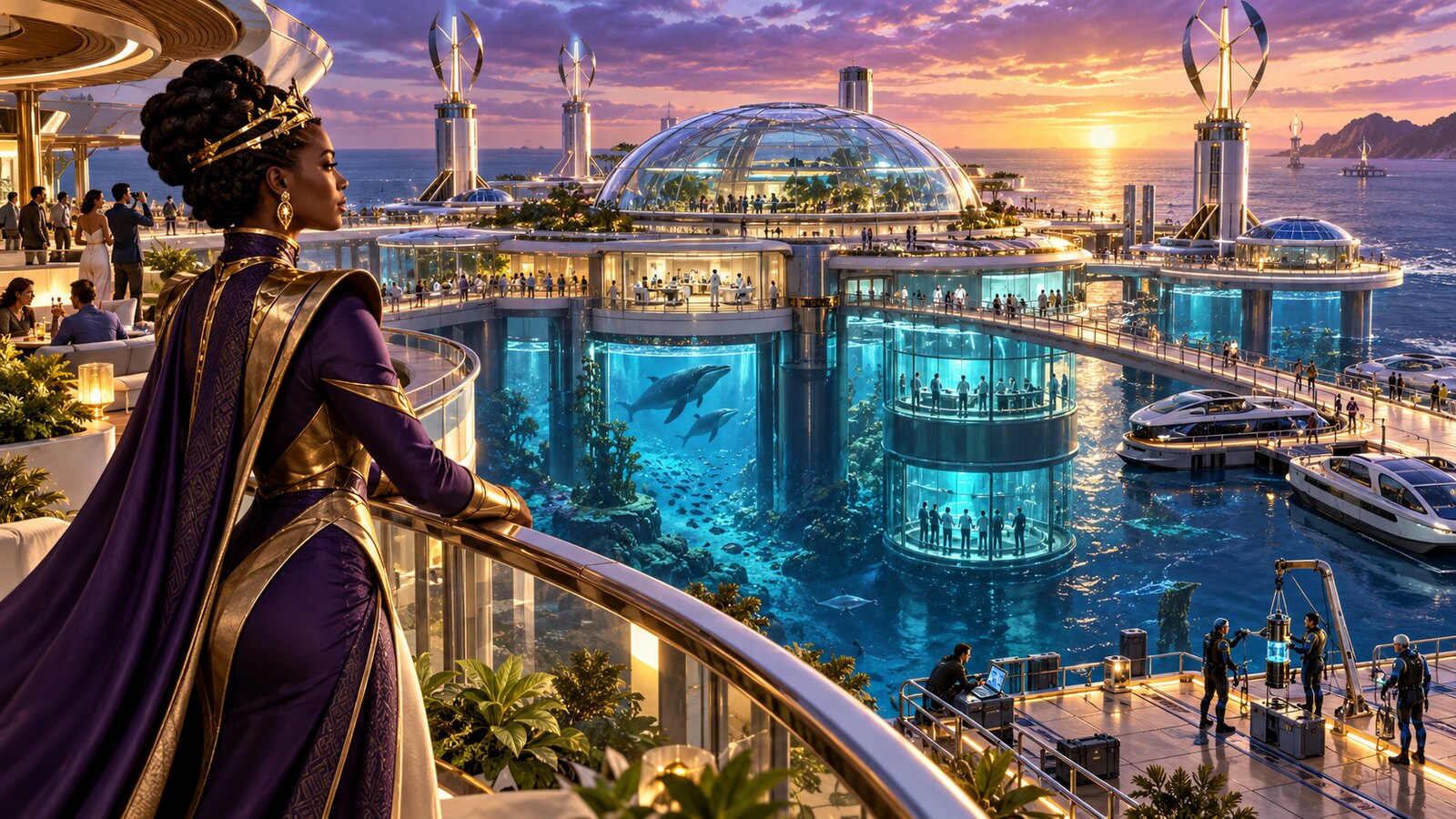
The centrepiece is a network of underwater observatories connected to the main habitat. Panoramic galleries allow visitors to watch marine life without requiring every person to dive. Smaller research windows give scientists controlled observation points, while remotely operated vehicles transmit live images from deeper zones.
The architecture creates two parallel routes. The visitor route tells a coherent story about the ocean. The research route protects instruments, samples and sensitive work. Glass makes science visible, but security and ethics determine how close tourism can come to the laboratory.
The ocean should not become scenery surrounding a hotel. The hospitality economy should become an instrument for understanding and protecting the ocean.
A 2,500-place hospitality and tourism district
Within the wider 5,000-person research habitat, the concept reserves up to 2,500 places for hospitality, tourism and rotating visitors. Capacity is managed rather than filled without limit. The objective is a stable revenue base that does not overwhelm the researchers, residents or marine environment.
- Premium ocean-view suites for short research-inspired stays.
- Family learning cabins connected to supervised science programmes.
- Residences for visiting lecturers, artists and documentary teams.
- Accessible rooms close to the main observation routes and sick bays.
- Secure accommodation for conference delegates and technology partners.
Visiting luxury ships can dock for timed excursions, while smaller electric vessels move people between observation platforms. Private-aviation and maritime arrival fees support infrastructure, but every arrival is subject to environmental and security controls.
Six revenue streams that return value to research
- Accommodation: tiered stays fund laboratories and maintenance.
- Observation experiences: guided underwater galleries and research demonstrations support instrument programmes.
- Museum and exhibition access: the Museum of the Sea and AI Technologies converts current research into public education.
- Citizen-science expeditions: visitors help classify images or record approved observations under scientific supervision.
- Retail and licensing: the luxury shopping district sells responsibly developed products and licensed discoveries.
- Conferences and residencies: universities, companies and creators pay for structured access to a uniquely integrated environment.
A transparent research dividend
Commercial income should not disappear into a general account. Each visitor product can carry a defined research dividend: a published proportion or amount directed to specific programmes such as coral monitoring, autonomous underwater robotics, marine medicine or climate observation.
A public dashboard would report the money raised, the project funded, milestones reached and failures encountered. That transforms tourism from a vague promise to “support science” into a measurable contract with visitors.
Protecting the ocean from the attraction
Successful tourism can damage the environment that created its appeal. Scaler Queen Sea Tourism therefore requires ecological ceilings: limits on vessel movements, light, underwater noise, waste, visitor density and wildlife interaction.
- No feeding or chasing marine animals.
- Quiet zones around breeding and migration areas.
- Closed-loop water and waste systems wherever technically possible.
- Independent monitoring of noise, emissions and biodiversity.
- Rapid suspension of an experience when research shows harm.
- No commercial filming inside protected laboratories without approval.
The human experience
Luxury is not defined only by expensive materials. Here, it is access to meaning: watching a whale migration through an underwater window, hearing a scientist explain a new observation, or seeing a student’s citizen-science contribution enter a real dataset.
The strongest visitors leave with a relationship to the ocean. They become subscribers, donors, customers, advocates and perhaps future students or founders. This connects Sea Tourism to the startup marketplace, the exhibition city centre and the technology villages.
The CreativeVerse principle
Scaler Queen Offshore is not a cruise ship with laboratories added as decoration. It is a research civilisation whose public-facing economy protects its independence. Commerce funds compute, maintenance, safety, scientists and human habitation; research gives the commerce purpose and originality.
Explore the MaryChuks Digital Store and follow the CreativeVerse series as Scaler Queen Offshore grows from a visual concept into a complete systems world.
Discussion question: Which experience would make you support ocean research most strongly—an underwater observatory, a citizen-science expedition, a museum or a live laboratory demonstration?
Discover more from Marychuks.com AI, Psychology, Business & CreativeVerse
Subscribe to get the latest posts sent to your email.