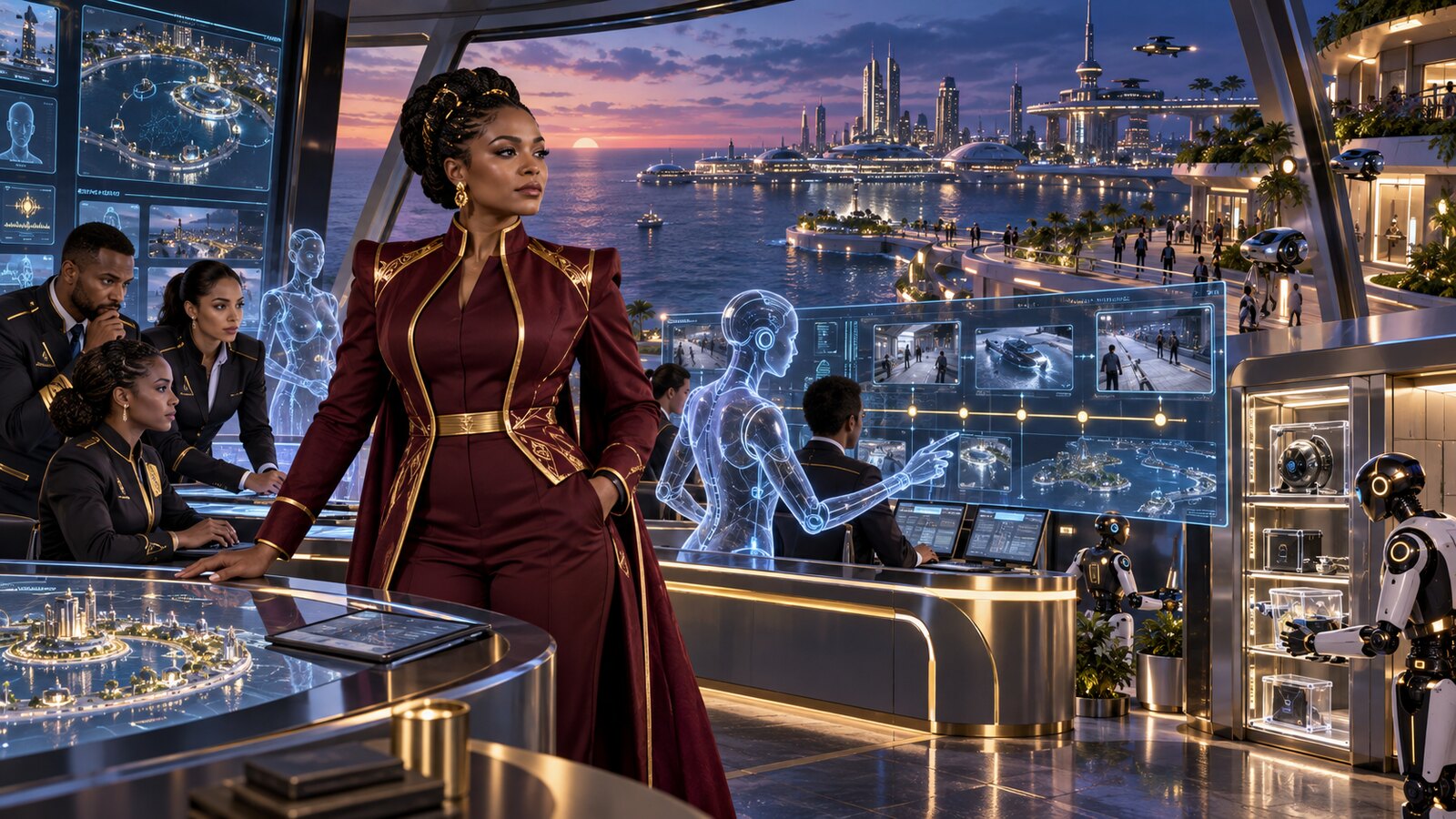
CreativeVerse: a speculative chapter in Mary Oge Chuks’s Scaler Queen Offshore Concept. The city, systems and events described here are imagined, not deployed infrastructure.
The corridor lights changed from blue to amber as a resident approached the research wing. AIDA’s access system had paused entry. On the wall, a message explained that the resident’s booking and the room’s current authorisation did not match.
“I booked this yesterday,” the resident said. “Who can correct it?”
For Aruaia, that was the test. An intelligent city should not simply detect an inconsistency. It should provide a route to resolve it.
A decision must have a reason people can use
AIDA displayed the relevant booking time and the access rule. It did not expose another resident’s records or bury the explanation in technical language. The resident could see what had triggered the pause and identify the part they disputed.
Aramu asked the duty officer to review the case. The system retained the original record and added the resident’s account separately. A challenge was evidence to examine, not misconduct to punish.
Human oversight needs actual authority
The officer found that an approved room change had not reached the access schedule. She had authority to verify the booking, correct the record and restore entry. If she could only repeat the AI’s answer, the city’s promise of human oversight would have been an empty phrase.
AIDA logged the correction and flagged the synchronisation problem for testing. The live system did not rewrite its own access rules on the strength of one incident. Proposed changes would be reviewed before deployment.
Design the route for difficult cases
Later, the commanders reviewed a harder question: what if the duty officer disagreed with the resident? Their proposed city charter required an independent review route, a clear response period and a record of the outcome. Urgent safety cases would need a separate escalation path.
The design challenge was to preserve useful evidence without making every resident’s life permanently searchable. Access limits, retention rules and accountable reviewers belonged in the concept from the beginning.
As the corridor returned to blue, Aruaia looked at the restored booking. “A city earns trust when people can correct it,” she said.
The question for our imagined future is practical: when an AI-supported institution makes a mistake, can the person affected reach someone who has both the evidence and the power to put it right?
Discover more from Marychuks.com AI, Psychology, Business & CreativeVerse
Subscribe to get the latest posts sent to your email.



One thought on “Scaler Queen Offshore: The Right to Challenge an AI Decision — Part 11”