A bird feeder looks like a simple act of kindness. Yet a fixed place where many birds repeatedly eat and drink can also become a meeting point for infection. In 2026, UK guidance shifted towards seasonal feeding—and that change deserves a careful explanation rather than an alarming headline.
What changed in April 2026
The British Trust for Ornithology now recommends pausing seeds and peanuts during the warmer months, from May to October, and offering them from November to April. Its current guidance says mealworms and fat or suet can continue throughout the year, alongside careful food and water hygiene.
The recommendation is a proportionate attempt to reduce the effects of finch trichomonosis, not a claim that all garden feeding is harmful. BTO explains that supplementary feeding has both benefits and risks, and that some questions remain less certain than others. Read the BTO’s current garden-bird feeding guidance.
This distinction matters. Evidence about disease transmission at feeding stations is stronger than evidence for some wider ecological concerns. Responsible action means following what is well supported while being honest about remaining uncertainty.
Why feeding stations can spread disease
In nature, food patches are often dispersed or temporary. Birds arrive, feed and move on. A garden feeder can concentrate many individuals at the same small openings, perches and patches of ground day after day. Spilled seed, droppings, saliva and standing water may accumulate unless the site is actively managed.
Trichomonosis is caused by the protozoan parasite Trichomonas gallinae. Garden Wildlife Health says transmission between birds is likely through food or drinking water contaminated by an infected bird, as well as direct feeding between birds. Greenfinches and chaffinches have been particularly affected, although other species can be susceptible.
The Garden Wildlife Health disease factsheet reports that incidents occur throughout the year, with June to September observed as peak months. It also links the epidemic that began in the mid-2000s to severe declines in Britain’s greenfinch population. The project is a collaborative wildlife-disease surveillance initiative with support that includes Defra and the Animal and Plant Health Agency.
A practical seasonal routine
November to April: seeds and peanuts, managed carefully
During the cooler feeding season, use fresh food from a reputable source. Store it somewhere cool and dry, and reject anything mouldy. Peanuts should be offered behind a suitable mesh so birds cannot take whole nuts. Put out modest quantities rather than filling a feeder for a long absence.
May to October: pause seeds and peanuts
Under the BTO’s April 2026 recommendation, stop offering seeds and peanuts during these warmer months. Those who wish to continue supplementary feeding can use mealworms and fat or suet while maintaining hygiene. This is seasonal risk reduction, not abandonment.
All year: support natural food
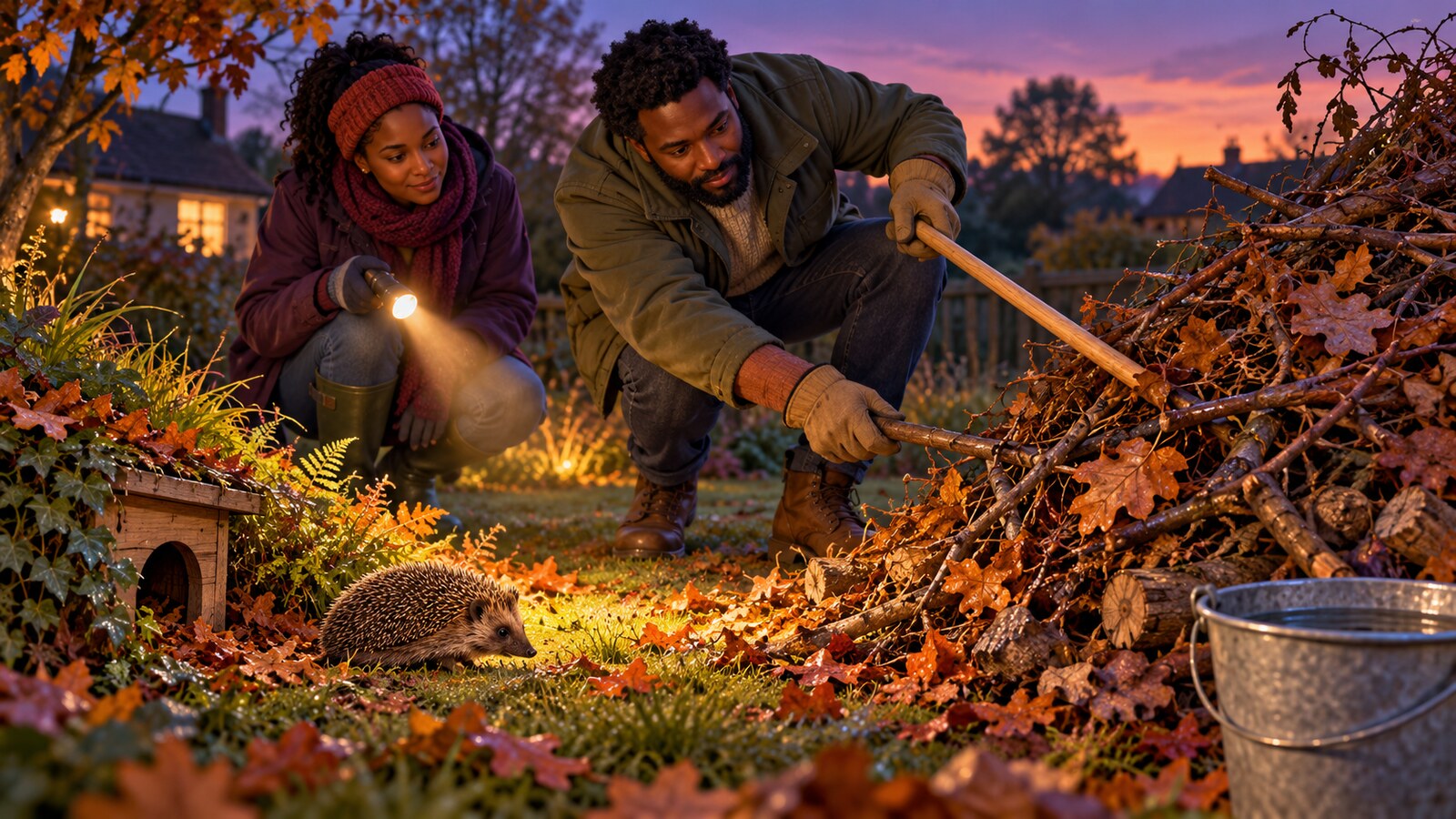
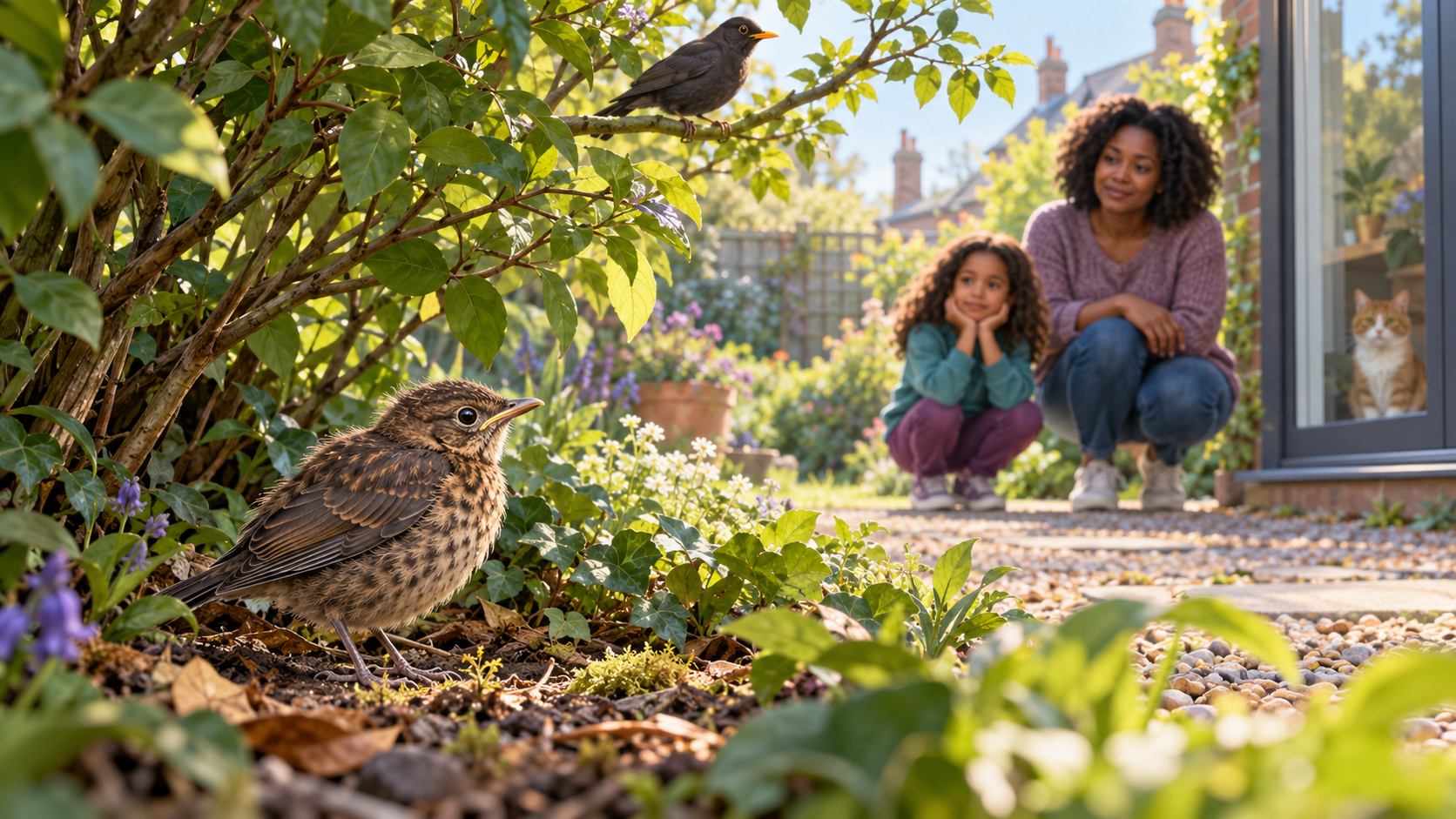
A garden can feed birds without concentrating every visitor on one device. Leave seed heads on suitable plants, grow berry-bearing shrubs, allow insects to occupy leaf litter and avoid unnecessary pesticide use. Habitat distributes food and gives birds cover, nesting material and foraging opportunities.
Natural planting is not an instant substitute for every species or season, and small gardens have limits. It is still a valuable way to make bird support less dependent on a single crowded station.
The feeder-hygiene checklist
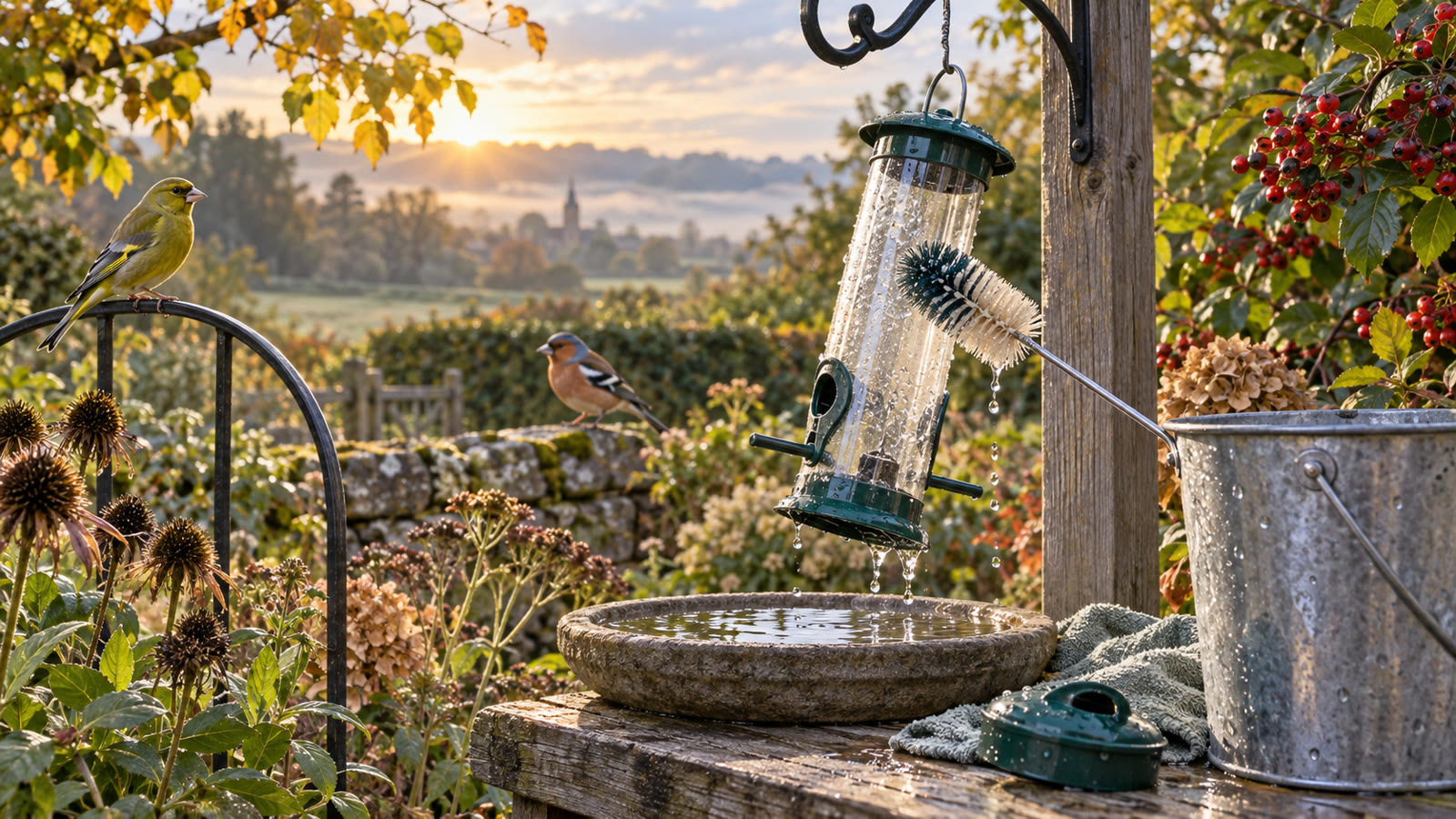
- Clean and disinfect regularly. Rinse thoroughly and allow equipment to air-dry before reuse.
- Use dedicated outdoor brushes and gloves. Do not bring feeder-cleaning equipment into food-preparation areas.
- Provide fresh water daily. Clean the container rather than simply adding new water to old.
- Offer only 24–48 hours of food. Dispose of uneaten food safely instead of topping it up.
- Remove waste beneath feeders. Damp seed and droppings create contaminated ground.
- Rotate positions where possible. Moving feeding locations helps prevent waste building up in one place.
- Separate food types. Multiple sites can reduce close contact among species with different feeding habits.
Hygiene lowers risk, but it cannot guarantee that birds will not transmit infection when they congregate. That is why seasonal feeding and outbreak responses matter alongside cleaning.
Know the warning signs
Garden Wildlife Health lists lethargy, fluffed-up plumage, difficulty swallowing, laboured breathing, drooling, regurgitation and wet or matted feathers around the face and beak among possible signs. These symptoms are not a diagnosis: laboratory examination is required to confirm trichomonosis, and other conditions can look similar.
A sick bird may remain near food because swallowing is difficult and it is attempting to feed repeatedly. Resist the understandable urge to add more seed. The priority is to reduce congregation and contamination.
What to do if you see sick or dead birds
- Stop feeding for at least two to four weeks.
- Leave bird baths empty until there are no further sightings of sick or dead birds.
- Clean and disinfect feeding equipment and the surrounding area safely.
- Avoid direct contact; use gloves and wash hands and forearms thoroughly.
- Report the incident to Garden Wildlife Health so it can contribute to national disease surveillance.
- Reintroduce food gradually only after signs of illness have stopped, monitoring closely for recurrence.
If disease repeatedly returns, Garden Wildlife Health advises a longer pause, potentially three to six months. Never attempt to medicate free-living birds through communal food or water; targeted dosing is not practical and could create further risks.
What the guidance does not mean
It does not mean that anyone who has fed birds caused a population decline. Disease emerges through interactions among pathogens, hosts, environment and behaviour. It also does not mean gardens should become sterile. Leaf litter, decaying wood, dense shrubs and seed heads can look untidy by conventional standards while serving important ecological functions.
Nor does it mean every bird-feeding claim online is equally reliable. Advice varies by country, climate, species and current evidence. UK householders should prioritise UK research and surveillance guidance, and check updates when practices change.
Kindness needs observation
The best bird care is responsive rather than automatic. Watch which species visit, how crowded the station becomes, whether food remains damp, and whether any bird appears unwell. Adjust the food, season, location or pause accordingly.
A feeder is not merely a decoration. It is a small wildlife-management responsibility. Used seasonally, cleaned carefully and supported by a habitat-rich garden, it can remain part of a thoughtful relationship with the birds outside our windows.
Featured image: original conceptual AI-generated wildlife illustration. It is not documentary photography and should not be used for species identification.
Discover more from Marychuks.com AI, Psychology, Business & CreativeVerse
Subscribe to get the latest posts sent to your email.