CreativeVerse fiction and brand editorial: the story below is fictional. Its practical commentary uses current UK guidance on evidence-based environmental claims.
Some brands fail because their products are poor. Others fail because the story becomes larger than the evidence beneath it. The danger is especially sharp when a colour, symbol or slogan quietly makes an objective promise: “clean”, “responsible”, “planet-positive” or “sustainable”. A beautiful identity may attract attention, but if customers cannot discover what the promise covers, how it was measured or when the evidence was collected, the same identity can become a liability.
The crown appears
In the city of Virelia, every new company presented its emblem to the Hall of Markets. The emblem was more than a logo. It floated above each shop, repeating the promise the founder wanted the city to remember.
Nara Vale arrived with a crown made of green light. She had built a clothing house called Verdancy, and the crown seemed to breathe. Leaves unfolded along its rim. Gold threads ran through its centre. Whenever a customer approached, it whispered one sentence: “Nothing here harms the living world.”
The crowd loved it. People photographed the crown before touching a garment. They repeated its sentence in reviews. Within weeks, Verdancy’s green promise had travelled further than its coats.
Nara had not intended to deceive anyone. Her packaging used less plastic than before. One supplier had sent her a certificate. Her studio repaired damaged returns. She believed the direction of the business was good, so the crown’s absolute words felt like an ambitious summary.
The first customer asks for a receipt
A schoolteacher named Ilyan entered the atelier and chose a dark-green jacket. Before paying, he looked up at the crown.
“Which part harms nothing—the fabric, the dye, the factory, the journey or the whole jacket?”
The crown brightened, but it could not answer. Nara opened the supplier certificate. It covered one fibre, from one mill, during one year. The jacket contained three materials. Its dye came from another company. Its zip, lining and transport had not been assessed. The certificate was not false; the crown had simply stretched it beyond its scope.
Other customers began asking sensible questions. Was “less plastic” measured against the previous box or the entire package? Did “repairable” mean the business guaranteed repairs, or merely that a skilled tailor could attempt one? Did the green crown describe every product or only the small verified collection?
Each question removed a little light. By the end of the week, the crown was still beautiful, but everyone could see that it was hollow.
Nara does not replace green with another colour
Her advisers proposed a quick rebrand. Silver would look technological. Blue would suggest trust. A new slogan could avoid the word “sustainable”. Nara refused. The problem was not the shade of the crown. The problem was that the symbol carried a claim the business could not yet support.
She took the emblem down and replaced it with a plain workbench. For thirty days, the atelier showed no grand promise. It showed questions.
- What exactly are we claiming?
- Which products and stages does the claim cover?
- What evidence do we hold, who produced it and when?
- What remains unknown or outside our control?
- What change would make the claim inaccurate tomorrow?
The new crown is smaller—and stronger
Nara mapped every product. Some suppliers could document materials and processing; others could not. She separated verified facts from intentions. She stopped using one sentence for the whole company.
When the crown returned, it no longer said that nothing caused harm. It illuminated only above garments with supporting records. A customer could touch the emblem and see the fibre, the supplier, the assessment date, the part of the product covered and the limits of the evidence.
For the rest of the collection, the label said what Verdancy was doing rather than claiming a finished virtue: reducing a named packaging material, offering a defined repair service, or seeking traceability from a supplier. Where the business did not know, it said so.
The new crown was smaller. It did not fill the street with green light. Yet customers trusted it because its brightness ended exactly where the evidence ended.
What the story means for real brands
A brand identity can communicate a claim without using a formal sentence. Names, imagery, badges, colour, page layout and omitted qualifications all shape what a reasonable customer may understand. That does not make green design inherently misleading. It means the visual promise and the documentary evidence need to describe the same thing.
The UK CAP Code’s misleading-advertising rules say marketers should hold documentary evidence for objective claims that are capable of substantiation. The Competition and Markets Authority’s Green Claims Code guidance similarly asks businesses to make claims that are truthful, clear, unambiguous, complete and supported by robust, credible, relevant and current evidence.
This is not a reason to strip every brand of emotion. It is a reason to separate three things that marketing often blends together: verified fact, reasonable interpretation and future ambition.
| Message type | What it needs | Safer example |
|---|---|---|
| Verified fact | Evidence matching the product, period and scope | “This bottle contains 70% recycled plastic by weight.” |
| Interpretation | A clear basis and proportionate wording | “Designed to reduce packaging material compared with our 2025 box.” |
| Ambition | A defined target, baseline and timeframe | “We aim to eliminate this plastic sleeve from UK orders by December 2027.” |
Build a claim file before a campaign
Before commissioning a badge, slogan or campaign, create a small claim file. It should be readable by someone outside the marketing team and contain:
- The exact wording: record the sentence and the visual context in which it will appear.
- The likely customer interpretation: ask what an ordinary reader may think the claim covers.
- The evidence: retain reports, invoices, calculations, certificates and supplier statements rather than a link that may later change.
- The scope: identify products, countries, production stages, comparison baselines and exclusions.
- The date: show when the evidence was produced and when the claim must be reviewed.
- The owner: name the person responsible for approving, updating or withdrawing the claim.
The cost is not only the assessment or certification fee. Include staff time, supplier follow-up, data storage, legal or specialist review, packaging changes, monitoring and the cost of withdrawing old creative. For a small brand, the sensible alternative may be a narrower claim that can be evidenced internally rather than an expensive company-wide promise.
Who should avoid a broad green identity
A broad environmental position is a poor fit when the business cannot obtain supplier information, the product mix changes quickly, evidence covers only a minor component, or nobody owns claim review. A founder may still communicate specific improvements, but the identity should not imply that an unresolved supply chain has already become environmentally superior.
Doing nothing can be responsible. If evidence is weak, a company can postpone the campaign, publish a factual operations update, improve traceability first or focus its brand on qualities it can demonstrate—durability, service, repair access, design or transparent pricing. Silence about an unverified benefit is better than a crown that customers must dismantle themselves.
A five-question pre-publication test
- Would a reasonable customer understand this as an objective fact?
- Does the evidence cover the whole impression, not merely one convenient detail?
- Are important limits visible near the claim rather than hidden elsewhere?
- Could the team reproduce the calculation and show the source records?
- Is there a date or operational change that should trigger review?
The final CreativeVerse lesson
The strongest brand promise is not the largest statement a company can place above its door. It is the clearest statement the company can continue to prove after the campaign has travelled beyond the founder’s intentions.
In Virelia, Nara’s second crown attracted fewer photographs. It attracted better questions, longer conversations and customers who understood what they were buying. The brand did not become trustworthy because it found a more convincing symbol. It became trustworthy because the symbol finally learned where to stop.
For another CreativeVerse story about the risks of unstable brand identity, read The Brand That Changed Its Voice Every Morning.
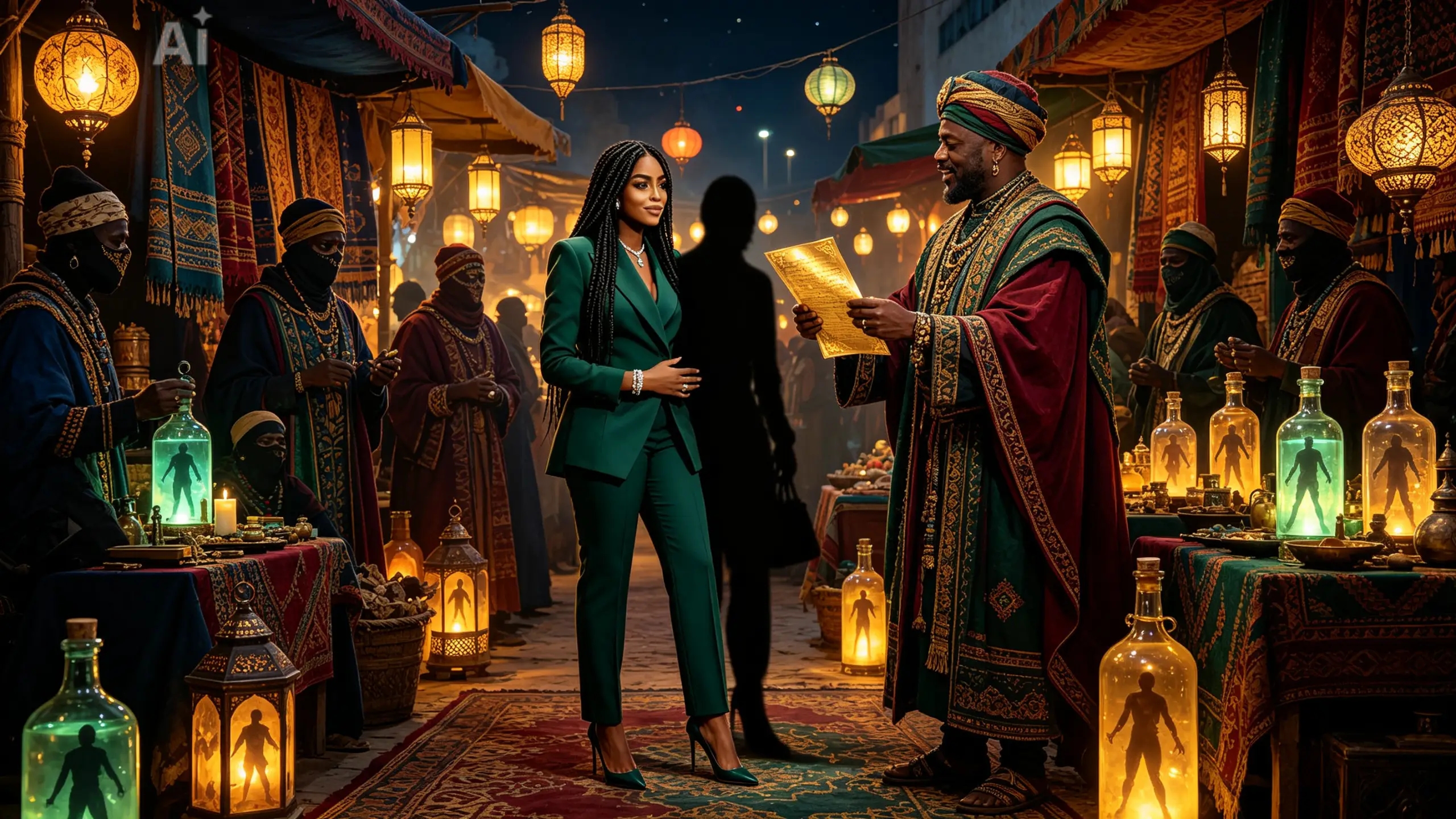
Editorial note: the fictional characters, city and company in this article are invented. The featured image is an original conceptual AI illustration created for MaryChuks.com. Regulatory sources were reviewed on 15 October 2026. This article provides general editorial guidance, not legal advice.
Discover more from Marychuks.com AI, Psychology, Business & CreativeVerse
Subscribe to get the latest posts sent to your email.