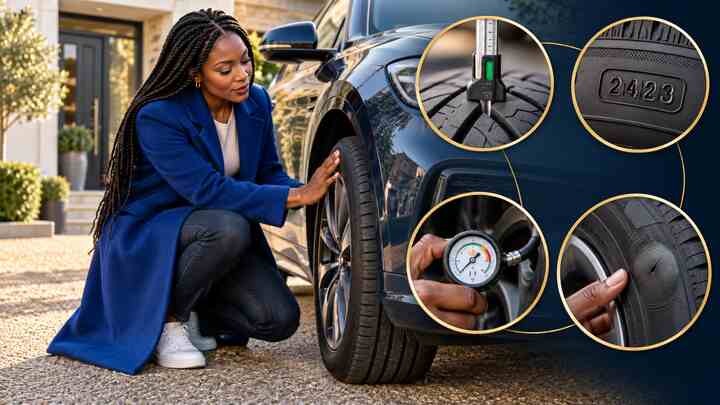
Featured image: conceptual AI-generated editorial illustration. It is not documentary evidence and does not depict a specific seller, buyer or vehicle transaction.
A polished used car can create a dangerous shortcut in the mind: clean bodywork becomes “well maintained”, a fresh MOT becomes “mechanically sound”, and a friendly seller becomes “nothing to hide”. None of those conclusions necessarily follows from the evidence.
Buying well means treating the car as three things at once: a physical machine, a legal identity and a financial asset. A check in only one layer leaves gaps in the others. The practical solution is a used-car evidence pack—a small folder of records, screenshots, observations and written promises collected before payment.
An MOT pass is evidence, not a guarantee
The free GOV.UK MOT history service shows past passes and failures, recorded mileage, test dates and the next due date. Depending on the manufacturer, it may also show an outstanding safety recall. This is valuable—but an MOT records a minimum roadworthiness assessment at a point in time. It is not a warranty, a valuation or a complete mechanical inspection.
Read the sequence, not just the newest result. Repeated advisories for corrosion, tyres, suspension, brakes or fluid leaks may indicate deferred maintenance. A sudden mileage drop needs an explanation. Long gaps between tests may be legitimate—for example, the vehicle was off the road—but they are still questions to resolve.
Interpretation matters. One advisory does not prove neglect, and a repaired failure can demonstrate responsible maintenance. The useful question is whether the history, invoices and present condition tell a coherent story.
Layer one: prove the vehicle’s identity
Start before the viewing. Ask for the registration number, make, model, year and enough information to use official checks. Compare the advertisement with DVLA vehicle information, including fuel type, engine size, tax status and MOT status where available.
At the vehicle, ask to see the V5C registration certificate—the log book. GOV.UK’s used-vehicle checklist advises checking its “DVL” watermark, comparing the document details with what you have been told, and matching the vehicle identification number (VIN) and engine number to the document. It also identifies specific V5C serial-number ranges that may indicate a stolen document; check the live guidance rather than relying on a saved list.
A V5C is not proof of ownership; it identifies the registered keeper. Ask why the person selling the vehicle is entitled to sell it. If the name, address, story, keys, VIN plates and documents do not align, pause. Pressure to pay before discrepancies are resolved is itself information.
Layer two: build the history timeline
- MOT history: save the result and note failures, advisories, dates and mileage progression.
- Service evidence: compare stamps and invoices with mileage and dates. A stamped book without supporting detail is weaker than itemised records.
- Recall status: use the official vehicle recall service. It can show unresolved safety recalls for a registration; other manufacturer actions may require direct confirmation.
- Write-off and theft indicators: consider a reputable vehicle-history check and verify exactly which databases, date range and guarantees it covers.
- Outstanding finance: check whether a finance provider may still have an interest in the vehicle. Do not assume possession equals clear title.
Paid history reports can add useful information, but they are not magical truth machines. Record the provider, time of search, registration and VIN used, result, exclusions and any financial guarantee. A report generated from one incorrect character can create false reassurance.
Layer three: inspect the car you are actually buying
View in daylight and, where possible, when the engine is cold. A warmed engine may hide starting problems. Walk around slowly and look for inconsistent paint, uneven panel gaps, damaged tyres, warning lights, fluid under the vehicle, moisture inside lamps, corrosion and signs of water entry.
Test every function that matters: lights, wipers, windows, locks, air conditioning, cameras, charging ports and driver-assistance warnings. Confirm both keys are present if promised. On an electric car, ask for battery-health evidence, charging equipment, warranty status and confirmation that connected-app access can be transferred.
A test drive should include different road speeds where lawful and safe. Notice steering pull, braking vibration, clutch behaviour, gearbox changes, suspension noises, temperature and warning messages. Insurance must cover the drive. If you lack technical confidence—or the purchase would strain your finances—an independent professional inspection may be inexpensive compared with one concealed fault.
Separate seller claims from verified facts
“Never crashed”, “one careful owner”, “full service history” and “new battery” are claims until supported. Ask the seller to put important representations on the invoice or receipt. Save the advertisement, photographs and messages. If a trader describes a feature or condition that influenced your decision, that description may matter later.
Consumer protection differs according to who sells the car. A dealer sale carries statutory obligations that do not apply in the same way to a genuine private sale. Citizens Advice notes that remedies may be available when a dealer-supplied used car is faulty or does not match its advertisement or description. Its current used-car problem guidance is a useful starting point, but it is better to establish the seller’s legal identity before a dispute begins.
Do not let “sold as seen” end the analysis automatically. A trader cannot simply use a phrase to erase statutory rights. Conversely, private buyers should not assume dealer-style change-of-mind protections exist. Evidence, seller status and the precise facts matter.
Calculate the first-year price, not the windscreen price
The purchase price is only the opening figure. Add insurance, vehicle tax, immediate servicing, tyres, brakes, timing-belt work where relevant, breakdown cover, parking permissions, charging equipment and repairs suggested by advisories. Obtain an insurance quote for the exact registration before committing; assumptions based on a similar model can be wrong.
Vehicle tax does not transfer with the car. The buyer must tax it using the appropriate V5C or new-keeper reference. GOV.UK’s vehicle-buying steps explain the checking, registration, tax and insurance sequence.
Your one-page evidence pack
- Identity: registration, VIN, make/model and V5C details matched.
- Official record: DVLA facts, MOT timeline and recall result saved.
- Commercial history: finance, theft and write-off checks recorded with provider limitations.
- Condition: viewing notes, test-drive observations, photographs and independent report if commissioned.
- Promises: advertisement and important seller statements saved in writing.
- True cost: insurance quote and first-year maintenance budget added.
- Transaction: seller identity, payment record, dated receipt, keys and handover documents listed.
A pause is cheaper than a bad explanation
No checklist eliminates all risk. Records can be incomplete, faults can develop later and honest sellers may not know a vehicle’s entire history. The goal is not certainty; it is to replace avoidable assumptions with multiple independent signals.
If the documents, digital history, physical condition and seller’s story reinforce one another, confidence becomes more reasonable. If they conflict, do not buy the explanation before you buy the car. Stop, verify, inspect—or walk away.
Discover more from Marychuks.com AI, Psychology, Business & CreativeVerse
Subscribe to get the latest posts sent to your email.