Slug: personal-fit-profile-online-clothes-shopping
Tags: Fashion, fashion tips, Online Shopping
Meta description: Clothing sizes are inconsistent clues, not reliable measurements. Build a personal fit profile to compare garments, shop online more carefully and reduce avoidable returns.
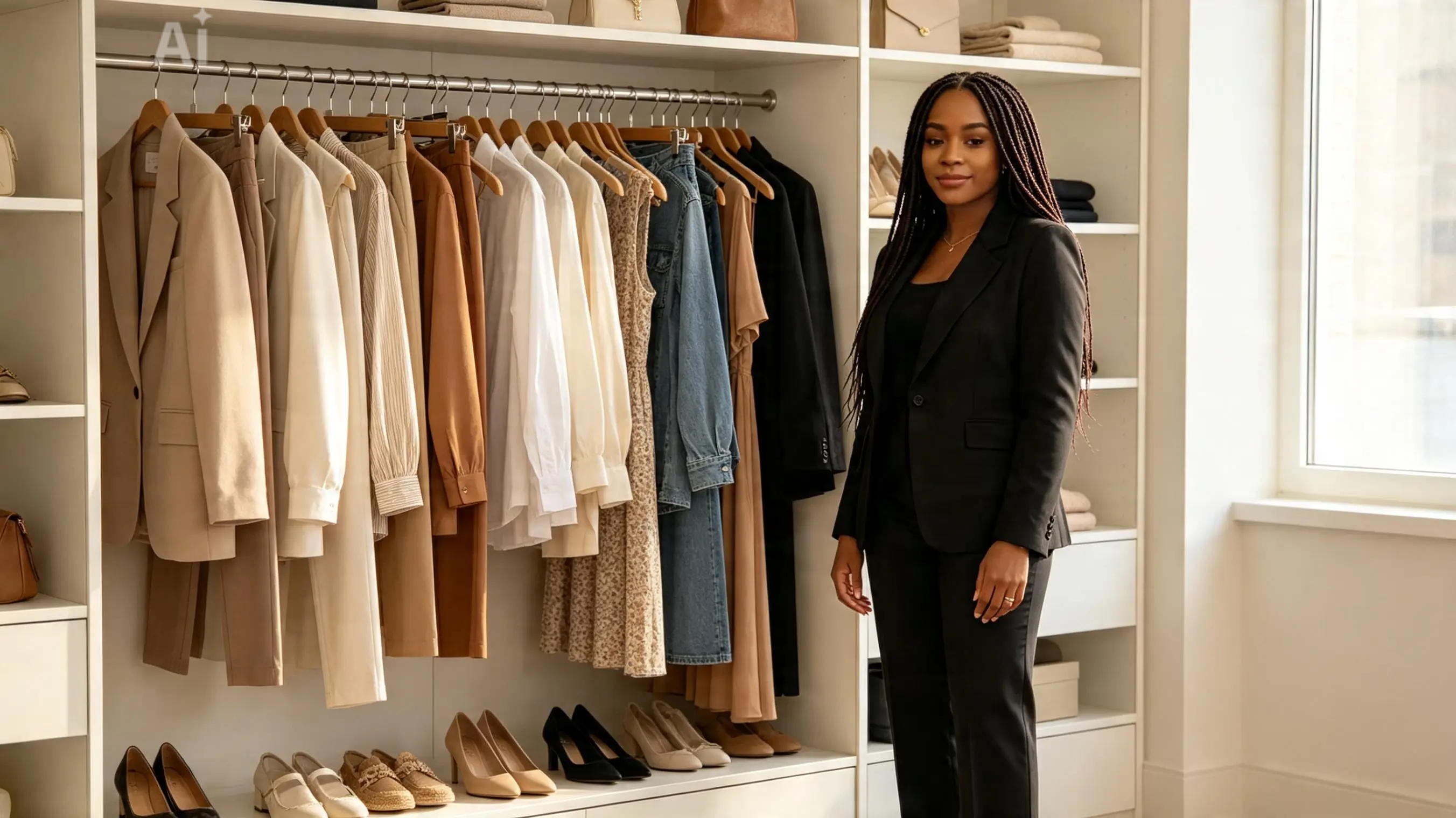
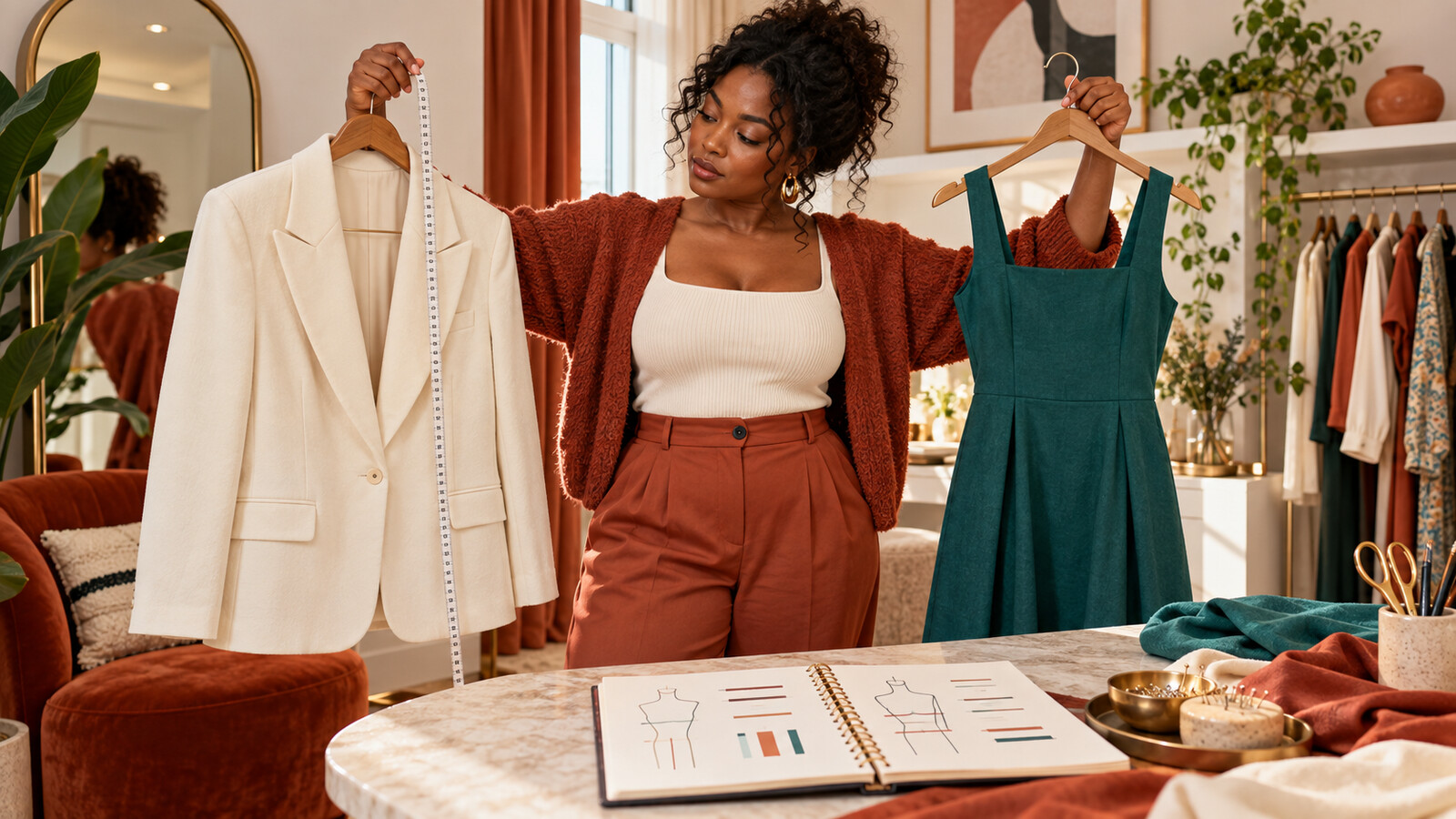
Featured image: conceptual AI-generated editorial illustration. It is not documentary evidence and does not depict a specific retailer, garment or customer.
A size label looks precise. It is not. “12”, “medium” and “large” can feel like measurements, yet they are usually the end result of a brand’s own pattern, target customer, styling choices and allowance for movement. Two garments carrying the same label can therefore fit very differently—even when neither is defective.
The practical response is not to judge your body, memorise one favourite number or order three sizes and hope. Build a small personal fit profile: a record of your body measurements, the measurements of clothes that already fit, and the fit preferences that change by garment type. It turns online shopping from label-matching into evidence-led comparison.
Why the label cannot do all the work
The distinction between a body and a garment matters. ISO 8559-2, an international standard for clothing size designation, says its system is based on body measurements. Garment measurements are a separate design choice: makers add allowances for style, cut, movement and how an item is intended to be worn.
That explains why a fitted shirt and an oversized shirt may share a nominal size but have very different chest widths. It also explains why a straight-cut pair of trousers and a curvier cut may behave differently at the waist and hip. The label is a route into a brand’s size chart, not proof that a garment will fit your proportions or preferences.
Stretch complicates the picture further. A garment measured flat is not the same thing as a garment under tension, and a fabric’s fibre content does not reveal exactly how its knit, weave, lining or construction will behave. Treat every chart as product information to interpret, not a verdict on your body.
Build the profile in three layers
1. Record current body measurements
Use a flexible tape measure over the underwear or light clothing you would normally wear beneath the garment. Stand naturally; do not pull the tape tight to produce a preferred number. Record the date, because bodies change and an old measurement can create false confidence.
- Tops and dresses: full bust or chest, natural waist, shoulder width and preferred sleeve length.
- Trousers and skirts: natural waist, the point where you actually wear the waistband, fullest hip, rise preference and inside leg.
- Close-fitting pieces: add any measurement that is decisive for you, such as upper arm, thigh, calf or torso length.
There is no need to collect every possible dimension. ISO 8559-1 provides standardised definitions for body measurements, but a shopper’s useful card can be much shorter. Capture the dimensions that repeatedly decide whether you keep or return an item.
2. Measure clothes that already work
Body measurements tell you your dimensions; favourite-garment measurements reveal the ease and proportions you actually enjoy. Choose one good-fitting example from each important category, fasten it, lay it flat without stretching and note how the retailer measures its chart.
- For a shirt: pit-to-pit, shoulder seam to shoulder seam, back length and sleeve.
- For trousers: waistband, front rise, hip, thigh, inside leg and hem opening.
- For a dress: bust, waist, hip, shoulder-to-waist and total length.
Write down whether each measurement is a flat width or a full circumference. Confusing the two is a common and expensive error: a 50 cm flat chest typically represents roughly 100 cm around before considering construction or stretch.
3. Add fit preferences
Comfort is not captured by circumference alone. Add short notes: “room for a jumper”, “waistband sits above navel”, “no pull across upper arm”, “ankle length with flat shoes”, or “prefer loose hip and defined waist”. These are not flaws to correct. They are design requirements.
Use a five-question product-page audit
Before choosing a size, ask:
- Is the chart specific to this product? A generic brand chart is weaker evidence than garment measurements for the exact item.
- Are the numbers body or garment measurements? Do not compare your bust directly with a flat pit-to-pit width without converting and allowing for ease.
- What does the cut intend? Words such as fitted, relaxed, cropped, high-rise and drop-shoulder change the comparison.
- What does the fabric permit? Check stretch, lining and reviews describing recovery, transparency or shrinkage—but treat reviews as individual experiences, not controlled tests.
- Can you return it on workable terms? Read the deadline, return method, postage cost, exclusions and refund route before paying.
If a seller gives no meaningful chart, omits garment length and provides only the model’s size, uncertainty remains high. A photograph can show styling, but perspective, pinning and body proportions make it a poor measuring device. The rational choice may be to ask for measurements or skip the purchase.
Know what return rights do—and do not—solve
For UK online sales, official GOV.UK distance-selling guidance says customers generally must be told that they can cancel an order up to 14 days after delivery without giving a reason. Separate rules cover refunds and the handling of returned goods, and exceptions can apply. Faulty or misdescribed goods also engage statutory rights; a retailer’s voluntary policy cannot remove those rights.
But a legal right to return is not a fit strategy. You may still face packaging, travel, postage, a delayed refund or an overseas seller that is difficult to enforce against. Check who the seller is, not just which marketplace hosts the listing, and save the product description and size chart with your order confirmation.
More deliberate selection can also reduce wardrobe churn. WRAP’s large UK clothing audit found that many owned garments had gone unworn for at least a year; its clothing longevity research examined 44,807 items. That does not prove poor fit caused every unworn item. It does support the broader case for buying pieces that have a realistic path into regular use.
A compact fit card you can keep on your phone
Updated: [date]
Body: bust/chest __; waist __; wearing waist __; hip __; inside leg __
Best-fitting top: flat chest __; shoulder __; length __
Best-fitting trousers: waistband __; rise __; hip __; inside leg __
Preferences: [three short notes]
Units: centimetres or inches—never mix them
Keep separate reference garments for different silhouettes. The measurements of an oversized blazer should not set the target for a fitted blouse. Update the card after a body change, a successful alteration or a purchase that teaches you something useful.
The useful shift: from size loyalty to fit evidence
A label can help you start, but it should not control the decision—or your self-image. Compare the product’s actual information with your current body, a garment that works and the way you want the new piece to feel. Where evidence is missing, count that uncertainty as part of the price.
The best size is not the smallest number you can fasten. It is the option that lets the garment perform its job, feels right in motion and earns a place in your real wardrobe.
Discover more from Marychuks.com AI, Psychology, Business & CreativeVerse
Subscribe to get the latest posts sent to your email.