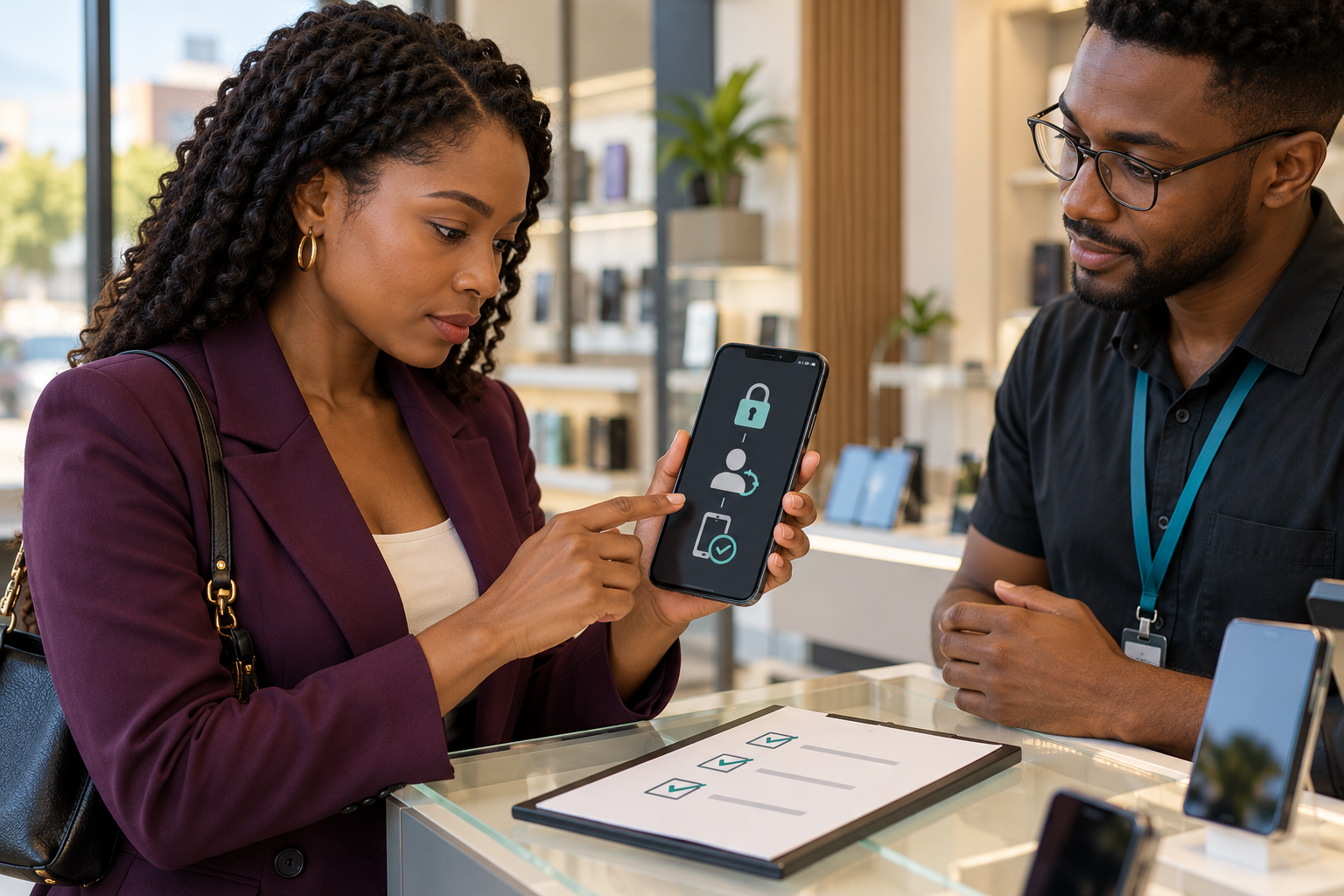
Two cables can have identical USB-C plugs and behave very differently. One may charge a laptop quickly, another may move files at a crawl, and a third may fail to send a picture to a monitor. The connector’s shape tells you what fits—not everything the cable can do.
Start with the crucial distinction
USB-C describes a connector. It is small, reversible and designed to support a broad ecosystem of devices. Charging power, data performance and video capability are separate questions.
That distinction explains much of the confusion around USB-C shopping. A listing that says only “USB-C cable” has told you the plug type, but not enough to judge whether the cable suits a phone, a high-power laptop, a fast external drive or a display.
The USB Implementers Forum (USB-IF), the organisation behind the specification and certification programme, says USB Type-C was designed for reversible connection and scalable power and performance. “Scalable” is the important word: the same physical form can be used for very different capabilities.
Question one: how much power must the cable carry?
Think of charging as a chain containing the device, charger and cable. The result is limited by the least capable part of that chain, as well as the charging modes the products support. Buying a powerful charger does not make an inadequately specified cable more capable.
Start with the wattage recommended by the device maker. A phone and a workstation-class laptop have very different needs. Then check that both charger and cable explicitly support the required power. Avoid assuming that thickness, price or braided fabric proves electrical performance.
USB Power Delivery allows compatible devices to negotiate power over USB. The current USB-IF material says USB Power Delivery Revision 3.1 can reach 240 watts through specified full-featured USB-C cables and connectors, extending the earlier 100-watt ceiling. That does not mean every USB-C cable carries 240W; it means products built and marked for the appropriate specification can do so.
Question two: what data speed do you actually need?
If the cable is only for overnight phone charging, modest data performance may not matter. If it connects an external solid-state drive, camera, dock or high-resolution workflow, it can matter enormously.
Look for an explicit supported transfer rate rather than vague phrases such as “high speed”. A seller should state a recognised figure or certified performance mark. If the listing provides a wattage but says nothing about data, do not infer fast data from charging performance: those are separate capabilities.
This is also why a cable that charges perfectly can still feel “broken” when copying a large video library. It may be doing exactly what its limited data specification permits.
Question three: does your setup require video?
A USB-C plug on a laptop is not, by itself, a promise of display output. Video depends on the computer or phone port, the cable and the monitor or adaptor supporting a compatible path. All three parts must agree.
Before buying, read the device manufacturer’s port specification and the monitor or dock documentation. Then choose a cable whose description explicitly confirms the required display capability. A charging-only cable cannot acquire video support because it fits the socket.
Question four: is certification clear?
Certification is not a substitute for matching a product to your needs, but it is useful evidence. USB-IF says products displaying its certified logos must pass compliance testing and be listed through its compliance programme. Clear certified markings can therefore be more informative than decorative claims created by a marketplace seller.
Be precise here: the absence of a logo does not automatically prove a cable is unsafe, and a logo does not guarantee compatibility with every device. It means you should investigate further. Check the maker, model, published specification and warranty, and compare the packaging with the manufacturer’s official product page.
A five-minute buying method
- Name the job. Write down whether the cable is for charging, file transfer, a dock, a monitor—or several of these.
- Check both endpoints. Read the specifications for the device and charger, drive, dock or display it will connect to.
- Record the minimums. Note required wattage, data rate, video support and practical length.
- Demand explicit claims. Reject listings that substitute words such as “premium” or “ultra” for measurable specifications.
- Keep the evidence. Save the product page, order record and packaging until you have tested the cable in its intended setup.
Length and flexibility involve trade-offs
The longest cable is not automatically the best cable. Longer runs can make high performance harder to deliver and may require a different design. Buy the shortest comfortable length for the task, while leaving enough slack to avoid bending the connector sharply or pulling on the port.
Likewise, a very stiff cable can be inconvenient for a phone on a bedside table, while a thin, flexible cable may not meet a laptop’s higher-power requirement. Mechanical comfort and electrical capability both matter; neither proves the other.
Troubleshoot before replacing everything
If charging is unexpectedly slow, first test the cable with the intended charger and device, then check the device’s charging indication. Remove unnecessary adaptors and inspect ports for damage or debris. If possible, compare one component at a time with a known-good, correctly specified alternative.
If data transfer is slow, confirm that the cable, both ports and the storage device support the expected rate. If a monitor remains blank, verify video support at the source port and try the display’s recommended input and cable arrangement. Changing one variable at a time produces evidence; replacing everything at once only produces expense.
Build a small labelled cable kit
Once a cable has passed your tests, label it by function: for example, “phone charging”, “laptop power”, “fast drive” or “monitor”. Keep the purchase specification with the label or in a note on your phone. This prevents capable cables from disappearing into a drawer where every black lead looks the same.
The larger lesson is simple: compatibility should be demonstrated, not guessed from the connector. Treat power, data and display as three separate questions and USB-C becomes far less mysterious.
Evidence and sources
- USB-IF: USB Charger (USB Power Delivery) — official overview of power negotiation, certified logos and power levels.
- USB-IF: USB Type-C Cable and Connector Specification — official specification hub and connector overview.
Sources accessed 20 September 2026. Product capabilities change, so confirm the current specification for the exact model before purchase. Featured image: conceptual AI-generated illustration; it is not documentary evidence.
Discover more from Marychuks.com AI, Psychology, Business & CreativeVerse
Subscribe to get the latest posts sent to your email.