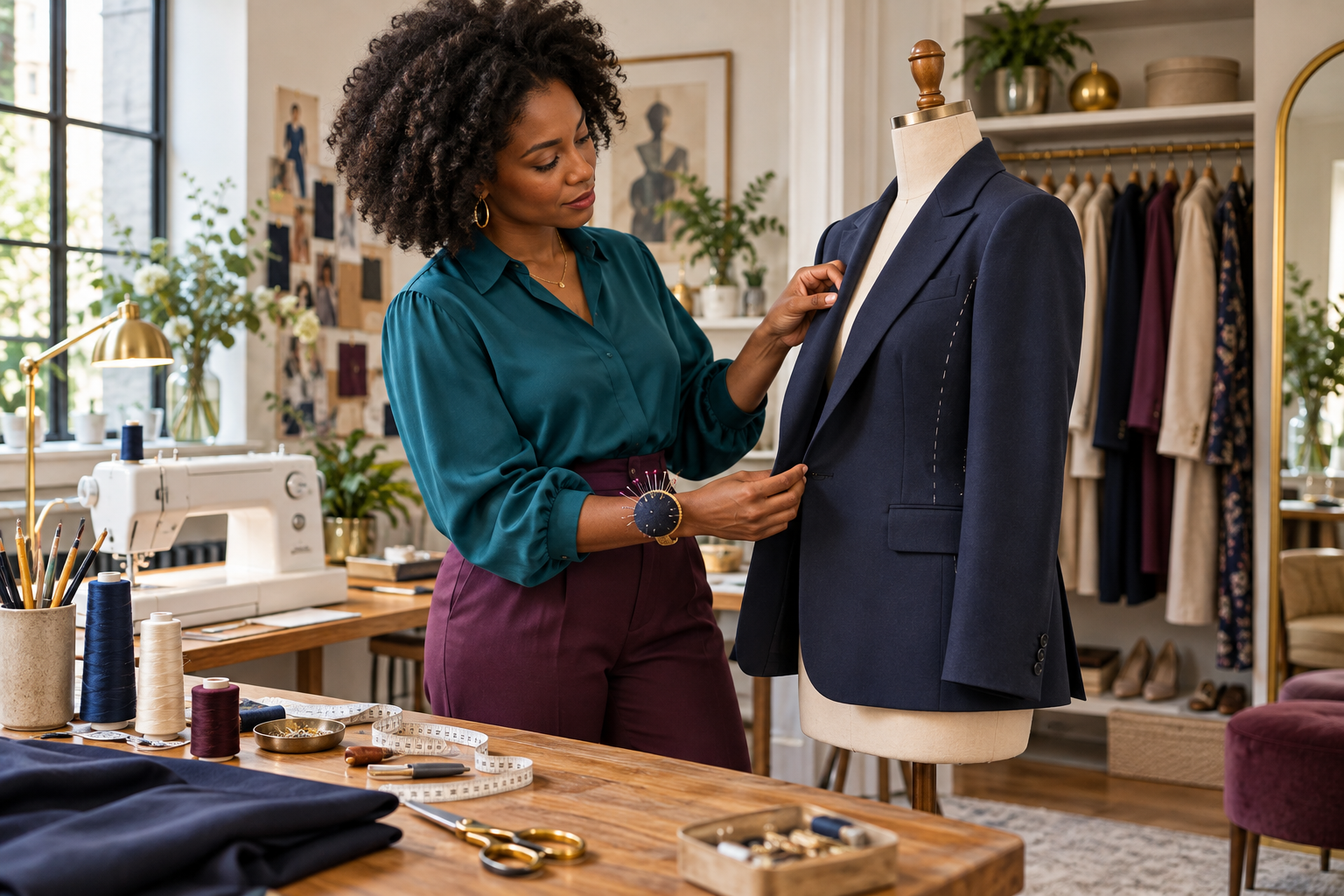
A loose hem can make a good dress feel finished. A jacket that no longer fits can sit unworn for years. At the other extreme, an expensive repair can rescue the appearance of a garment whose fabric is already failing.
The useful question is not simply “Can this be fixed?” It is “Will this repair or alteration return the garment to regular, confident use?” A five-factor decision can separate a worthwhile intervention from money spent postponing an inevitable replacement.
Repair, alteration and replacement solve different problems
A repair restores something that has failed: a seam, zip, button, lining, pocket or small damaged area. An alteration changes fit or form: shortening a hem, adjusting a waist, reshaping a sleeve or changing the silhouette. Replacement makes sense when the material, function or safety of the whole garment can no longer be recovered reliably.
This distinction prevents the wrong conversation with a tailor. “Make it wearable again” is too vague. Point to the exact fault, describe how the garment should feel and move, and identify what you want preserved.
Repair deserves serious consideration. The European Environment Agency reports that 95% of textile items logged by participating European Repair Cafés in 2025 were repaired successfully. That figure comes from a particular network rather than every garment or repair business, but it shows how many apparently finished items still contain usable value. The EEA’s repairability evidence also gives the scope and limits of the data.
Factor one: is the damage local or structural?
Local damage affects a contained part of an otherwise sound garment. Examples include a missing button, opened seam, detached belt loop, worn pocket edge or short section of damaged lining. These are often strong repair candidates because the surrounding cloth can still support the work.
Structural failure is different. Look for fabric thinning across a wide area, repeated tearing beside previous repairs, crumbling coatings, stretched-out elastane, extensive moth damage or seams pulling because the underlying cloth has weakened. A patch can cover one hole; it cannot restore strength to fabric that is breaking down throughout.
Turn the garment inside out and examine the area in good light. Gently move the fabric around the damage. If new splits appear or the cloth feels papery, brittle or unusually transparent, ask a professional whether the material can carry another seam or patch.
Factor two: can the fit be changed without fighting the construction?
Some fit problems are alteration-friendly. A long trouser leg can be shortened; a generous waist may be reduced; a jacket sleeve may have enough allowance for adjustment. Other changes disturb the balance of the entire garment.
Before approving an alteration, ask where the extra fabric will come from, which seams must be opened and whether pockets, zips, vents, patterns or decorative details will move. Shortening a plain skirt is not the same task as shortening a bordered print. Taking in a side seam may shift a pocket or distort the hang.
Try the garment with the shoes, underwear or layers you actually intend to wear. Stand, sit, raise your arms and walk. A static mirror pose can hide tightness across the back, a pulling zip or a hem that becomes impractical when you move.
Factor three: will the fabric survive the work and future care?
Price, brand name and fibre label are weak substitutes for inspecting the item in front of you. WRAP’s 2026 durability research found that price, brand and fabric composition did not reliably predict garment durability. Its durability report argues that longevity must be measured rather than assumed.
Check high-friction areas: underarms, inner thighs, seat, cuffs, collar, elbows and the space around fastenings. Look for pilling that can be removed, but distinguish it from thinning fibres or broken yarns. Inspect the lining, interfacing and seam allowances; the outside may look strong while the internal structure is exhausted.
Then consider care. A repair made with unsuitable thread, adhesive or heat can fail in the wash or damage delicate material. Tell the repairer how you clean the garment and show the care label. If the item requires a care routine you will not realistically follow, a technically successful repair may still produce an unworn garment.
Factor four: how many confident wears will the work create?
The original purchase price is already spent. The decision now concerns future use. Estimate how often you would wear the garment during the next year if the problem disappeared.
A £45 alteration that creates thirty confident wears costs £1.50 per future wear. A £12 repair on an item you still avoid wearing is not automatically better value. Cost per wear is only a decision aid, but it forces the important question: are you restoring a role in your wardrobe, or preserving an object out of guilt?
Be specific about the role. “Work jacket for weekly meetings” is more testable than “nice jacket”. If another item already performs the same job more comfortably, repairing this one may add clutter rather than usefulness.
Factor five: does the repair preserve what you value?
A visible repair can be a design choice. A contrasting patch, decorative darning or new buttons may give a garment a second identity. On formal tailoring, sentimental pieces or collectible fashion, you may prefer an invisible method that preserves the original line and materials.
Explain your priority before work begins: originality, invisibility, strength, reversibility, speed or price. You may not be able to maximise all six. A robust patch can be more visible; an invisible repair may cost more; a dramatic alteration may reduce resale value while making the garment far more useful to you.
Ask to see examples of similar work, especially for leather, beading, knitwear, technical outerwear or structured tailoring. A general alteration service and a specialist restorer solve different problems.
Use a three-minute garment triage
- Identify the failure. Mark every damaged or uncomfortable area rather than presenting only the most obvious one.
- Inspect the whole item. Check fabric strength, lining, fastenings, seams and high-friction zones.
- Test movement. Wear it as intended and photograph the pulling, gaping or excess length.
- Define the future role. Name where and how often you expect to wear it.
- Set a limit. Decide the maximum cost and the result that would make the work worthwhile.
This inspection complements a wider garment-quality audit. The same clues that reveal quality before purchase help determine whether a used garment still has enough structure to justify repair.
What to repair at home—and when to stop
Replacing a simple button, securing a loose hem, closing a small seam opening or removing light pilling may be realistic with basic tools and a careful tutorial. Start with a reversible or low-risk step, test thread and heat on a hidden area, and stop if the fabric begins to distort.
Use a professional for complex zips, major resizing, lined garments, leather, lace, beading, invisible mending, tailored shoulders and damage close to stressed seams. Protective clothing, specialist sportswear and items whose performance depends on waterproofing, flame resistance or impact protection need manufacturer-approved care. A repair that looks neat is not proof that safety performance has been restored.
How to brief a tailor or repair service
- Bring the garment clean and bring the shoes or layers worn with it.
- Show all faults and disclose previous repairs.
- Describe the desired movement and fit, not only a number of centimetres.
- Ask whether the work will be visible and whether it can be reversed.
- Confirm the price, completion date and what happens if hidden damage appears.
- Agree on replacement materials, especially buttons, zips, lining and thread colour.
For a valuable item, photograph its condition at handover and keep the written quote. This protects both customer and craftsperson from confusion about pre-existing damage.
When replacement is the responsible decision
Repair is not automatically sustainable if the result will not be worn. Replacement may be more honest when the fabric is failing widely, the garment cannot perform its function, the fit change would require complete reconstruction, or the repair cost would prevent you buying a suitable essential item.
Do not donate an unusable garment merely to move the disposal problem elsewhere. The EEA’s textiles briefing distinguishes reuse from recycling and notes that reuse is generally the more environmentally sustainable route. Donation should therefore mean passing on something another person can genuinely wear, not hiding waste in a collection bag.
Where reuse is not realistic, follow local textile-collection guidance. Remove only components that can be safely reused, such as distinctive buttons, if doing so will not cause the remaining material to be rejected by the collector.
Build repair into the wardrobe, not just the crisis
The European Commission’s circular-textiles strategy sets a 2030 vision in which textiles placed on the EU market are durable, repairable and recyclable, with reuse and repair services widely available. Consumers should not have to solve the system alone, but individual decisions can still protect value already in the wardrobe.
Keep spare buttons, record successful alterations and review minor damage before it grows. When you add something new, ask whether it is constructed so that a zip, hem, button or lining can be serviced. A useful capsule wardrobe is not defined only by having fewer pieces; it also depends on pieces that can remain wearable.
The best decision is the one that creates real future use. Repair local damage, alter recoverable fit, replace structural failure—and judge every option by the confident wears it can honestly deliver.
Discover more from Marychuks.com AI, Psychology, Business & CreativeVerse
Subscribe to get the latest posts sent to your email.