
“100% cotton” sounds reassuring. “Cashmere blend” sounds luxurious. “Recycled fabric” sounds responsible. Yet none of those phrases, by itself, tells you whether a garment will keep its shape, survive regular wear, feel comfortable after washing or be easy to repair.
A fibre label is useful evidence, but it is only one line in a much larger quality report. Two garments made from the same fibre can behave very differently because of yarn quality, fabric density, knit or weave, finishing, pattern cutting and construction. Price and prestige can also mislead: a large logo is not a stress test.
The better question is not “Is this fabric good?” It is: Does this particular garment suit the way I intend to wear, wash, maintain and repair it? A five-minute audit can turn an emotional purchase into a more informed decision.
1. Start with the label—but know what it proves
UK textile-labelling guidance says a label must show fibre content, including fur and other animal parts; where a product has components with different fibre compositions, those contents may also need to be identified. That makes the label a valuable starting point for allergies, preferences, care expectations and comparison. It is not, however, a durability certificate. The rule identifies what fibres are present, not how well the cloth or garment was made. See the UK Government’s textile-labelling guidance.
- Read every component. The shell, lining, filling and trim can have different properties.
- Notice the proportions. “With wool” and a mostly-wool fabric are not the same proposition.
- Do not rank fibres by slogan. Natural does not automatically mean durable; synthetic does not automatically mean poor. The right material depends on use and construction.
- Treat unfamiliar claims as questions. If a hangtag says “responsible”, “conscious” or “eco”, look for a precise definition and evidence.
2. Inspect the fabric as a structure
Look beyond softness. A heavy finish can create an impressive first touch and then change after cleaning. Hold the garment up to the light: is the cloth evenly knitted or woven? Are there thin patches, pulled threads, snags or slubs that are not clearly intentional? Gently stretch a hidden area and release it. Does it recover, or remain rippled?
For knits, examine cuffs, necklines and elbows—places likely to face repeated strain. For trousers, look at the seat, knees and inner thighs. On bags and outerwear, inspect areas around straps, pockets and fastenings. You are not trying to predict the future with certainty. You are locating foreseeable stress and asking whether the material and construction appear prepared for it.
Recent WRAP durability research is a useful warning against simple price or fibre shortcuts. In 2025, WRAP reported that price was not a reliable guide to T-shirt durability in its testing, and that fabric composition was only part of the picture. That does not prove every inexpensive shirt is excellent or every expensive one weak; it shows why shoppers need product-level evidence rather than a status-based assumption. Read WRAP’s durability research summary.
3. Turn the garment inside out
The outside is designed to sell the garment. The inside often reveals how it was assembled.
- Follow the seams. They should lie reasonably flat without skipped stitches, loose loops or abrupt changes in tension.
- Check stress points. Pocket corners, zip ends, underarms and the base of belt loops benefit from reinforcement.
- Examine seam allowance. A narrow allowance may be harder to repair or alter. More fabric is not always better, but no workable margin limits options.
- Look at the hem. Is it even, secure and appropriate to the fabric’s weight?
- Test fastenings. Run the zip more than once. Gently check buttons, hooks, press studs and buttonholes.
- Inspect the lining. It should allow movement without pulling the outer garment out of shape.
Perfectly matched patterns can indicate careful cutting, especially across prominent seams, but mismatch is not universal proof of poor quality. Complex shapes, small-scale prints and deliberate design choices complicate the test. Use it as one clue, not a verdict.
4. Test movement, not just mirror pose
A garment can look excellent while you stand still and fail during an ordinary day. Sit, reach, bend, raise your arms and walk. Notice whether a jacket rides up, a waistband folds, pockets gape or a skirt twists. Check whether shoulder seams sit where the cut intends and whether fabric pulls into radiating lines around a tight point.
Fit is not a moral judgement about a body. It is an interaction between body, pattern, ease and intended silhouette. A size number is only a manufacturer’s label. Choose the garment whose cut supports movement and alteration, rather than treating discomfort as something your body must solve.
5. Price the care burden before the garment
Read the care label before paying. “Dry clean only”, hand washing, low-temperature ironing, drying flat or special storage may be entirely reasonable for a cherished occasion piece. The same requirements can turn an everyday purchase into an expensive inconvenience.
- Can your normal laundry routine follow the instructions?
- Will the item need professional cleaning, and how often?
- Does it attract lint, crease immediately or require reshaping?
- Could colour transfer affect other clothes or furniture?
- Would air-drying space, storage or ironing become a barrier to wearing it?
This is part of quality because an item that is technically durable but impractical to maintain may spend most of its life unworn.
6. Audit repairability
Imagine the first likely failure. Can a missing button be replaced? Can a hem be restitched? Is the zip accessible to a repairer? Can a worn sole, strap or lining be renewed? Are decorative parts glued where stitching would be easier to mend?
Spare buttons, standard hardware and accessible seams do not guarantee a long life, but they preserve choices. WRAP’s work on clothing longevity treats physical durability, emotional durability and care and repair as connected issues. Its LITAC durability project is developing tests and performance criteria rather than relying on a single material or marketing cue.
7. Challenge environmental language
A claim can be true and still be too vague to help. “Made with recycled material” should prompt: which component, what percentage, verified by whom, and compared with what? An impressive claim about one attribute should not distract from durability, manufacturing impacts, transport, care or end-of-life limitations.
The UK Competition and Markets Authority says broad terms such as “green”, “sustainable” and “eco-friendly” are more likely to mislead when used without explanation. Its fashion guidance stresses clear, accurate claims with important information presented rather than hidden. See the CMA’s fashion green-claims guidance.
Evidence: fibre percentages, test results, certification scope, care information and specific product details. Interpretation: whether those details make the garment suitable for your wardrobe. Speculation: assuming a broad ethical label means the whole product has low impact. Keep those three categories separate.
8. Use cost per wear carefully
Cost per wear is a useful forecast: purchase price plus likely care and repair costs, divided by realistic wears. A £160 coat worn 160 times is £1 per wear before maintenance; a £30 top worn twice is £15 per wear. But the arithmetic is only as honest as the estimate.
Ask what you already own, where you will wear the item, whether it works with several outfits and whether its care needs fit your life. Do not rescue an impulsive purchase with an imaginary promise of 100 wears. If you cannot name the next three occasions or settings, pause.
The five-minute fitting-room audit
- Minute 1: read fibre and care labels; photograph them if permitted.
- Minute 2: inspect the fabric against light and check recovery after gentle handling.
- Minute 3: turn the item inside out; trace seams, hems, lining and stress points.
- Minute 4: move, sit and reach; test every fastening and pocket.
- Minute 5: estimate wears, care effort and first likely repair. Then walk away for ten minutes if the decision still feels rushed.
Buy evidence, not aura
No shop-floor inspection can guarantee performance. Some weaknesses appear only after repeated wear and washing, while excellent workmanship can still be unsuitable for a particular person or routine. The aim is not certainty; it is a better decision with fewer unsupported assumptions.
A useful garment earns its place through a combination of material, construction, fit, care, repairability and actual use. The fibre label begins the investigation. It should never be allowed to end it.
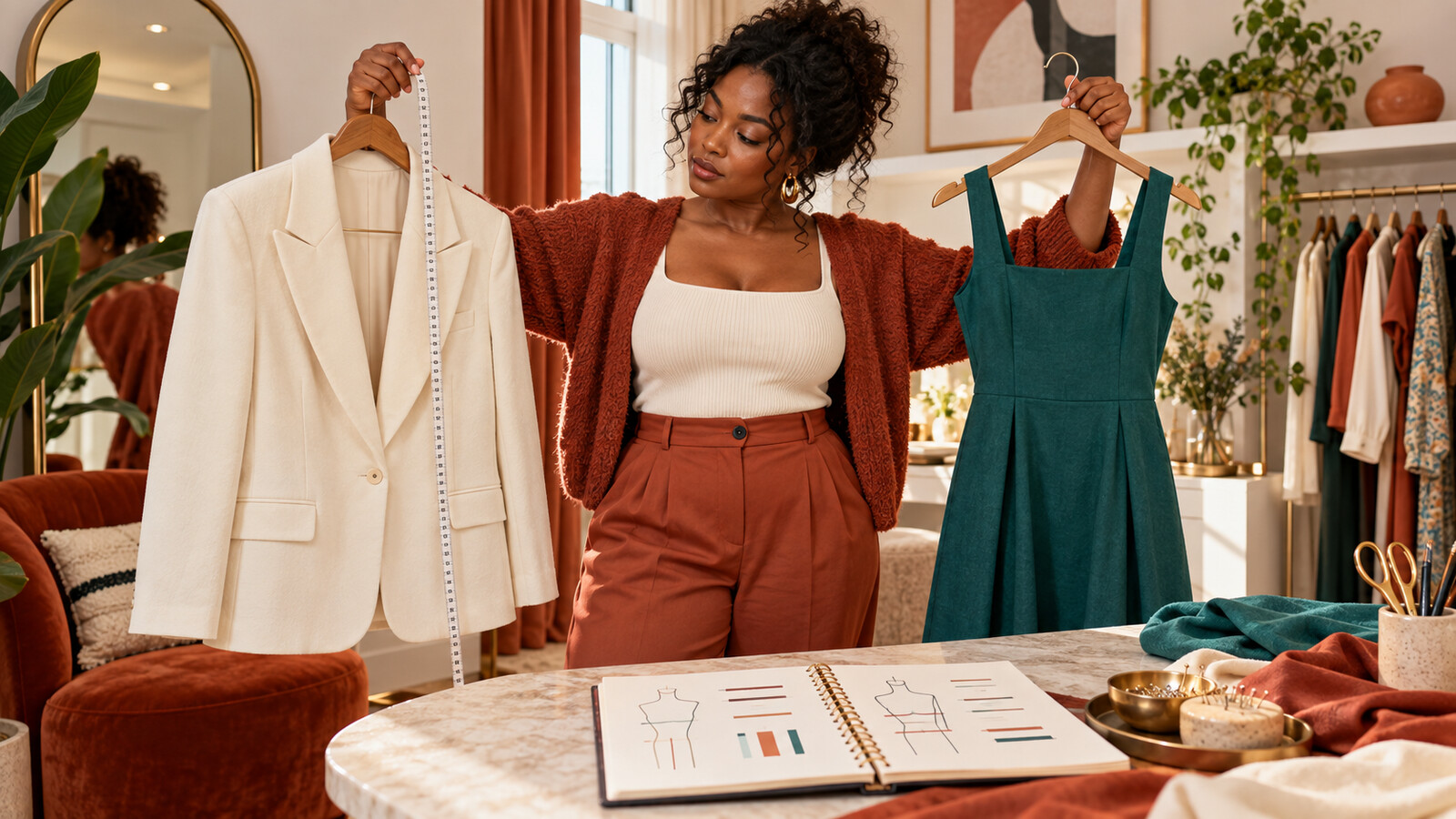
Featured image: original conceptual AI-generated illustration created for this article. It depicts a garment inspection and is not documentary evidence of a particular shop, product or person.
Discover more from Marychuks.com AI, Psychology, Business & CreativeVerse
Subscribe to get the latest posts sent to your email.
One thought on “A Fabric Name Is Not a Quality Guarantee: Audit Clothes Before You Buy”