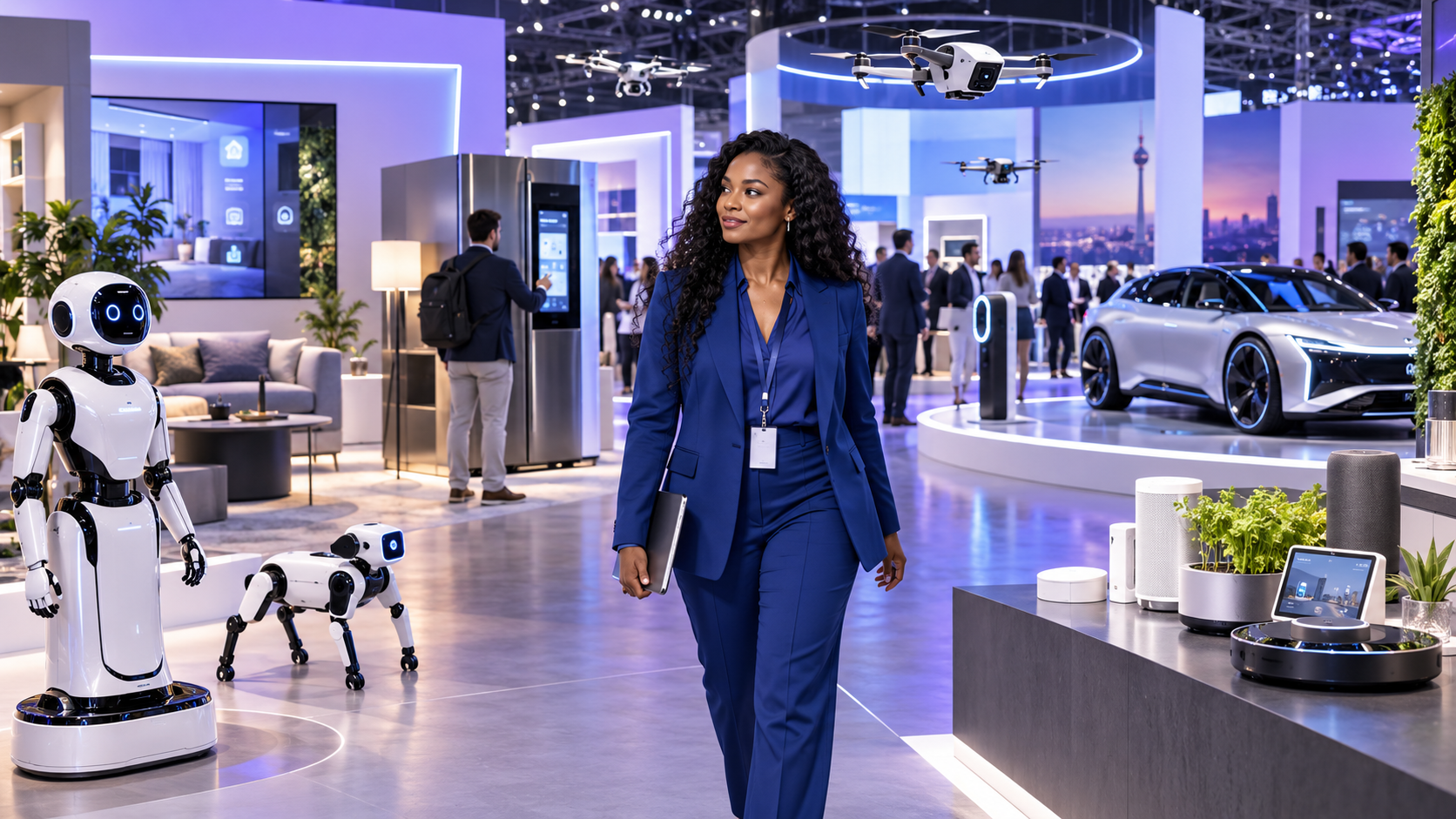

The next phase of artificial intelligence will not always announce itself as a chatbot. It will adjust a washing cycle, recognise spoiled food, guide a home robot, monitor sleep, manage energy or respond through an appliance that people do not think of as a computer.
IFA Berlin 2026 runs from 4 to 8 September and says more than 1,900 brands are participating across consumer electronics, robotics, smart living and future technology. The exhibition is a useful snapshot of AI’s movement from a screen-based service into everyday physical environments.
From conversation to ambient action
Chat interfaces made AI visible because the user asks and the system answers. Embedded AI can be less obvious. A device senses context, predicts a need and changes behaviour. That makes the experience convenient, but it also changes the safety question.
When a chatbot makes a weak suggestion, a user can ignore it. When an appliance, lock, camera or robot acts on a prediction, the consequence becomes physical. Reliability, permissions and graceful failure therefore matter as much as intelligence.
The strongest product categories
- Home robotics: machines moving from single-purpose cleaning towards manipulation, navigation and assistance.
- Smart appliances: energy optimisation, food management, maintenance prediction and personalised cycles.
- Health and wellbeing: sleep, movement and environmental sensing integrated into ordinary objects.
- Energy systems: devices coordinating consumption, storage and household generation.
- Mobility: connected vehicles, drones and smaller forms of intelligent transport.
- Creative hardware: cameras, displays and tools that apply AI during capture rather than only after upload.
Five questions before buying an AI device
- What works without the cloud? A useful product should explain what fails if servers or internet access disappear.
- Where does the data go? Voice, video, health and home data deserve different levels of protection.
- How long will updates last? An intelligent appliance can become a security liability after support ends.
- Can the user override it? Automation needs visible controls and a dependable manual mode.
- Does AI solve a real problem? A label is not value; compare the product with a simpler alternative.
Interoperability will decide convenience
A home containing ten intelligent devices can become less intelligent if every brand requires a separate account, app and subscription. Common standards, local control and permission management will decide whether smart living feels coherent or exhausting.
The user should not need to understand an entire technical stack to revoke microphone access or prevent a child’s data from leaving the home. Good design makes important boundaries understandable.
The robot question
IFA’s emphasis on robotics reflects a wider change. Better perception and language models allow robots to handle more varied environments. But a demonstration floor is controlled. Homes are filled with stairs, pets, toys, visitors, disability needs and cultural rules.
The gap between demonstration and dependable daily life is where human workflow design becomes essential. A capable model still needs permissions, stopping rules, escalation and feedback.
What businesses should learn
AI hardware creates recurring relationships after the sale: cloud costs, software updates, consumables, subscriptions and customer support. Companies should disclose those economics before purchase, while buyers should calculate total ownership rather than only the launch price.
The wider infrastructure also matters. Yesterday’s RAMageddon analysis showed how AI demand can affect consumer-device components. Physical AI connects the data centre, chip factory and family home in one supply chain.
AI becomes truly everyday when people stop noticing the model—but that is precisely when accountability must remain visible.
Turn new technology into useful routines
Sources and date note
This article reflects information available on 6 September 2026. See the official IFA Berlin 2026 site and its smart-home overview.
Discover more from Marychuks.com AI, Psychology, Business & CreativeVerse
Subscribe to get the latest posts sent to your email.