Words such as “natural”, “high protein” or “source of fibre” can be useful clues. They are not, by themselves, a verdict on the whole food. A better shopping habit is to inspect three sides of the pack: the front claim, the nutrition panel and the ingredients-and-allergen information.
A food packet has two jobs. It must provide regulated information, but it must also compete for attention. Those jobs meet on the front: appetising photography, reassuring colours and one or two prominent benefits. The result can be a “healthy halo”, where one positive feature shapes our judgement of everything else.
This does not mean every front-of-pack claim is deceptive. In the UK, nutrition and health claims are governed by rules, and a food business cannot claim that a product prevents, treats or cures a disease. The narrower point is that even a legitimate claim describes only the feature it names. “High protein” says something about protein; it does not automatically settle questions about salt, sugars, saturated fat, portion size or whether the product suits your needs.
Why the front of the pack is only the opening question
Most prepacked food must carry nutrition information. Front-of-pack traffic-light labels are voluntary, but they can make comparison quicker by showing whether a product is high, medium or low in fat, saturated fat, sugars and salt. Red does not mean “forbidden”; it signals that the nutrient is high and that frequency and portion deserve attention.
Start with the front, then refuse to stop there. A prominent benefit may be relevant, but the quieter information elsewhere on the packet supplies context. Treat the front claim as a question: what exactly is being claimed, and what has not been said?
Side one: read the claim precisely
- Name the claim. Is it about a nutrient, an ingredient, a production method or a health effect?
- Notice the unit. Does the claim apply per 100g, per portion or under a particular preparation instruction?
- Separate presence from balance. A useful nutrient can be present in a food that is also high in something you are trying to limit.
- Ignore the scenery. Leaves, fields, rustic paper and athletic imagery are design choices, not nutritional evidence.
This is the moment to avoid category mistakes. A cereal can contain wholegrain without being the lowest-sugar cereal. A snack can supply protein without being an everyday replacement for a varied meal. A lower-fat formulation can still differ substantially from neighbouring products in sugar, salt, energy or serving size.
Side two: compare the nutrition panel fairly
The back-of-pack table is most useful when you compare like with like. If front traffic lights are absent, the NHS advises using the figures per 100g or 100ml to compare similar products. That standard base prevents a manufacturer’s small suggested portion from making one packet look artificially lighter than another packet with a larger stated serving.
Use a two-pass comparison
- Compare per 100g or 100ml. Put two products from the same category side by side. Look at energy, fat, saturates, sugars and salt, then any nutrient that matters to your purpose, such as fibre or protein.
- Return to your realistic portion. Estimate what you will actually pour, spread, eat or drink. Multiply mentally where necessary. The standard comparison identifies the denser product; the real portion estimates what reaches your plate.
Both passes matter. Per-100g figures are excellent for comparison, but people do not always eat 100g. Per-portion figures are practical, but the printed portion may not resemble a normal serving in your household. A sensible decision uses both rather than choosing whichever produces the more flattering number.
Side three: inspect ingredients and allergens
The ingredients list explains what the product is made from and normally lists ingredients in descending order by weight. It can reveal whether the ingredient celebrated on the front is a major component or a modest addition. It also helps distinguish two products that have similar headline nutrition but very different formulations.
For someone with a food allergy, ingredient and allergen information is not a lifestyle comparison—it is a safety check. Allergens must be emphasised in the ingredients list, often in bold, but packaging and recipes can change. Check the specific packet every time and follow Food Standards Agency guidance. If an allergy, intolerance or medical condition shapes your diet, seek personalised advice from a suitably qualified professional.
The three rules that prevent misleading comparisons
1. Compare within the same job
Compare breakfast cereals with breakfast cereals, tomato sauces with tomato sauces and similar snacks with one another. Comparing unlike foods can produce technically correct numbers but an unhelpful decision. The question is usually not “which food has the least sugar in the entire shop?” but “which version of the thing I intend to buy fits my needs better?”
2. Keep the measurement base fixed
Do not compare one product per portion with another per 100g. Choose the common base first. This matters especially when packs use different serving suggestions or when one product is concentrated and another is ready to eat.
3. Put the portion back into everyday life
A spoonful of sauce, a bowl of cereal and a handful of nuts have different practical meanings. Consider how often you will eat the product, what accompanies it and whether the pack encourages repeated grazing. Nutrition data are measurements; the eating pattern supplies the context.
A 60-second three-sided check
- State the job. Breakfast, occasional treat, quick lunch component or staple?
- Read the front claim literally. What does it prove—and what does it leave open?
- Scan the traffic lights. Compare the overall pattern, not a single green box.
- Turn the pack. Compare similar products per 100g or 100ml.
- Estimate your portion. Use what you realistically consume, not automatically the smallest printed serving.
- Read ingredients and allergens. Check the first few ingredients and any information essential to your safety.
- Make a frequency decision. Is this an everyday choice, a sometimes choice or simply the best available option today?
This method does not divide the supermarket into morally “good” and “bad” foods. It makes the trade-offs visible. A product may still be worth buying because it is affordable, convenient, enjoyable or culturally important. The point is to choose it with the whole label in view.
What this check cannot tell you
A label cannot design your entire diet. It cannot know your health history, energy needs, allergies, budget, cooking facilities or relationship with food. Nor can a single product determine the quality of an overall eating pattern. Use labels to make better comparisons at the shelf, not to diagnose yourself or to turn meals into a constant arithmetic test.
The most useful conclusion is modest: attractive packaging is an invitation to investigate. Read the claim, standardise the comparison and restore the real portion. That small sequence turns a healthy halo into an informed choice.
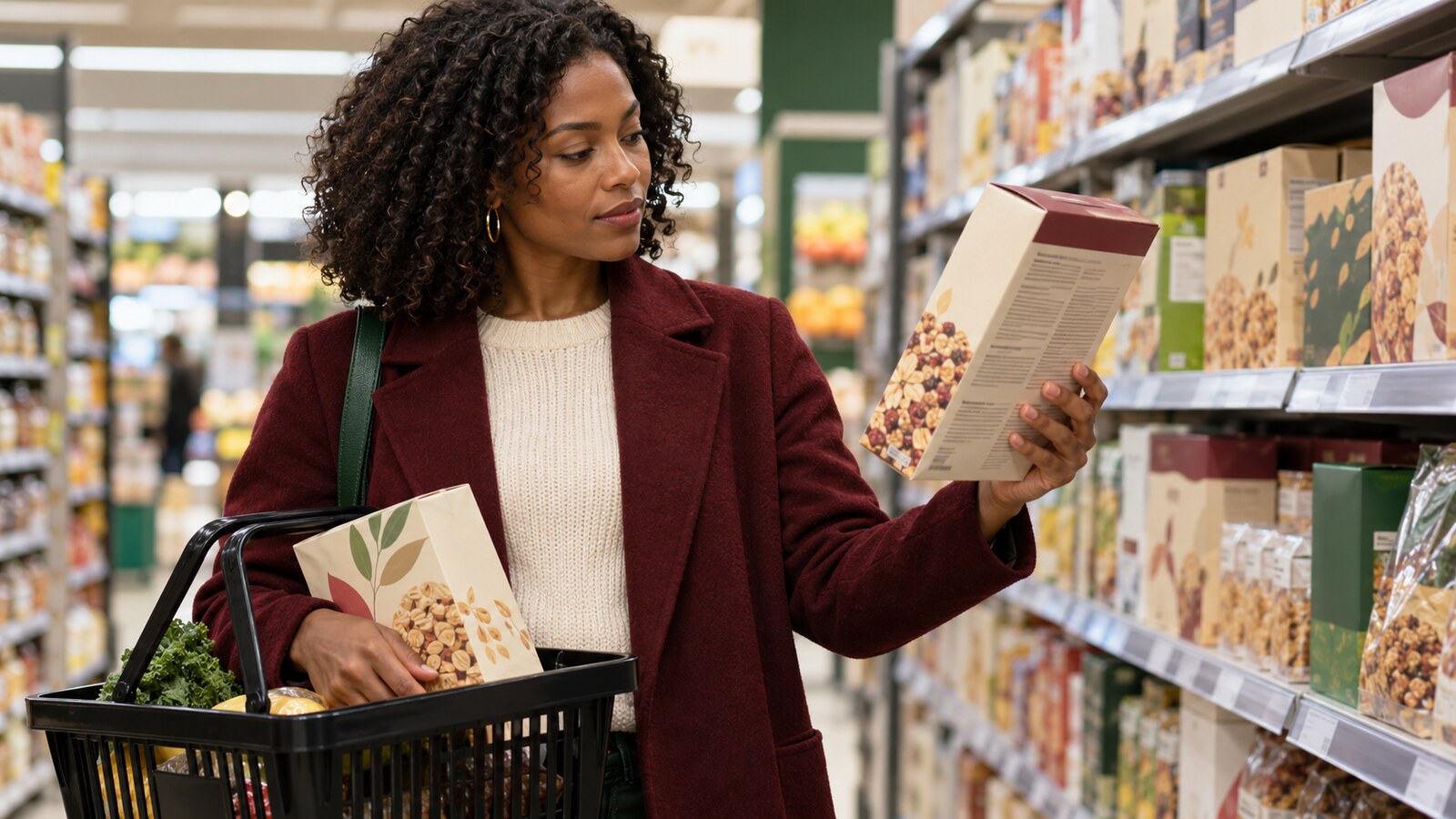
Featured image disclosure: conceptual AI-generated editorial illustration. It is not documentary evidence and does not depict or endorse a specific food product.
Sources and further guidance
- GOV.UK: Nutrition, health claims and supplement labelling
- GOV.UK: Food labelling—what you must show
- NHS: How to read food labels
- NHS: Healthier food swaps
- Food Standards Agency: Check the label
This article offers general food-label literacy, not medical or personalised dietetic advice.
Discover more from Marychuks.com AI, Psychology, Business & CreativeVerse
Subscribe to get the latest posts sent to your email.



One thought on “A Healthy Halo Is Not a Nutrition Label: Turn the Pack Around”