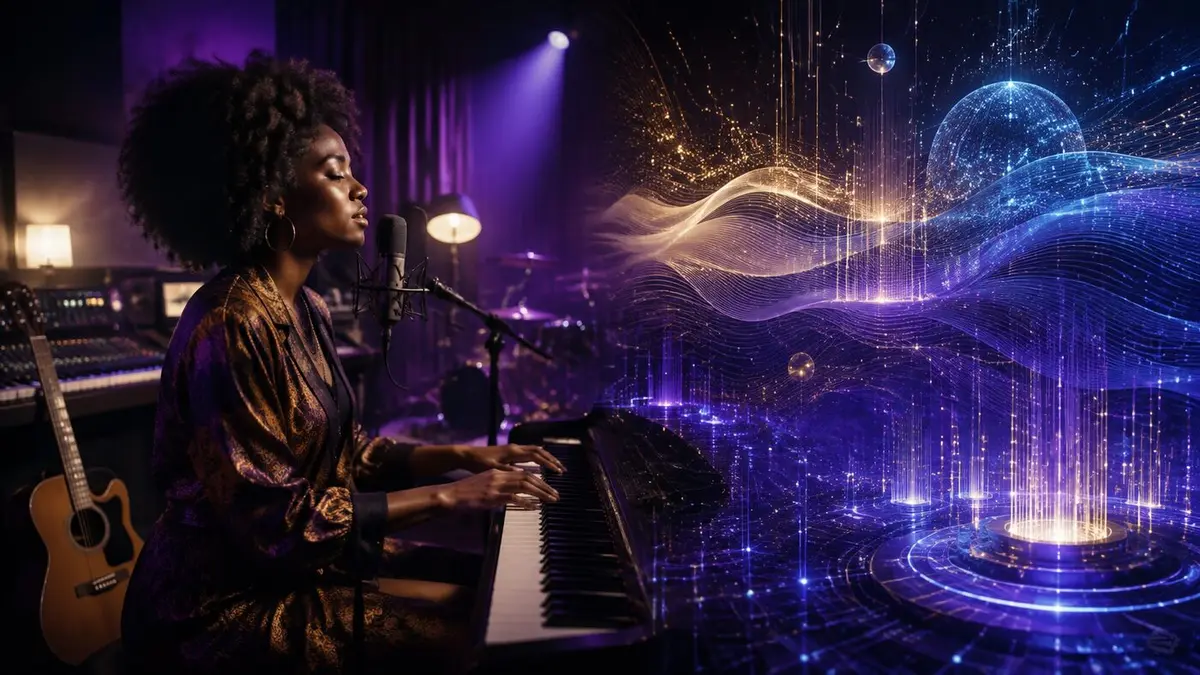
Australia’s recorded-music industry is drawing a new line around artificial intelligence: wholly AI-generated tracks will no longer qualify for the country’s official charts, while music that uses AI as an assisting tool may still be eligible.
The Australian Recording Industry Association’s decision arrives as synthetic music floods streaming services and forces the industry to answer a difficult question: how much human creative contribution should a recording need before it competes with human artists?
According to the Associated Press, ARIA will require chart-eligible releases to be substantially human-made. Human-written lyrics, lead vocals and primary instrumental performance remain important, while wholly machine-generated tracks are excluded.
This is not a total ban on AI music
The distinction matters. Digital music production has used software for decades: synthesisers, pitch correction, sampling, digital audio workstations and algorithmic effects are already normal creative tools.
The new policy is not simply “software bad, traditional instruments good.” It is an authorship rule. AI can assist a human-led creative process, but a track generated without meaningful human composition or performance cannot enter the same official competition.
Why charts need rules
- Volume: automated systems can produce enormous numbers of tracks at very low cost.
- Attribution: listeners may not know whether a credited performer actually sang or played.
- Training rights: artists question whether their work was used to build music models without consent.
- Competition: synthetic catalogues can occupy attention and recommendation space that human musicians depend on.
- Manipulation: automated production can combine with artificial streaming to distort popularity.
The hard cases remain
A clear ban on wholly generated music is easier than judging hybrid work. What if a human writes the melody but generates the voice? What if an AI proposes chords that a musician rearranges? What if a producer performs extensive editing after generation?
Future rules will need evidence of process rather than assumptions about sound. Labels and distributors may need creator declarations, records of licensed tools and clearer credits describing where AI contributed.
What this means for independent musicians
Creators who use AI should preserve their human authorship trail: lyric drafts, session files, vocal recordings, arrangement decisions and production notes. Transparency may become part of music distribution in the same way songwriter and producer credits already are.
The MaryChuks.com perspective
Creativity does not live only inside a tool or only inside a creator. It also appears in the choices, interpretation and emotional resonance connecting creator, technology and audience.
The strongest policy is therefore not a blanket rejection of AI. It is a defence of meaningful human agency, consent and truthful attribution. AI can be an instrument in the studio. The person directing the work must remain more than a name placed on automated output.
Discover more from Marychuks.com AI, Psychology, Business & CreativeVerse
Subscribe to get the latest posts sent to your email.