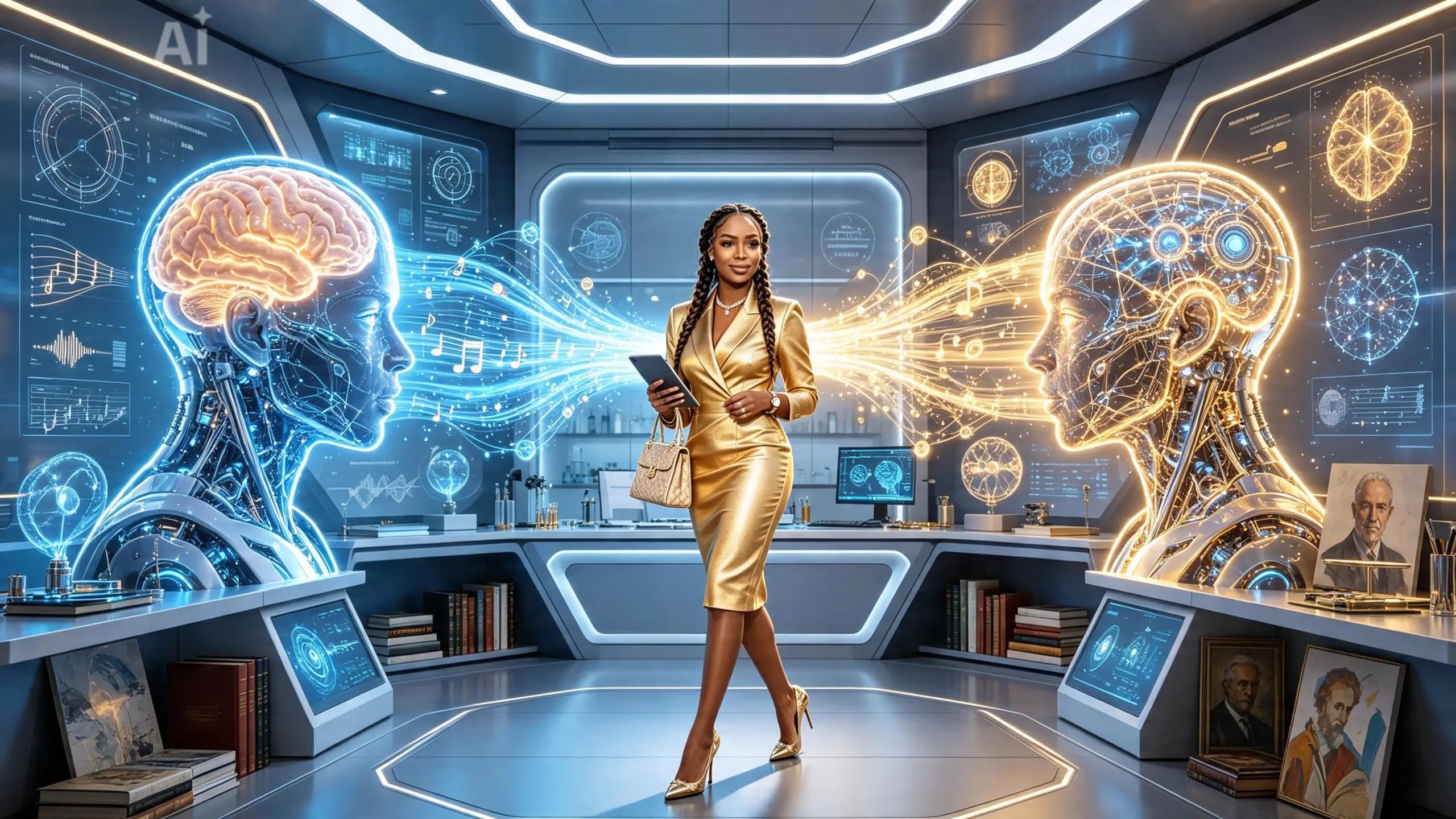
Does artificial intelligence make people more creative?
The tempting answer is simply yes.
The psychologically interesting answer is:
It depends on how we use it.
A growing body of 2026 research is examining something far more nuanced than whether AI can generate creative material.
Researchers are asking what happens to human creativity when AI enters the thinking process.
An August 2026 experimental study in New Ideas in Psychology investigated AI-assisted creativity among university students. The researchers examined not only AI versus non-AI conditions but also different interaction styles, including simple single-round interaction and deeper multi-round engagement. �
ScienceDirect
Other recent research has raised a similar theme: generative AI can support creativity, but psychological factors such as creative self-efficacy, engagement and patterns of dependency may influence the outcome. �
ScienceDirect +1
This distinction matters.
There Are Two Ways to Use AI
Imagine two creators.
Creator A asks:
“Give me ten ideas.”
The AI generates them.
The creator chooses one.
Finished.
Creator B starts with an original idea and asks:
“What assumptions am I making?”
Then:
“Give me three opposing interpretations.”
Then:
“What field outside my own might approach this differently?”
Then the creator synthesises those perspectives into something new.
Both used artificial intelligence.
But psychologically, they performed very different kinds of cognitive work.
Don’t Outsource Curiosity
One danger of powerful AI is that humans can become intellectually passive.
Why struggle with a question when an answer appears instantly?
Yet creative breakthroughs frequently emerge during the struggle.
Confusion forces exploration.
Contradictions encourage new perspectives.
Failure produces learning.
AI should therefore remove unnecessary friction without eliminating productive cognitive friction.
Use AI as a Challenger
Instead of constantly asking AI to provide answers, creators can ask it to challenge their thinking.
Try questions such as:
What am I overlooking?
What evidence would contradict this idea?
How would a psychologist approach this?
How would an engineer approach it?
What happens if the opposite assumption is true?
Now AI becomes less like an answer machine and more like an intellectual sparring partner.
Human Distinctiveness Becomes Valuable
As AI makes polished output easier to produce, perfectly fluent writing may become less impressive.
Distinctive thinking becomes more important.
Your lived experiences.
Your unusual combinations of ideas.
Your questions.
Your judgement.
Your willingness to explore something nobody else thought worth investigating.
Those are difficult to commoditise.
The Future of Creativity Is Collaborative
The most interesting future may therefore not be:
Human versus AI.
It may be:
Human curiosity × machine intelligence.
AI can dramatically expand the number of directions we explore.
But humans still decide which directions are meaningful.
The goal should never be to allow artificial intelligence to do all our thinking.
The opportunity is to use it to help us think further than we could before.
Research: New Ideas in Psychology — AI Assistance and Creativity Study�
Discover more from Marychuks.com AI, Psychology, Business & CreativeVerse
Subscribe to get the latest posts sent to your email.