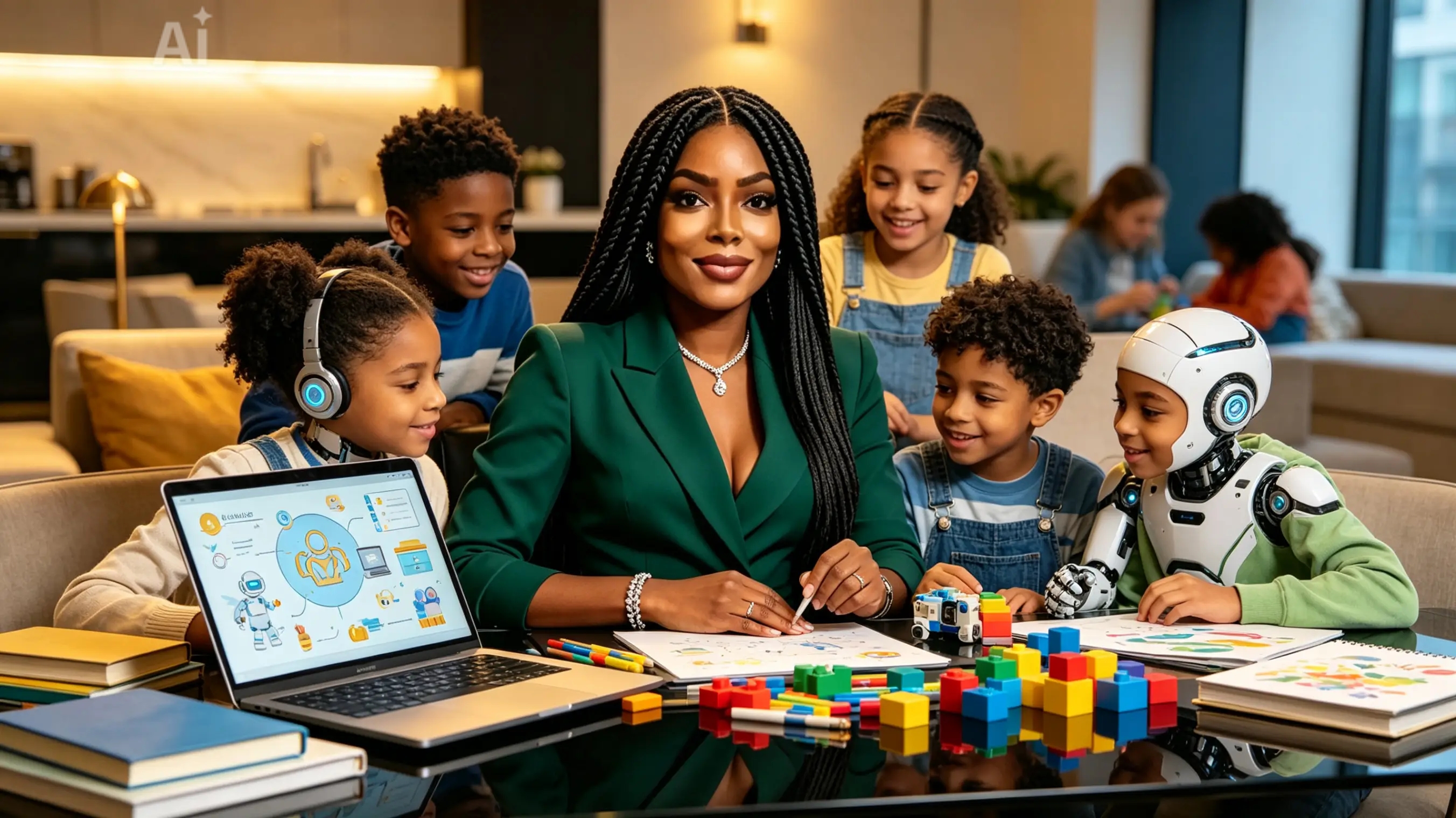
Artificial intelligence is becoming part of how children learn, communicate, create, and explore information.
Some parents feel excited about the opportunities. Others worry that AI could weaken children’s thinking, expose them to harmful content, or make future careers uncertain.
Both excitement and concern are understandable.
Children need preparation, but preparation should not be based entirely on fear. They need adults who can help them understand what AI is, what it can do, where it can fail, and how to use it responsibly.
The goal is not to raise children who depend on intelligent tools.
It is to raise thoughtful people who can use powerful technology without losing curiosity, creativity, empathy, or personal responsibility.
Explain AI in Simple Language
Children do not need a highly technical lecture before they can understand the basic idea.
You might explain AI as:
“A computer system that studies patterns in information and uses those patterns to create answers, suggestions, pictures, or predictions.”
Make it clear that AI does not know everything.
It can misunderstand questions, produce inaccurate answers, and imitate confidence. It does not have human experience, emotions, or moral judgement.
This early understanding prevents children from treating every computer-generated response as a fact.
Encourage Questions Before Answers
AI can provide answers almost instantly.
That convenience may reduce the time children spend wondering, experimenting, and solving problems independently.
Create a family habit of attempting first.
Before using AI, ask the child:
What do you already know?
What do you think the answer might be?
How could you investigate it?
Which part is confusing?
What evidence would make an answer believable?
After the child has made an effort, AI can become a tool for explanation, comparison, or feedback.
The child remains an active learner rather than a passive receiver.
Teach Children to Verify Information
Children should learn that a polished answer is not necessarily a correct answer.
Encourage them to compare AI responses with:
School textbooks
Trusted educational websites
Teachers
Library materials
Reliable reference books
Recognised experts
Turn verification into a game.
Ask a child to find three claims in an AI-generated response and check whether they are accurate.
This helps develop digital judgement that will remain useful beyond any individual platform.
Protect Personal Information
Children may speak casually to technology and reveal more than they realise.
Teach them not to share:
Their full home address
Passwords
Banking details
School timetables
Private family information
Personal identification numbers
Confidential photographs
Another person’s secrets
Their live location
Explain that entering information into a digital platform is different from writing privately in a notebook.
Parents should review the privacy settings and age requirements of tools before allowing children to use them.
Develop Skills AI Cannot Replace Easily
Children need technical awareness, but they also need deeply human abilities.
Encourage:
Creativity
Let children draw, write stories, build objects, make music and invent games without expecting every activity to become perfect.
Communication
Teach them to express ideas, listen carefully, ask respectful questions and manage disagreement.
Empathy
Help them consider how their words and decisions affect other people.
Critical Thinking
Encourage them to examine evidence, identify assumptions and consider alternative explanations.
Adaptability
Allow children to make mistakes, revise plans and try again.
Collaboration
Create opportunities for them to solve problems with other people rather than working only through screens.
Future success will involve more than knowing how to operate a tool. It will require knowing when, why and whether the tool should be used.
Make AI a Creative Partner
AI does not need to be limited to homework answers.
Families can use it for active projects.
For example, children might:
Generate ideas for a science experiment
Create questions for a family quiz
Plan a fictional city
Compare several solutions to an environmental problem
Develop characters for a story
Practise a new language
Explore how an invention might work
The child should make the major creative decisions.
AI can suggest possibilities, but the child chooses, changes and improves them.
Discuss Fairness and Bias
Children are capable of understanding fairness.
Explain that AI systems learn from human-created information, which may contain stereotypes or unequal representation.
Ask questions such as:
Does this image show different kinds of people?
Is the answer making assumptions about boys or girls?
Does it treat one culture as more important than another?
Who might be missing from this response?
Would this result be fair to everyone?
These conversations help children recognise that technology reflects human choices.
Set Clear Family Rules
Create a simple household agreement for AI use.
It might include:
We attempt schoolwork before asking AI.
We do not submit AI-generated work as our own.
We verify important information.
We do not enter private family details.
We tell an adult when something online feels frightening or confusing.
We use technology at agreed times.
We remain responsible for the work we create.
Rules should be explained rather than imposed without discussion.
Children are more likely to follow boundaries when they understand the reason behind them.
Model Responsible Behaviour
Children observe how adults use technology.
A parent who checks every alert during conversations may struggle to teach digital attention.
A parent who shares private family information carelessly may weaken lessons about privacy.
Demonstrate the habits you want children to develop.
Put the phone away during important conversations. Verify surprising claims before sharing them. Admit when you do not know something. Use technology for a purpose and step away when the task is complete.
Avoid Predicting a Frightening Future
Children do not need to carry adult anxiety about every possible technological change.
Statements such as “AI will take every job” can create helplessness.
Use balanced language.
Some jobs may change. New roles may appear. People will need to keep learning and adapting.
Help children focus on what they can develop today: curiosity, knowledge, practical skills, confidence and responsible judgement.
Final Thoughts
Preparing children for an AI-powered future does not require turning childhood into technical training.
Children still need play, nature, books, conversation, friendship, creativity and time away from screens.
Teach them how AI works, encourage them to question its answers, and protect their personal information.
Most importantly, help them understand that technology should serve human values.
The future will not belong only to children who know how to use artificial intelligence.
It will belong to those who know how to think, create, and care while using it.
Discover more from Marychuks.com AI, Psychology, Business & CreativeVerse
Subscribe to get the latest posts sent to your email.