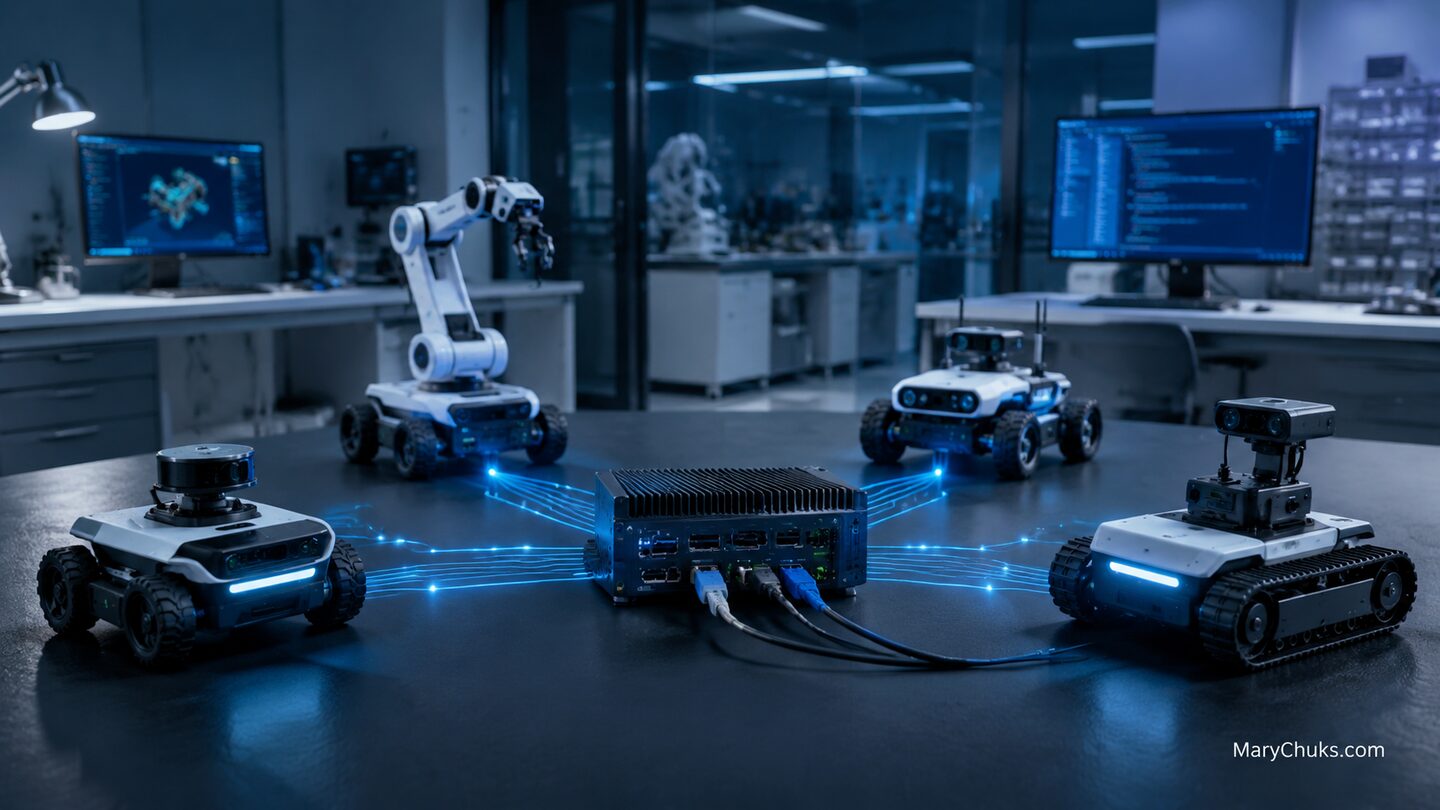
The next wave of artificial intelligence may not live only inside data centres. It may sit inside cameras, drones, factory machines and small robots operating at the edge.
Why This Matters
NVIDIA has announced Jetson Orin Nano 2, describing it as a new entry-level robotics computer designed to bring frontier-class generative AI performance to millions of developers.
The Bigger Shift
Edge computing changes the relationship between a machine and the cloud. A robot that can process important information locally may respond faster, continue operating with limited connectivity and reduce the amount of sensitive data it must transmit elsewhere.
What to Watch
This is especially important for physical AI. Machines need to interpret visual information, understand instructions, plan actions and react to changing environments in real time. Latency that is acceptable for a chatbot can be dangerous for a moving robot.
A Practical Perspective
Lower-cost developer hardware can also widen participation. Universities, startups and independent builders gain a route into robotics experimentation without immediately needing the budget of a major laboratory.
Final Thoughts
The real test will be what developers build—and how safely those systems are deployed. More intelligence at the edge creates opportunity, but it also places capable autonomous technology in more environments. Physical AI needs permissions, monitoring and human override designed from the beginning.
Source and Further Reading
Read the official announcement.
Discover more from Marychuks.com AI, Psychology, Business & CreativeVerse
Subscribe to get the latest posts sent to your email.