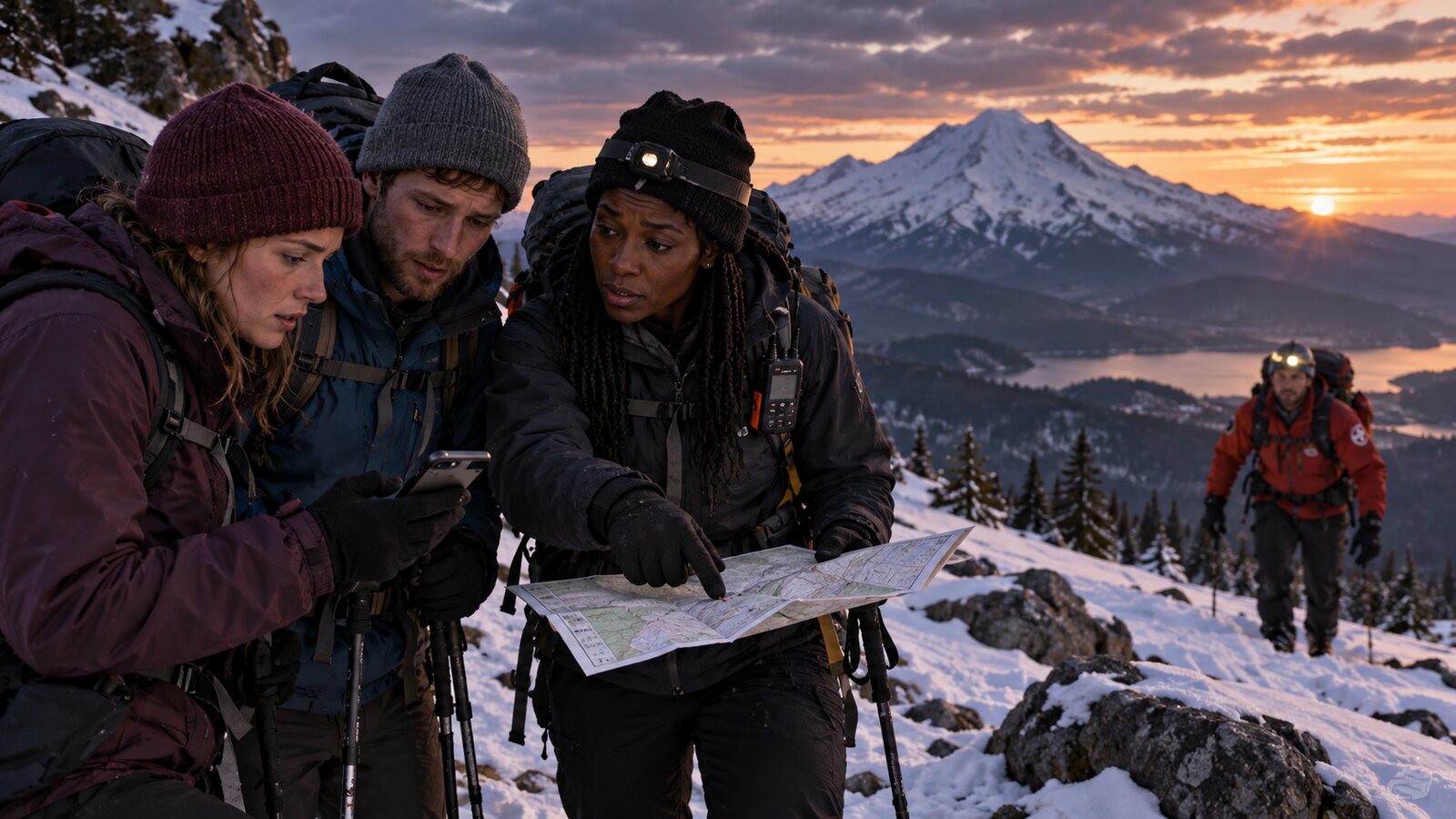

AI should be an assistant, not the final authority, when someone’s safety depends on the answer. The rescue of three novice hikers from Mount Shasta is a sharp reminder that a fluent plan on a screen is not the same thing as mountain knowledge, live conditions or a safe decision.
According to reporting based on the Siskiyou County Sheriff’s Office account, the hikers from Roseville relied heavily on Google Gemini while preparing their climb. What they expected to take roughly eight hours stretched far beyond that estimate. They reached the summit at about 7pm—many hours after the commonly advised noon turnaround—and then descended into the wrong canyon as daylight disappeared.
What reportedly went wrong
The technology was only one part of a larger chain. A phone died. A backup charger failed. One hiker suffered a knee injury. The group spent the night at roughly 11,000 feet with inadequate food, water, warm clothing and shelter. High winds prevented helicopter extraction, so rescuers reached them the following morning and helped them descend on foot.
Officials did not reduce the incident to a simple claim that “AI caused the rescue”. Human choices mattered: the hikers lacked sufficient high-altitude experience, passed a prudent turnaround time, had weak redundancy and continued when conditions were already narrowing their options. That distinction matters because responsible AI criticism should be precise.
Why confident answers feel safer than they are
Generative AI is designed to produce a useful response from the information it has. It does not stand on the mountain, feel the wind, see cloud building over a ridge or know whether a climber’s legs are deteriorating. It can also combine general information into a route that sounds coherent while missing local hazards, seasonal closures or the user’s true level of fitness.
This is a classic automation-bias problem: once a system gives us a clear recommendation, we may stop searching for disconfirming evidence. The more polished the answer, the easier it is to mistake fluency for authority. That is why my earlier argument in Teach Both, Test Both applies beyond education: people need to use AI and test it.
A practical safety protocol for AI-assisted planning
- Use AI for questions, not permission. Ask it to identify risks and planning factors, but do not let it make the go/no-go decision.
- Verify with primary local sources. Check ranger stations, land managers, weather services, avalanche centres and current trail notices.
- Build independent navigation. Carry an offline map, compass, downloaded route and the skill to use them when the phone fails.
- Create hard turnaround rules. Fix a time, weather threshold and physical-condition threshold before starting—and obey them.
- Add redundancy. Treat batteries, clothing, food, water, lighting and communication as safety systems, not optional comfort.
- Tell another human. Leave your route, return time and emergency plan with someone who will raise the alarm.
The lesson for every safety-critical use of AI
The same principle applies to medical decisions, financial transfers, driving, electrical work and workplace safety. An AI system can organise information and surface questions. A qualified human must still consider context, take responsibility and stop when the evidence changes.
MaryChuks.com has argued that an agent is not finished when it produces an answer; the work is complete only after verification. The same publishing contract described in A Blogging Agent Is Not Finished When WordPress Says “Published” becomes a survival contract in the physical world. And as Human Feedback Is Food for AI explains, better outcomes come from feedback loops—not unquestioned obedience.
Conclusion
The Mount Shasta rescue should not become a reason to reject AI. It should become a reason to use AI with discipline. The tool can widen our preparation, but it cannot absorb the cold, carry the injured person or accept responsibility for the decision. In high-stakes situations, the final authority must remain informed human judgement.
Sources and further reading
Discover more from Marychuks.com AI, Psychology, Business & CreativeVerse
Subscribe to get the latest posts sent to your email.



One thought on “Mount Shasta AI Rescue: Why AI Must Be an Assistant, Not the Final Authority in Safety-Critical Decisions”