A politician barred from contesting Brazil’s 2026 election has returned to the campaign stage—digitally.
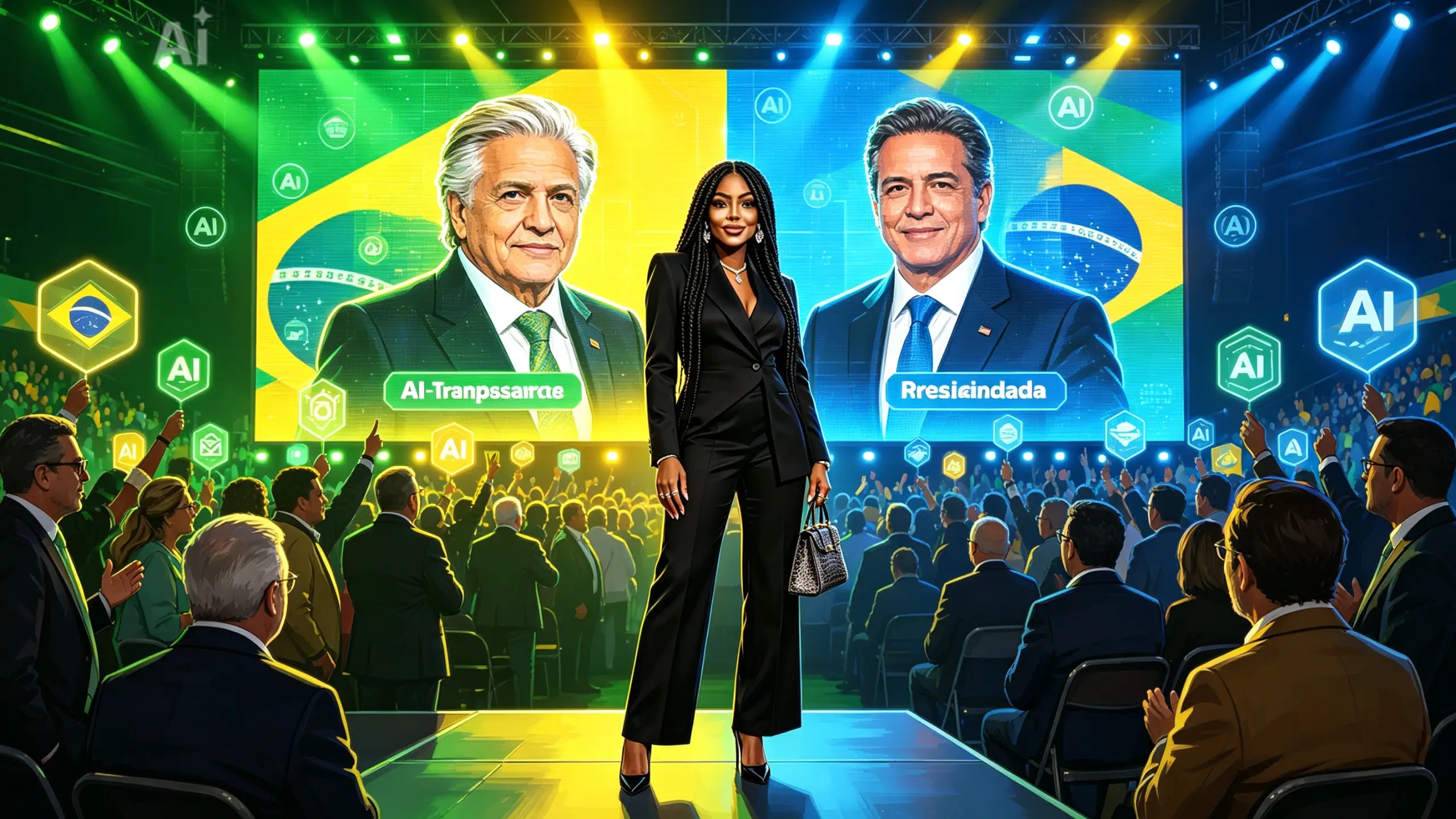
Former Brazilian President Jair Bolsonaro appeared through an artificial-intelligence-generated avatar during the presidential campaign launch of his son, Senator Flávio Bolsonaro
The synthetic video showed the former president addressing supporters even though he is currently barred from seeking office and reportedly remains under house arrest following his conviction related to an attempt to overturn Brazil’s 2022 election result.
The unusual appearance has triggered a legal and political argument: can a politician restricted in the physical world continue exercising influence through an AI-generated version of himself?
Reuters reported that the avatar appeared during Flávio Bolsonaro’s campaign launch and was openly identified as AI-generated. A coalition of left-leaning parties subsequently asked Brazil’s electoral court to investigate whether the video breached election rules or restrictions affecting Jair Bolsonaro. �
Reuters
What Did the AI Avatar Do?
The digital Bolsonaro delivered a political message supporting his son’s campaign.
The avatar was designed to resemble the former president and reproduce his appearance and manner of speaking. It was not presented as genuine live footage; the campaign disclosed that artificial intelligence had been used.
That transparency is central to the campaign’s defence.
Flávio Bolsonaro’s legal representatives argue that the video should not be classified as a deceptive deepfake because viewers were told that the figure was synthetic.
Critics disagree.
They argue that disclosure does not necessarily settle whether the avatar allowed Jair Bolsonaro’s political influence to bypass restrictions that apply to the real person. �
Reuters
Is a Labelled AI Avatar Still a Deepfake?
The term deepfake is often used for synthetic media that falsely presents someone as saying or doing something.
However, political avatars create a more complicated category.
The person may approve the message.
The video may be clearly labelled.
The words may accurately represent the person’s political views.
Yet the synthetic figure can still create the psychological impression that the person is present, active, and campaigning.
The ethical issue is, therefore, larger than whether viewers were tricked.
It concerns whether AI can reproduce political presence when the individual’s real-world participation has been legally restricted.
Why the Video Went Viral
The story contains a striking contradiction:
The politician could not appear normally, but his artificial version could.
That immediately raised questions extending far beyond Brazil.
Could an imprisoned politician campaign through an avatar?
Could a seriously ill candidate continue appearing through AI?
Could a deceased leader be digitally revived to endorse a political successor?
Could political parties create unlimited speeches using the likeness of a popular figure?
Artificial intelligence separates physical presence from political communication. Election law was largely written before that separation became technologically easy.
The Election-Law Question
Brazil has introduced rules governing artificial intelligence in campaigning, including restrictions on deceptive synthetic media.
However, Reuters reported that legal specialists disagree about whether Bolsonaro himself could face consequences if he neither created nor formally authorised the video.
The president of Brazil’s electoral court has said AI may be used in campaigning provided it is not employed to harm others, but the court had not issued a final ruling on this specific avatar at the time of reporting. �
Reuters
This leaves several unresolved questions:
Who legally “speaks” when an avatar delivers a political message?
Is the creator responsible, the candidate, or the person depicted?
Does visible disclosure make every political avatar acceptable?
Can AI media violate the spirit of a restriction without violating its exact wording?
How should platforms preserve evidence showing who authorised a synthetic video?
Mary Chuks’ Perspective
Political identity is not merely a face and a voice.
It carries authority, history, loyalty, and emotional meaning.
An AI avatar can activate those associations even when viewers know it is artificial.
That means disclosure is necessary—but it may not always be sufficient.
Election rules must consider the psychological effect of simulated presence, not only whether the pixels are technically fake.
The central question should be:
Is AI helping a candidate communicate transparently original objective helping political power escape accountability?
Practical Takeaways
Voters should check:
Who created and authorised a political AI video?
Whether the synthetic nature is clearly disclosed.
Whether the person depicted actually approved the words.
Whether the complete message is available from an official campaign source.
Whether courts or electoral authorities have questioned its legality.
Conclusion
Bolsonaro’s AI avatar may be labelled, but the controversy it created is very real.
The incident demonstrates that future elections will not only debate what politicians are allowed to say.
They will also debate whether politicians must be physically, legally, or even biologically present to say it.
Original Sources and Further Reading
Original international report: Reuters, “Brazil’s Bolsonaro Is Barred From This Year’s Election. Can His AI Avatar Campaign Instead?”, published 28 July 2026. �
Reuters +1
Discover more from Marychuks.com AI, Psychology, Business & CreativeVerse
Subscribe to get the latest posts sent to your email.