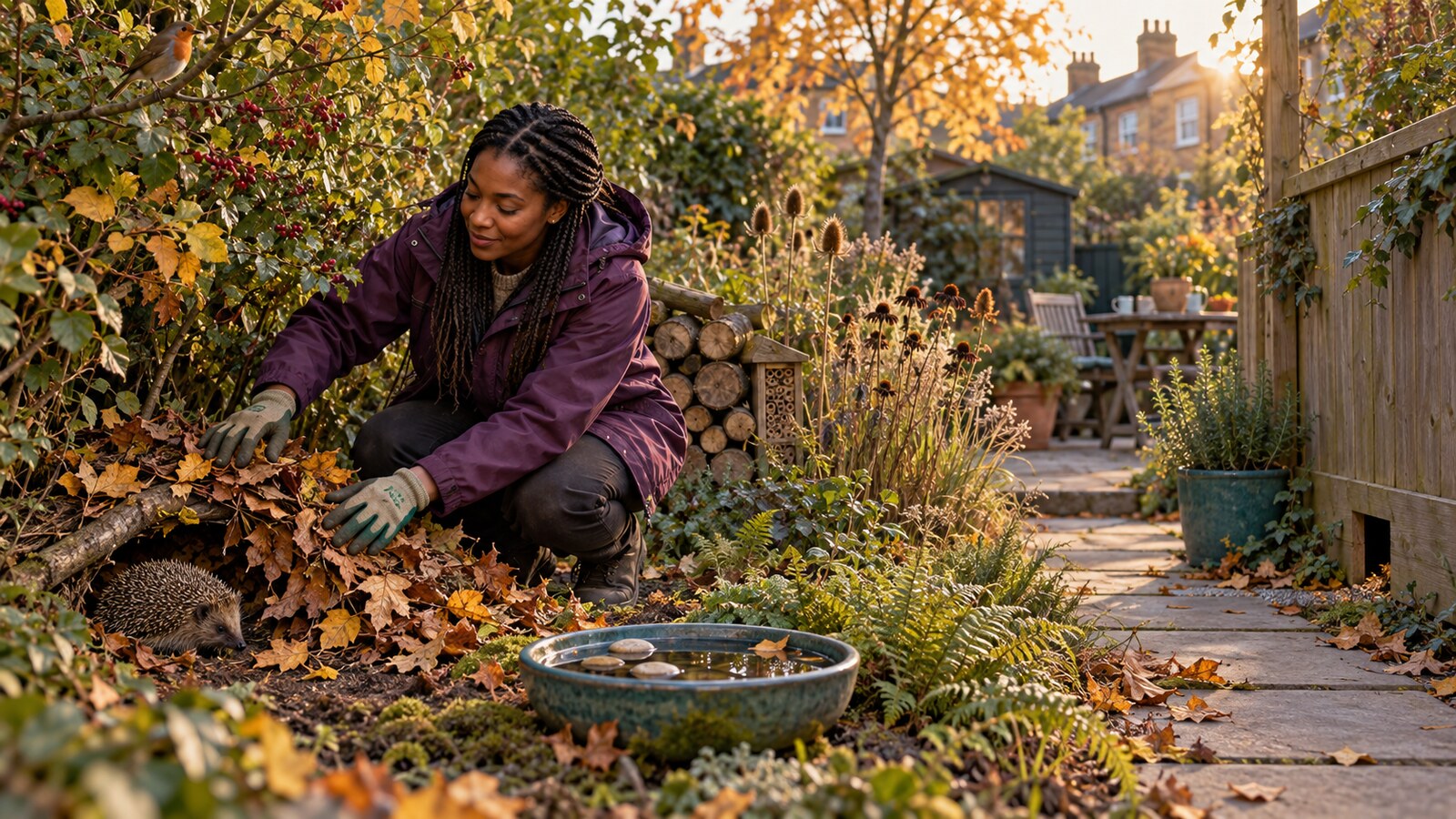
Featured image: conceptual AI-generated illustration created for this article. It shows a wildlife-friendly autumn garden and is not documentary evidence.
An autumn garden can look untidy to a person and perfectly organised to wildlife. Fallen leaves insulate the soil. Hollow stems offer hiding places. Seed heads hold food. A gap beneath a fence can turn several isolated gardens into one usable habitat.
That does not mean abandoning the garden until spring. Wet leaves on steps can be slippery; blocked drains can cause damage; diseased plant material may need removing; and hidden animals can be injured by strimmers, forks or bonfires. The useful alternative to “tidy everything” or “touch nothing” is to map the space before you clear it.
A winter refuge map divides the garden into three kinds of zone: places people must keep safe and functional, places wildlife can use with minimal disturbance, and connections that let animals move between resources. The result can look intentional while doing far more ecological work than a garden stripped back to bare soil.
First, protect the human-use zone
Begin with the surfaces and systems that must work through wet and freezing weather. Clear entrances, steps, narrow paths, ramps, drains, vents and access to bins. Move leaves from these areas with a rake or brush rather than treating every fallen leaf as waste.
This distinction matters. Wildlife-friendly gardening should not create avoidable fall risks, obstruct wheelchair access or leave a household unable to reach essential areas. A clear route also makes it easier to keep people out of the quieter refuge zones later.
As you work, pause before moving dense piles, pots, boards or old sacks. Check with your eyes first, then lift from one edge rather than driving a tool blindly into the material. If an animal is already nesting or resting, replace the cover gently and leave the area undisturbed.
Turn leaves into shelter and soil cover
Leaves removed from paths do not have to leave the garden. Move them beneath established hedges, around robust shrubs or into a contained leaf pile in a quiet corner. Kept off delicate crowns and away from house ventilation, they can form a protective layer while decomposing.
The Royal Horticultural Society’s wildlife-gardening guidance encourages creating a range of habitats rather than relying on a single feature. Leaf litter, compost, long vegetation, water and woody material support different parts of a garden food web. The key is variety and placement—not one enormous heap in the middle of the lawn.
A simple leaf refuge needs three qualities:
- Quiet: place it where feet, pets and routine maintenance will not repeatedly disturb it.
- Structure: tuck leaves loosely among twigs or beneath a hedge so wind does not immediately scatter them.
- Drainage: avoid creating a stagnant mound against timber, walls, vents or vulnerable plants.
Delay the cut, but inspect for disease
Standing stems and seed heads can provide food, shelter and structure through winter. Leave sound material in selected borders, especially away from the main path. Cutting everything to ground level in one session removes many small hiding places at once.
Selective delay is not the same as ignoring plant health. Remove clearly diseased material where established horticultural guidance recommends it, and do not add persistent disease problems to an ordinary home compost heap. Keep invasive plants under control. Wildlife value is strongest when the garden remains healthy enough to provide habitat next year.
Mark a few areas as “spring cut” zones. A small label or a note on your phone can stop another member of the household clearing them by mistake. When growth restarts and temperatures are consistently milder, inspect stems before cutting and remove material in stages.
Build a log refuge that will stay put
Untreated logs, branches and twigs can create cool, damp spaces for fungi and invertebrates. Stack them low in contact with soil, using pieces large enough not to blow around. Choose timber already available from safe garden work; there is no need to strip living woodland or import unknown material.
Do not place a loose pile where it could collapse onto a child, block a fire exit or become a trip hazard. Avoid treated, painted or chemically contaminated wood. A compact pile behind a border or beside a hedge is usually more useful—and easier to protect—than decorative logs placed in an exposed paved area.
Keep water shallow, clean and escapable
Wildlife needs water in cold weather as well as summer. A shallow dish can help when it is maintained properly. Add stones or a rough edge so small animals can climb out, place it where you can see and clean it, and refresh the water regularly. During freezing weather, check it rather than assuming yesterday’s supply remains accessible.
If you have a pond, create an exit route with a gently sloping edge, securely fixed ramp or rough stones. The RSPB’s garden-habitat guidance treats water, food, shelter and nesting opportunities as complementary parts of a nature-friendly space. One feature cannot compensate for an obvious hazard elsewhere.
Map movement, not only destinations
A perfect refuge is less useful if an animal cannot reach it. Look at the boundaries from ground level. Solid fences, netting, steep-sided drains and tightly enclosed decking can interrupt movement or create traps.
Where ownership and safety allow, a small ground-level passage between neighbouring gardens can improve connectivity. Specialist initiative Hedgehog Street, run by the British Hedgehog Preservation Society and People’s Trust for Endangered Species, recommends linking gardens because hedgehogs need to move across wider areas to find food, shelter and mates.
Do not cut through a boundary without the owner’s permission, and check for pipes, cables and structural risks first. If a gap is unsuitable, focus on keeping existing routes open and removing loose netting that could entangle wildlife.
Treat machinery and fire as high-risk events
Strimmers, mowers and forks move faster than hidden animals can escape. Walk the area first, part long vegetation carefully and inspect beneath the cutting line. Work from the open area towards cover so wildlife has an escape direction rather than being driven into a shrinking island.
A bonfire pile can look like ready-made shelter. The safest practice is to build it as close as possible to lighting time, using material stored elsewhere, rather than leaving an attractive pile in place for days or weeks. If a pile has stood, dismantle and rebuild it carefully before lighting; looking only at the outside is not a reliable check. Never light a bonfire with uncertainty about what is inside.
Do not turn feeding into crowding
Supplementary feeding can help some garden wildlife, but concentrated food can also concentrate droppings and disease. Follow current species-specific advice, offer appropriate food in manageable amounts, provide fresh water and clean feeding equipment regularly. Stop and seek expert guidance if you see sick or dead animals.
Natural resources are the foundation: varied plants, seeds, berries, invertebrate habitat, clean water and connected cover. Feeders are an addition, not a substitute for the habitat removed by excessive tidying.
A 20-minute winter refuge map
- Sketch the garden boundary, doors, paths, steps, drains, shed and seating area.
- Mark the routes that must stay clear for people, deliveries and emergency access.
- Choose one quiet leaf zone, one standing-stem zone and one stable woody refuge.
- Mark water, then add an exit route and cleaning reminder.
- Trace possible wildlife movement through hedges, fence gaps and borders.
- Circle hazards: netting, deep containers, machinery areas, chemicals and bonfire material.
- Tell everyone who uses the garden which areas are protected until spring.
Intentional untidiness is still management
A wildlife-friendly garden is not measured by how neglected it looks. It is measured by whether living things can find connected food, water, shelter and safe passage without creating unreasonable risks for the people who share the space.
Clear the step. Protect the drain. Remove genuine disease and hazards. Then move useful material into deliberate refuge zones instead of exporting every leaf, stem and branch. Autumn tidying becomes less about erasing the season and more about deciding what the garden should carry safely into winter.
Discover more from Marychuks.com AI, Psychology, Business & CreativeVerse
Subscribe to get the latest posts sent to your email.