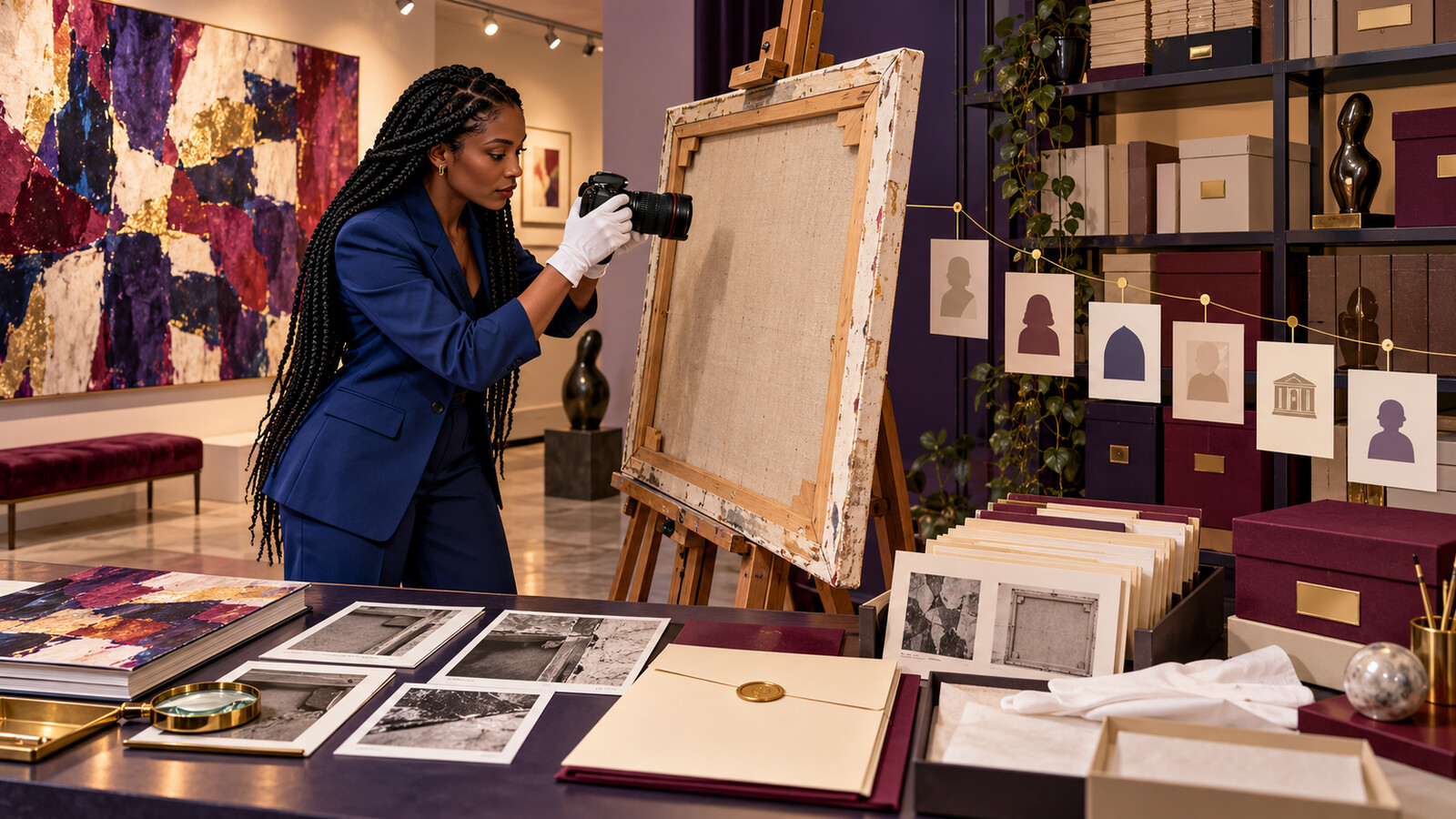
“Made with AI” tells us that a tool was involved. It does not explain who conceived the work, which expressive decisions were human, what was generated, or how the final piece emerged. Artists need a more precise record: an authorship ledger.
The real question is not whether AI touched the work
Creative tools have always shaped what can be made. Cameras changed painting. Sampling changed music. Layers, filters and digital brushes changed illustration. Generative AI creates a sharper challenge because it can produce substantial expressive material in response to instructions, sometimes adding details the user never specified.
That means a simple tool list cannot describe authorship. Two artists may use the same model but contribute very different levels of conception, selection, arrangement, drawing, compositing and revision. One may accept a first output. Another may begin with original sketches, generate components, reject dozens of variants, repaint major sections and construct a final composition manually.
The visible result may not reveal that difference. A process record can.
What an authorship ledger records
An authorship ledger is a dated creative log that connects intention to execution. It is not a claim that every recorded contribution automatically receives legal protection. Nor is it a substitute for professional legal advice. Its purpose is practical: to preserve evidence of how a work was conceived and made.
- Concept: the theme, message, constraints and audience defined by the artist.
- Human inputs: sketches, photographs, writing, layouts, palettes or other original source material.
- Tool role: what each AI or non-AI tool was asked to do.
- Selection: which outputs were retained or rejected, and why.
- Transformation: repainting, compositing, cropping, masking, typography, colour work and other revisions.
- Final arrangement: how the chosen elements were coordinated into the published work.
- Disclosure: the label given to viewers, clients or publishers.
Why human control matters
The US Copyright Office’s January 2025 report on copyrightability concluded that AI used to assist rather than replace human creativity does not remove copyright protection from human-authored expression. It also said purely AI-generated material, or material without sufficient human control over expressive elements, is not protected under US copyright law. Individual cases still depend on their facts.
The report identifies several potentially important forms of human contribution: expressive inputs created by the person, creative modification of generated material, and the selection, coordination or arrangement of elements. It also says that, with generally available technology considered in the report, prompts alone do not necessarily provide sufficient control.
This is a US legal analysis, not a universal rule. The UK has its own copyright framework and has been actively examining how copyright and AI should interact. The UK Government’s copyright and AI consultation illustrates that policy remains contested and jurisdiction-specific. Artists selling internationally should avoid assuming that one country’s position settles every market.
A seven-stage ledger artists can actually use
1. Date the creative brief
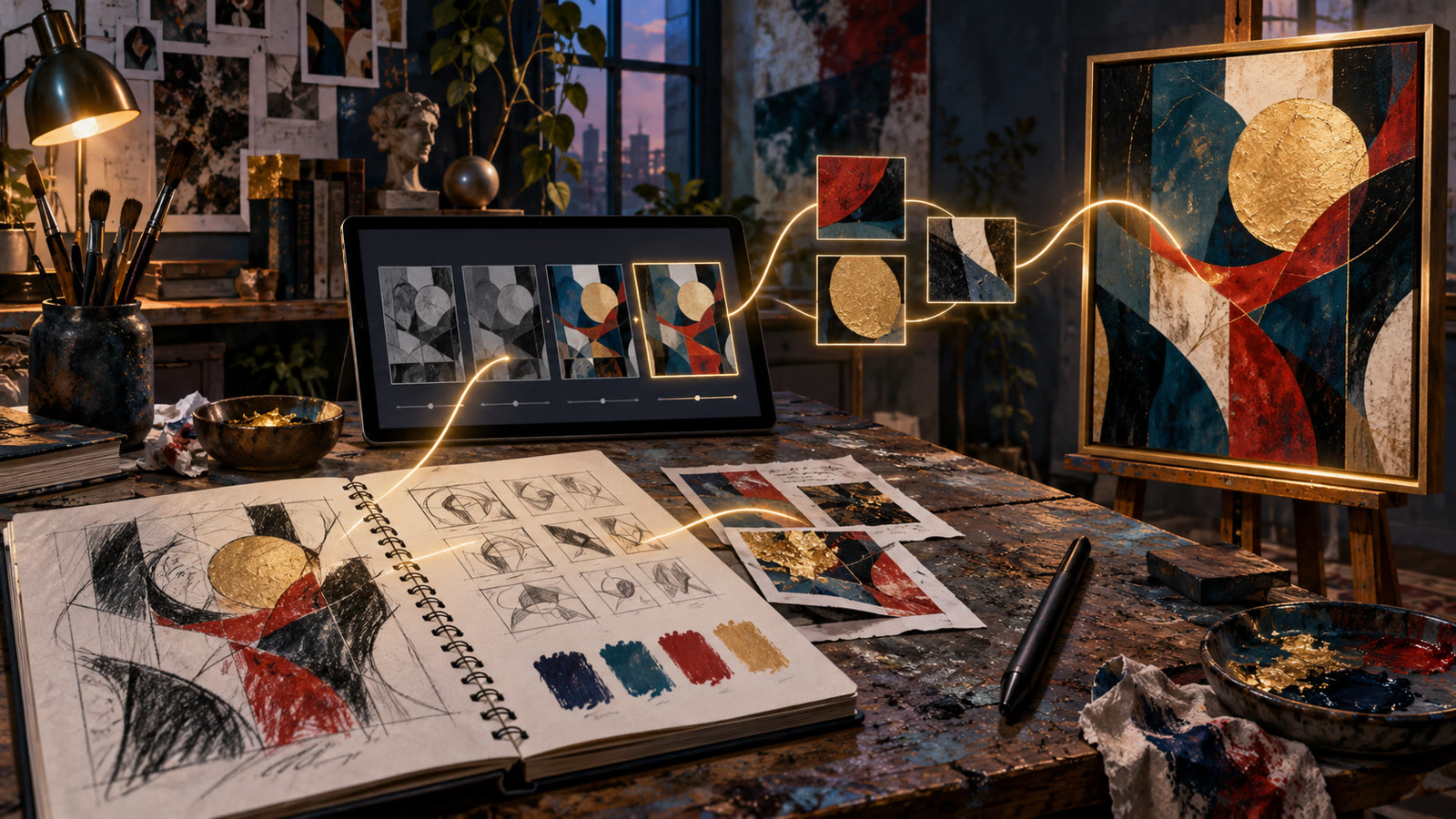
Begin before generation. Write a short statement of the work’s purpose, mood, subject, intended audience and non-negotiable choices. Attach early thumbnails or notes. This establishes that the artistic direction existed before the system proposed an image.
2. Preserve your expressive inputs
Keep the sketches, photographs, textures, poems or layouts you created and supplied. Record whether each input is your own, licensed, commissioned or in the public domain. Ownership and permission are separate questions from artistic quality.
3. Capture meaningful iterations
You do not need to archive every failed click. Save the stages that show a change in direction: a new composition, altered lighting, different subject relationship or rejected visual idea. Include prompts where useful, but do not treat prompt length as a reliable measure of authorship.
4. Explain selection decisions
Selection becomes more informative when the reason is recorded. “Version 12 retained because the asymmetrical balance supports the theme; figures removed because they weakened the focal point” says more than “best output chosen”. It connects judgement to expressive intention.
5. Record manual transformation
List significant edits rather than vague claims of “touching up”. Note which regions were redrawn, which elements were combined, how colours changed, whether typography was designed separately, and what proportions or relationships were deliberately altered.
6. Export a final process sheet
Create a compact PDF or project page containing the concept note, a few stages, final work, tool list, sources and disclosure. Keep original files and timestamps separately. The process sheet is the readable summary; the project archive is the deeper evidence.
7. Match the disclosure to the workflow
“AI-generated” may be accurate for a substantially generated image with little further intervention. “AI-assisted, composed and edited by…” may better describe a mixed workflow. “Conceptual AI illustration” tells readers not to mistake an image for documentary evidence. The strongest label is specific without exaggerating either the human or machine role.
What the ledger cannot prove
A beautiful log does not guarantee that every source was lawfully used, that a copyright office will accept a claim, or that the final work is artistically original. Records can be incomplete or misleading. A ledger is valuable because it makes claims inspectable, not because it turns them into unquestionable truth.
It also cannot resolve the wider dispute about model-training data, licensing or compensation. Those questions concern platform governance and law as well as individual practice. An artist’s careful workflow is good professional discipline, but it does not repair every upstream problem.
Better records can improve the art itself
The authorship ledger is not only defensive paperwork. It encourages artists to identify where their distinctive judgement lives. Looking back across rejected options can reveal recurring preferences in rhythm, colour, framing and symbolism. Documenting transformations makes the difference between direction and decoration easier to see.
It can also improve collaboration. A client can understand which assets were supplied, what the artist controlled and how revisions were made. A publisher can choose an accurate disclosure. A future buyer or curator receives more than a finished file: they receive a traceable creative history.
Authorship should be visible as a chain of decisions
The most useful response to AI-assisted art is neither to erase the tool nor to erase the artist. It is to describe the relationship precisely. Human authorship is clearest when intention, expressive input, selection, transformation and final arrangement form a documented chain.
The finished image matters. So does the route taken to reach it.
Featured image: original conceptual AI-generated illustration. It represents a creative workflow and is not documentary evidence. This article provides general editorial information, not legal advice.
Discover more from Marychuks.com AI, Psychology, Business & CreativeVerse
Subscribe to get the latest posts sent to your email.