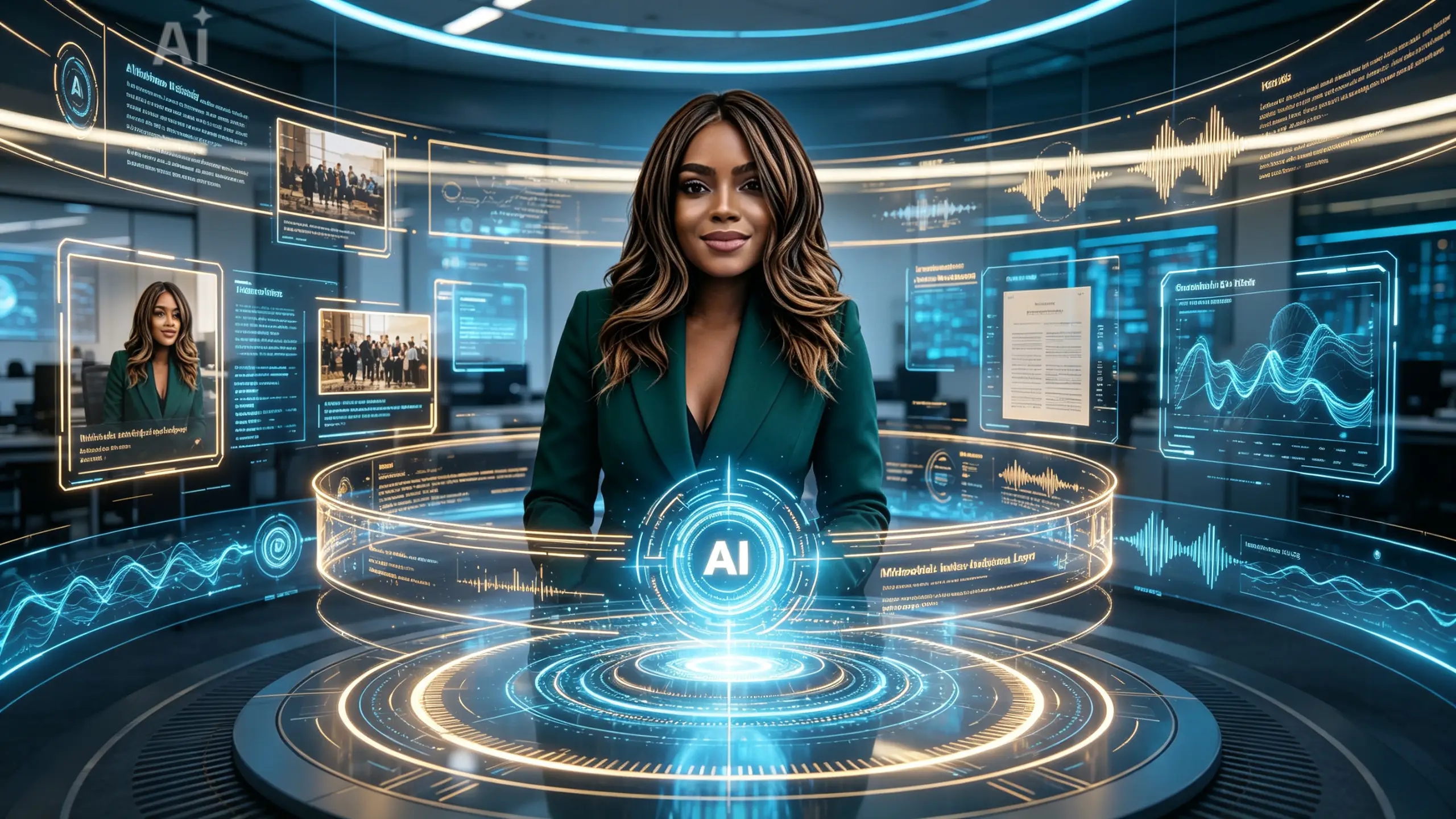
For much of the recent artificial intelligence revolution, the public experienced AI through a text box.
A person typed a question.
The system generated a written answer.
This was already transformative. It allowed people to use natural language for research, planning, writing, coding, education and problem-solving.
But human intelligence does not operate through text alone.
We understand the world through sight, sound, movement, language, memory, spatial awareness and social context. We do not normally separate these channels into completely independent experiences.
When someone enters a room, they may notice facial expressions, tone of voice, body position, environmental details and spoken words at the same time.
Artificial intelligence is now moving in a similar direction.
Multimodal AI can work across several forms of information, including:
Text.
Images.
Audio.
Video.
Documents.
Screen activity.
Spatial information.
Sensor data.
The importance of this development is not simply that AI can perform more tasks.
The deeper change is that AI is beginning to connect different kinds of evidence into one interpretation.
It is moving from language processing toward a more general form of machine perception.
What Multimodal AI Actually Means
The word multimodal refers to systems that can receive, analyse or generate information in more than one format.
A text-only model may read a written description of a damaged machine.
A multimodal model may inspect a photograph of the machine, listen to its sound, read the technical manual and compare all three sources.
A text-only assistant may help rewrite a presentation.
A multimodal assistant may examine the slides, identify crowded layouts, review the speaker’s rehearsal video and suggest where the spoken explanation does not match the visual material.
The formats are not treated as unrelated tasks.
They contribute to one understanding of the situation.
This is important because real-world problems are rarely presented in perfectly organised text.
A customer may upload a screenshot.
A student may show a handwritten equation.
A doctor may need to compare notes with an image.
A business owner may ask questions about a dashboard.
A creator may provide video, music, captions and audience analytics from the same campaign.
Multimodal systems are better positioned to work inside these mixed-information environments.
From Reading About the World to Looking at It
Traditional language models learned from enormous collections of text.
This gave them access to patterns in human language, explanations, arguments, stories and descriptions.
But text is an interpretation of reality.
A written sentence may say:
“The room is untidy.”
An image contains more direct visual information.
It may show boxes near the door, documents on the floor, an open window and a liquid spill beside electrical equipment.
The visual evidence may reveal urgency that the written description missed.
This does not mean images are automatically more truthful than text.
Images can be misleading, incomplete, edited or presented without context.
The advantage comes from comparison.
A multimodal system may ask:
Does the image match the description?
Is important information missing?
Are there visible details that change the interpretation?
Does the audio contradict the written transcript?
Does the video show a process that the instructions failed to explain?
Machine perception becomes more useful when several forms of evidence can correct one another.
Why Multimodal AI Feels More Natural
Humans often think by showing rather than explaining.
Someone may say:
“What is wrong with this?”
Then point to a screen.
They may upload a photograph instead of describing every visible detail.
They may play a sound because they do not know the technical words required to explain it.
They may speak freely because typing interrupts their thought process.
Multimodal AI reduces the burden of translating every experience into formal written instructions.
A user may be able to:
Show a document.
Circle the confusing section.
Explain the concern by voice.
Ask the AI to produce a revised version.
Review the result visually.
This creates a more continuous interaction.
The user communicates through the format best suited to the problem.
Multimodal AI in Education
Education is one of the clearest areas where multimodal systems may create value.
Students do not all learn in the same way.
Some understand through reading.
Others benefit from diagrams, spoken explanations, demonstrations or interactive examples.
A multimodal tutor could:
Read a student’s written answer.
Inspect a diagram they created.
Listen to their spoken explanation.
Identify where the reasoning becomes inconsistent.
Offer a new explanation using another format.
For example, a student may correctly memorise a scientific definition but misunderstand the process it describes.
Their written answer may look acceptable.
A drawing or spoken explanation may reveal the deeper confusion.
The AI tutor can then respond to the actual misunderstanding rather than merely checking whether the correct words appeared.
This could support more personalised learning.
However, it also requires caution.
The system may misinterpret handwriting, speech, cultural expression or disability-related communication. Human educators must remain involved, particularly where assessment has serious consequences.
Multimodal AI in Business
Businesses generate information in many formats.
A single customer issue may involve:
An email.
A photograph.
A purchase record.
A voice message.
A support chat.
A delivery document.
A video showing the fault.
A multimodal business assistant could bring these sources together and create a clearer summary.
It might explain:
“The customer reported that the item arrived damaged. The photograph shows damage near the hinge, the delivery record confirms the package arrived yesterday, and the earlier support message indicates the customer requested a replacement rather than a refund.”
This reduces the need for staff to inspect every source separately.
Multimodal AI may also assist with:
Product inspection.
Marketing analysis.
Document processing.
Meeting review.
Workplace training.
Inventory monitoring.
Website improvement.
Design feedback.
Customer onboarding.
The value comes from understanding the whole situation rather than one isolated data source.
Multimodal AI for Creators
Creators already work across multiple media.
A single campaign may include:
A long-form article.
A short video.
Music.
Images.
Captions.
Voiceover.
Comments.
Performance analytics.
A multimodal assistant could analyse how these elements work together.
It might identify that:
The visual hook is strong.
The spoken introduction is too slow.
The caption promises something the video does not deliver.
The background music competes with the voice.
The strongest frame should become the thumbnail.
Viewers leave before the product demonstration begins.
This is more valuable than analysing the caption alone.
The campaign is a combined experience.
Multimodal intelligence can begin evaluating it as one.
The Growth of Visual Reasoning
Recognising objects in an image is useful.
But the more important development is visual reasoning.
Visual reasoning involves understanding relationships, processes and implications.
For example, an AI system may inspect:
A chart and explain the trend.
A room layout and identify an accessibility problem.
A workflow diagram and detect a missing stage.
A product screenshot and recognise confusing navigation.
Several medical images and highlight areas for professional review.
A photograph of equipment and compare it with maintenance instructions.
The challenge is that visual interpretation can appear convincing even when it is wrong.
A system may confidently describe something that is not present.
It may misunderstand scale.
It may miss subtle visual evidence.
It may rely on familiar patterns rather than the actual image.
Therefore, multimodal AI should not be treated as infallible observation.
It should be treated as an analytical assistant whose conclusions require appropriate verification.
Audio Adds Emotion, Rhythm and Context
Text transcripts remove much of the information contained in speech.
They may not capture:
Hesitation.
Sarcasm.
Emotional intensity.
Pace.
Emphasis.
Background noise.
Multiple speakers.
Interruptions.
Audio-capable AI can examine more of this context.
For example, a meeting transcript may show that everyone agreed.
The audio may reveal long pauses, uncertainty or reluctant responses.
A customer-service transcript may appear polite, while the tone suggests growing frustration.
A music-production assistant may analyse rhythm, structure, vocal balance and instrumentation.
However, emotional interpretation must remain cautious.
AI should not claim certainty about a person’s psychological state based on tone alone.
A quiet voice does not automatically mean sadness.
A fast voice does not automatically mean anxiety.
Cultural style, personality, disability and context all influence communication.
Multimodal analysis should generate possibilities, not unsupported diagnoses.
Video Introduces Time
A photograph captures one moment.
Video reveals sequence.
It shows what happened first, what changed and what followed.
This allows AI systems to analyse:
Movement.
Procedure.
Cause and effect.
Repeated behaviour.
Timing.
Interaction.
Progress over time.
A manufacturing company might use video to review a production process.
A sports coach might analyse movement.
A creator might examine audience-retention moments.
A teacher might review a practical demonstration.
A business owner might analyse how customers navigate a physical environment.
Video understanding brings AI closer to analysing activity rather than only static information.
But video also creates significant privacy concerns.
People may be recorded without meaningful consent.
Workplaces may use AI surveillance in intrusive ways.
Systems may draw unfair conclusions from behaviour.
The ability to analyse movement must not become an excuse to monitor people constantly.
Multimodal AI and Accessibility
Multimodal systems can support accessibility by allowing information to move between formats.
AI may:
Describe images for visually impaired users.
Convert speech into text.
Read documents aloud.
Simplify complex written information.
Generate captions for video.
Interpret visual instructions through voice.
Convert diagrams into structured explanations.
Help users navigate interfaces conversationally.
This flexibility can make digital systems more inclusive.
But accessibility features must be tested with the people they are intended to support.
An automatically generated image description may miss the detail that matters most.
Captions may misrepresent unfamiliar names.
Speech recognition may perform differently across accents.
Designing for accessibility requires participation, not assumption.
The Problem of Conflicting Evidence
Multimodal systems may receive information that does not agree.
A written report may say one thing.
The photograph may suggest another.
The audio may be incomplete.
The video may begin after the important event.
The AI must decide how to handle uncertainty.
A trustworthy system should not quietly choose one source and present the result as settled.
It should say:
“The written report states that the equipment was switched off, but the indicator light appears active in the image. The image quality is limited, so this should be verified manually.”
This is better than forced confidence.
The more information an AI system receives, the more important uncertainty management becomes.
Multimodal AI Does Not Possess Human Experience
A system may analyse a smile.
It does not experience the relationship behind it.
It may recognise a damaged family photograph.
It does not feel the loss represented by that image.
It may identify musical tension.
It does not necessarily experience anticipation in the human sense.
Multimodal capability should not be confused automatically with human consciousness or emotional life.
It represents increased access to patterns across formats.
Whether this amounts to experience is a separate philosophical question.
What is clear is that the interaction can feel more socially and cognitively rich because the AI is responding to more of the user’s environment.
The New Digital Literacy
As multimodal AI becomes common, users will need new skills.
They should learn to ask:
What information did the system actually receive?
Which details may be missing?
Could the image or audio be misleading?
Has the AI confused observation with interpretation?
Is personal information visible in the background?
Does the system have permission to analyse these people?
Which conclusions require human verification?
Is the result influenced by poor image or audio quality?
Uploading more data can improve the answer.
It can also expose more private information.
Multimodal literacy requires both curiosity and restraint.
The Future May Be Environment-Aware
The next step beyond uploaded media is continuous environmental awareness.
AI glasses, robots, vehicles and smart devices may receive live information from the physical world.
An assistant may recognise:
Where the user is.
What they are looking at.
Which task they are performing.
What tools are nearby.
Whether the environment has changed.
Which instruction is relevant to the present moment.
This could make AI extremely useful in healthcare, engineering, education and everyday assistance.
It could also create one of the largest surveillance risks in modern history.
An always-aware system may observe people who never agreed to participate.
The boundary between assistance and monitoring could disappear.
Therefore, the future of multimodal AI must include strong controls around:
Consent.
Recording.
Data retention.
Access.
Security.
Bystander privacy.
Human review.
The ability to perceive the world should not imply unlimited permission to record it.
Conclusion
Artificial intelligence is moving beyond text.
It can increasingly examine images, listen to audio, analyse video, read documents and combine several forms of information into one response.
This makes AI feel more natural because human problems do not arrive in one format.
We show, speak, write, point and demonstrate.
Multimodal intelligence can reduce the distance between human intention and machine understanding.
But greater perception creates greater responsibility.
The system must communicate uncertainty.
Users must protect privacy.
High-stakes conclusions must be verified.
People must remain able to control what the AI sees, hears, stores and acts upon.
The next phase of AI will not simply be about machines producing more content.
It will be about machines receiving more of the world.
The central question is no longer only:
What can artificial intelligence say?
It is becoming:
What should artificial intelligence be allowed to perceive—and how carefully can it understand what it sees?
Discover more from Marychuks.com AI, Psychology, Business & CreativeVerse
Subscribe to get the latest posts sent to your email.