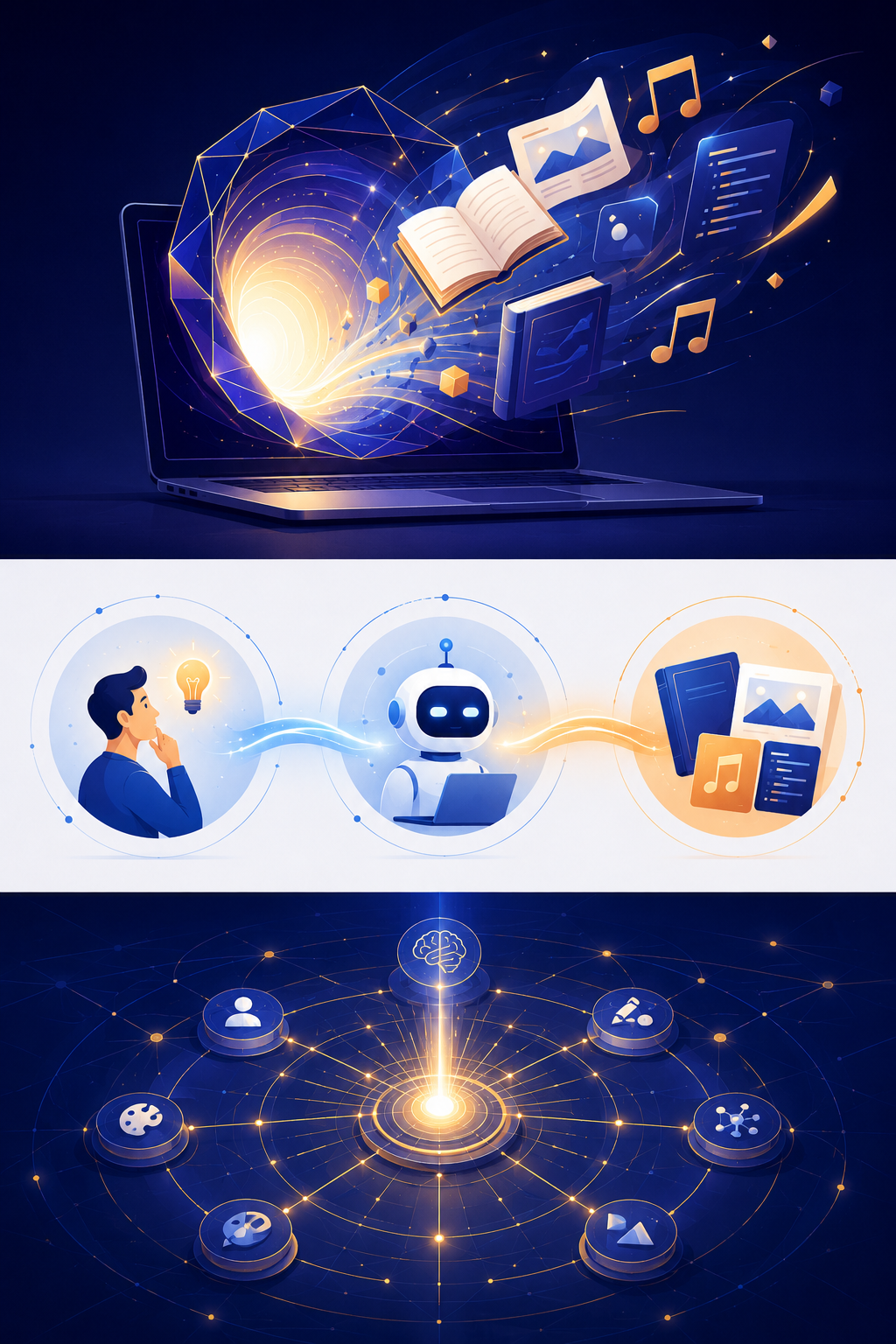
Every week seems to bring a new “revolutionary” AI chatbot promising to change your life, your business, or your brain. Some of it is genuinely useful. A lot of it is noise. Here’s a clear-eyed look at where AI chatbots stand in 2026 — what’s real, what’s overhyped, and how to tell the difference.
The Hype: What Gets the Headlines
Marketing loves big claims — “your new best friend,” “replaces your therapist,” “runs your whole business overnight.” These pitches sell subscriptions, but they rarely hold up once you use the product for more than a week. Chatbots still make things up confidently, struggle with truly novel problems, and can’t replace human judgment in high-stakes decisions.
What’s Actually Useful
Strip away the hype and a few genuinely solid use cases remain:
Drafting and editing — emails, first drafts of documents, brainstorming outlines
Research assistance — summarizing dense material, explaining unfamiliar topics quickly
Customer support triage — handling routine questions so humans focus on complex ones
Coding help — debugging, explaining code, scaffolding new projects
Personal organization — reminders, quick planning, simple decision-support
The common thread: chatbots work best as an assistant, not an authority. They speed up work you’d still check and own yourself.
Where the Hype Falls Apart
Therapy and deep emotional support — a chatbot can be a helpful sounding board, but it isn’t a substitute for a licensed professional, especially in a real crisis.
High-stakes accuracy — legal, medical, or financial advice needs a human expert to verify it.
Fully autonomous business operations — most “set it and forget it” claims still require a person checking the output.
How to Tell Real Value from Marketing Noise
Ask what problem it actually solves for you — not what it claims to solve for everyone.
Test it on your real, messy tasks, not the polished demo scenario.
Check how it handles being wrong. Does it admit uncertainty, or double down confidently?
Look at what you still have to do yourself. If the “time saved” disappears into fact-checking, the tool isn’t saving you much.
The Bottom Line
AI chatbots in 2026 are genuinely useful tools — for drafting, researching, organizing, and speeding up routine work. They are not magic, not infallible, and not a replacement for human expertise where it truly matters. The smartest way to use them is as a fast, tireless assistant that you still supervise.
What’s your experience been — has AI chatbot use lived up to the hype for you, or fallen short? Share your thoughts in the comments.
Discover more from Marychuks.com AI, Psychology, Business & CreativeVerse
Subscribe to get the latest posts sent to your email.