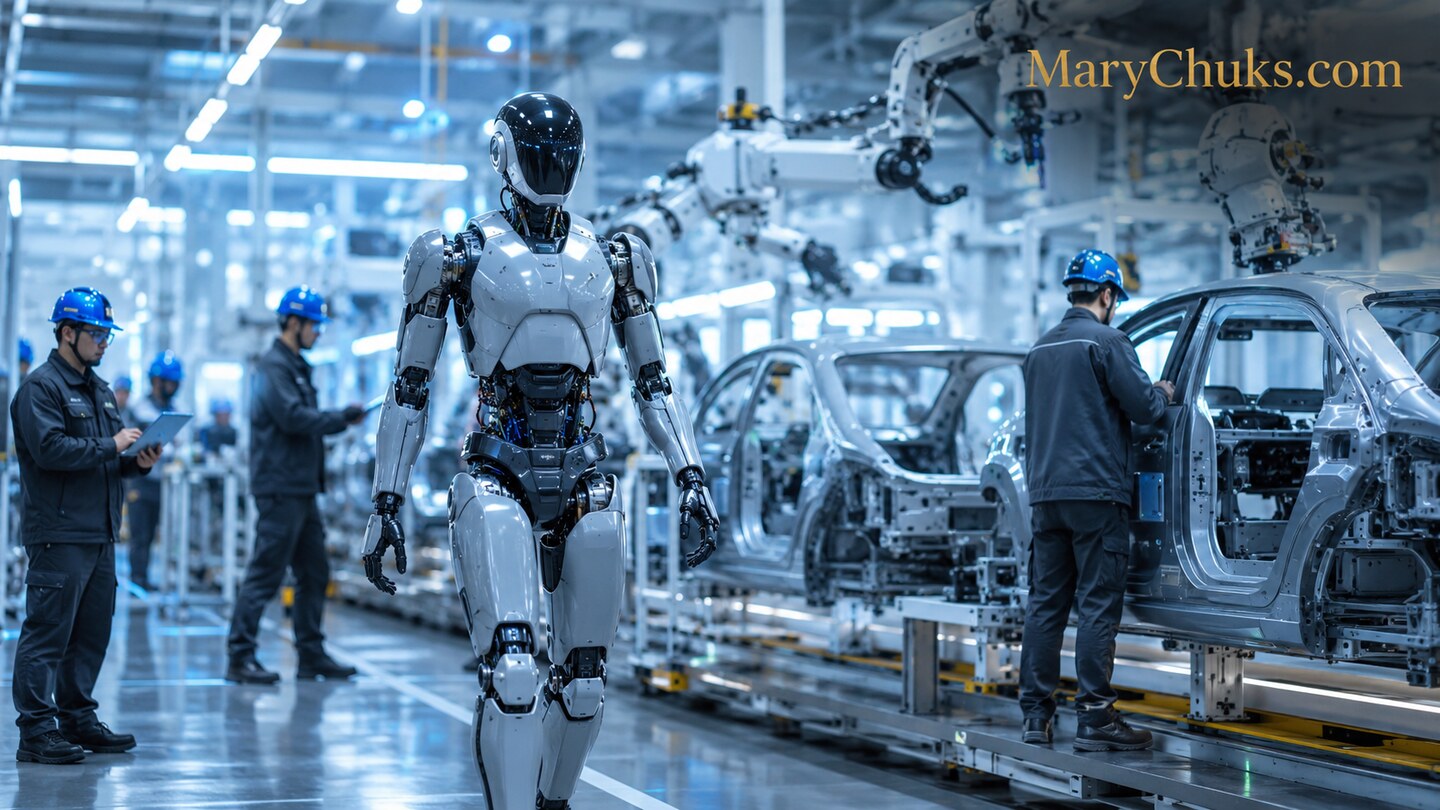
The artificial-intelligence investment boom is moving out of computer screens and into machines that can walk, carry objects and operate in the physical world. One of the clearest signals yet has come from China: Xpeng says its robotics division raised more than $900 million in its first external funding round, valuing the unit above $6.3 billion.
From chatbots to bodies
Generative AI usually lives inside a screen. Humanoid robotics adds perception, balance, safe movement and rapid adjustment to an unpredictable environment. A language model can regenerate a sentence; a robot carrying equipment cannot ignore gravity. That is why embodied or physical AI is a much harder—and potentially more valuable—challenge.
Meet Xpeng’s IRON robot
Xpeng plans to expand production of its IRON humanoid, targeting roughly 1,000 robots per month by the end of 2026. Initial deployments are expected in retail locations and industrial campuses, with broader commercial sales planned for 2027. The real test is whether impressive demonstrations can become dependable daily work.
Why an electric-car company builds robots
Electric vehicles already use computer vision, sensors, batteries, motors, autonomous software, manufacturing systems and complex supply chains. Much of that knowledge transfers to robotics. A company capable of building intelligent machines on wheels may have useful advantages when building intelligent machines with legs.
Why humanoid form matters
Homes, shops, warehouses and factories were designed around human bodies. Doors, stairs, shelves and tools suit human reach and movement. A capable humanoid might work in these spaces without requiring every environment to be rebuilt, although specialised machines will remain more economical for many tasks.
The commercial hurdles
A useful robot must be safe, secure, energy-efficient and affordable to maintain. It must recover from mistakes and perform consistently for long shifts. Commercial success will be decided less by viral videos than by reliability, economics and genuine usefulness.
MaryChuks perspective
For most people, AI still means a chatbot. That definition is becoming outdated. AI increasingly has eyes through cameras, ears through microphones, tools through software and bodies through robotics. Xpeng’s funding shows that investors believe this next stage could become commercially important sooner than many expect.
Source and further reading
Reporting: Reuters, 24 August 2026.
Discover more from Marychuks.com AI, Psychology, Business & CreativeVerse
Subscribe to get the latest posts sent to your email.