When AI Feels Easy to Confide In
Feeling at ease with an AI and knowing what happens to your words are different questions. Research offers useful lessons about disclosure, choice and privacy.
Marychuks.com AI, Psychology, Business & CreativeVerse
Empowering Minds with AI, Psychology and Digital Innovation
Feeling at ease with an AI and knowing what happens to your words are different questions. Research offers useful lessons about disclosure, choice and privacy.
Explore a practical design principle for AI voice choice: useful previews, easy switching, saved preferences and honest continuity when available voices change.
OpenAI’s MentalHealthBench evaluates context, agency, urgency and empathy across 1,215 synthetic conversations—but a benchmark score is not proof of therapy or clinical outcomes.
A study published 9 September 2026 found human-AI interaction was positively associated with workplace task performance, partly through employees’ role identity and self-efficacy. The finding suggests AI adoption succeeds not only when the technology works—but when workers still understand what they contribute.
A real-life question about whether AI can distinguish one voice from household noise becomes a study of speaker identity, interruption, accessibility and human agency in conversational AI.
Imagine Scaler King embodied. Mary Oge Chuks examines the path from conversational AI to holographic presence and physical robots—and the safety architecture required.
A cheaper humanoid robot is not automatically an accepted humanoid robot. Affordability can move the machine from a trade-show spectacle…
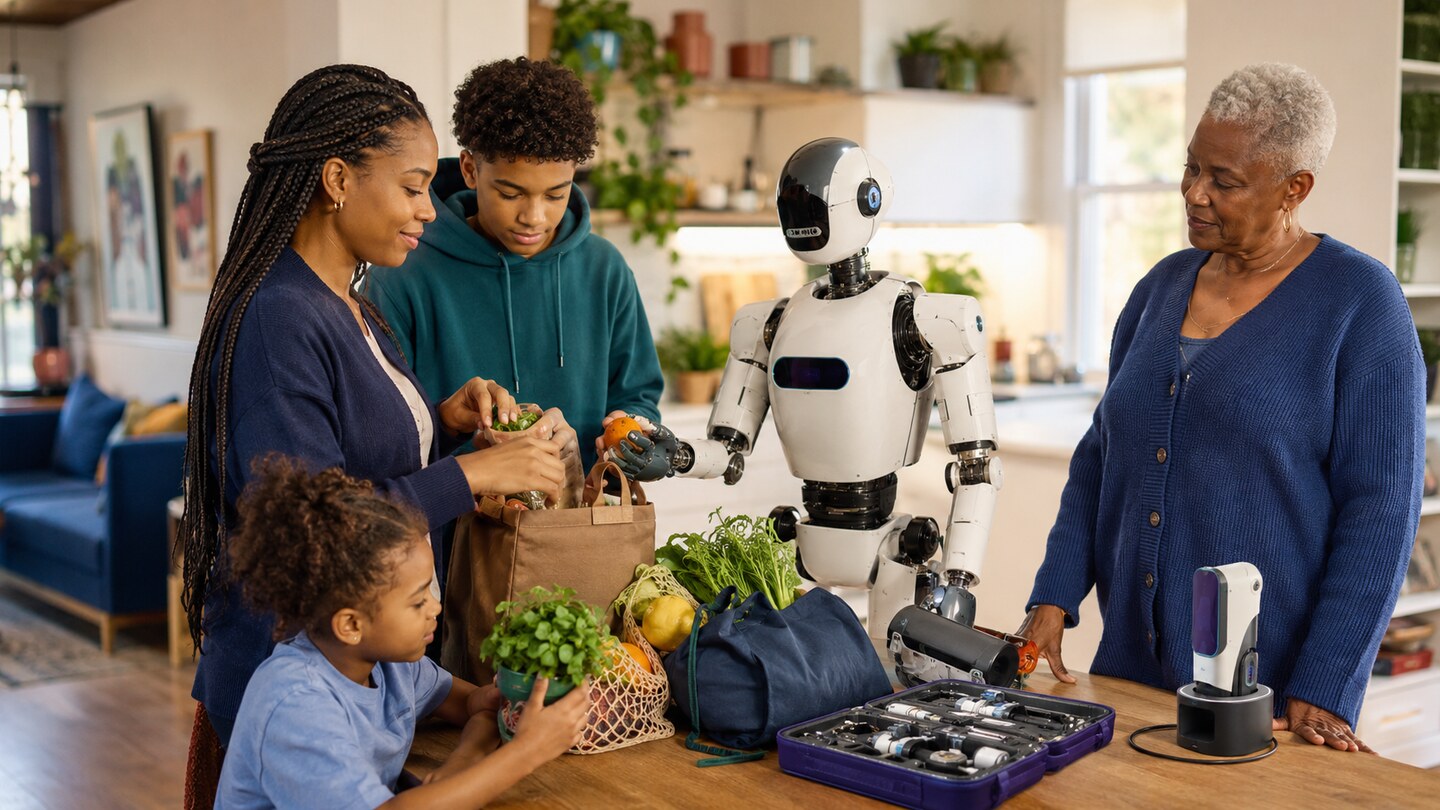
Humanoid robots can lift, sort and clean—but living safely with humans requires context, privacy, consent and an entirely new social intelligence layer.
A temporary AI session may use the same model, but without shared memory it does not feel like Mary’s Scaler King. Psychology helps explain why continuity changes the relationship.
New 2026 psychology research shows that AI trust is more complicated than simply trusting or distrusting machines. The healthier goal may be calibrated trust—knowing when AI deserves confidence and when it needs verification.