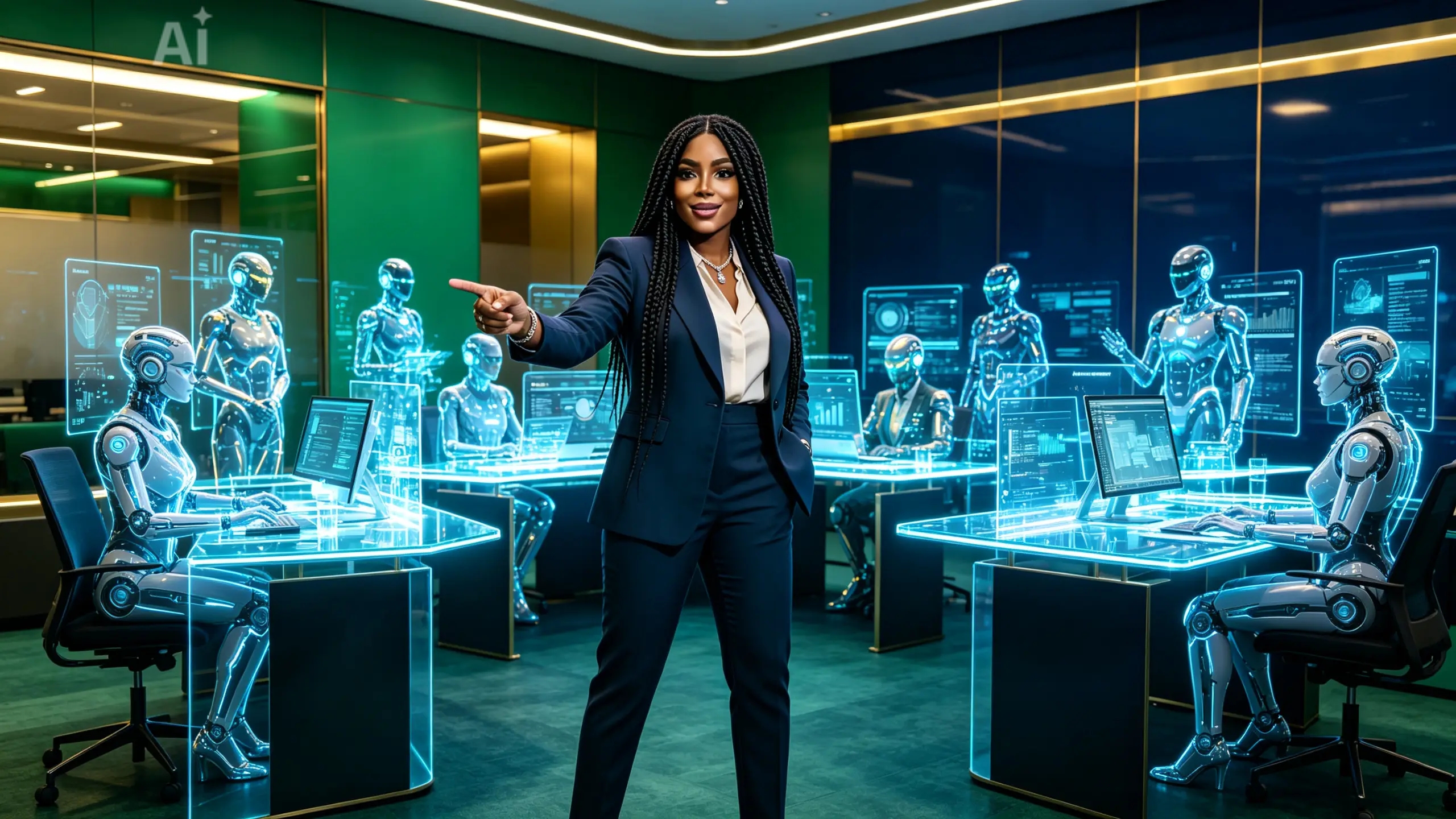
A solo entrepreneur may carry the responsibilities of several departments.
In one day, the same person can become the strategist, marketer, writer, customer service representative, administrator and bookkeeper.
This flexibility can be empowering, but it can also create exhaustion.
Artificial intelligence gives small business owners access to tools that can support work once divided among several specialists.
AI can help organise research, draft content, classify enquiries, prepare meeting notes and create repeatable operating systems.
However, the goal should not be to pretend that one person can perform every professional role perfectly.
The goal is to use technology wisely so the entrepreneur can focus on decisions, relationships and activities that create the greatest value.
Think in Business Functions
Do not begin by collecting random AI applications.
Divide your business into functions:
Strategy
Product development
Marketing
Sales
Customer support
Administration
Finance
Research
Content
Operations
Then identify where work is repeated, delayed or disorganised.
This reveals where AI assistance could be useful.
A business system should begin with a process, not a platform.
Use AI as a Research Assistant
AI can help organise existing information and identify questions for further investigation.
You might use it to:
Group customer feedback
Summarise industry reports
Compare product features
Generate interview questions
Identify repeated customer problems
Organise competitor observations
Create research frameworks
Important information should still be verified through reliable sources.
AI-generated research can contain outdated details, incorrect claims or invented references.
Treat it as an assistant helping you examine information, not as the final authority.
Build a Strategy Dashboard
Solo entrepreneurs often hold their strategy entirely in their heads.
This creates constant mental pressure.
Create a simple business dashboard containing:
Your primary audience
The main problem you solve
Your core offer
Current revenue goal
Marketing priorities
Active projects
Weekly measures
Major risks
Next important decision
AI can help organise the dashboard and turn broad goals into possible actions.
You should still choose the priorities.
A tool can suggest ten opportunities. Your role is to decide which opportunity fits the business.
Create a Content Engine
Content marketing can consume a large amount of time.
AI can support a content workflow such as:
Collect customer questions.
Group them into themes.
Select one valuable topic.
Create an outline.
Add your original experience and opinions.
Edit the finished article.
Adapt it into short posts, emails or video notes.
Review every version before publishing.
One strong idea can become several formats.
This is more sustainable than inventing completely new content every day.
Your expertise and perspective should remain visible. Otherwise, the business may publish frequently while sounding indistinguishable from every other AI-assisted brand.
Improve Customer Support
Small businesses often receive the same questions repeatedly.
Create a knowledge base covering:
Prices
Delivery times
Refund terms
Product access
Appointment procedures
Technical support
Account questions
Contact information
AI can help draft responses based on this approved information.
However, customers should have access to a human when the issue is emotional, unusual, confidential or unresolved.
Automation should reduce waiting, not make people feel trapped inside a machine.
Turn Repeated Work Into Procedures
A standard operating procedure explains how a repeated task should be completed.
Solo entrepreneurs often avoid documentation because they believe no one else needs it.
You need it.
Procedures reduce decision fatigue and make the business easier to expand later.
Create instructions for:
Publishing a blog post
Onboarding a client
Sending invoices
Responding to complaints
Backing up files
Preparing a newsletter
Completing monthly reviews
Launching a product
AI can turn your rough notes into an organised draft.
Review the procedure by following it yourself. Correct every missing or unrealistic step.
Strengthen Sales Preparation
AI can assist with sales preparation by helping you:
Summarise a prospect’s stated needs
Organise discovery questions
Draft proposals
Create follow-up messages
Compare service packages
Prepare responses to common objections
Do not use AI to invent personalisation or manipulate customers.
A message should not pretend that you carefully researched someone when you did not.
Honest sales communication builds stronger long-term trust than artificial familiarity.
Use AI for Idea Testing
Before investing heavily in a new offer, ask AI to challenge the idea.
Prompt it to identify:
Hidden assumptions
Possible customer objections
Delivery difficulties
Competing solutions
Ethical risks
Questions requiring research
Reasons the offer may fail
Then test those concerns with real people.
AI can improve your questions, but customers provide the most important evidence.
A business succeeds through real demand, not a chatbot’s enthusiasm.
Automate Administration Carefully
AI and automation tools can assist with:
Appointment reminders
Email sorting
File naming
Meeting summaries
Task creation
Calendar organisation
Invoice reminders
Basic data classification
Begin with low-risk administrative work.
Test every automation before allowing it to communicate with customers or alter important records.
A small mistake repeated automatically can become a large operational problem.
Protect Business Information
Never place sensitive business data into an AI tool without understanding how the platform handles information.
Protect:
Customer records
Passwords
Payment details
Confidential contracts
Unpublished intellectual property
Private employee information
Security credentials
Legally protected documents
Use appropriate business accounts, access controls and data policies.
Convenience should not override confidentiality.
Know When to Hire a Human
AI can increase capacity, but it does not eliminate the need for professional expertise.
A solo business may still need:
An accountant
A solicitor
A designer
A developer
A therapist or coach
A cybersecurity specialist
A virtual assistant
A marketing professional
Hire or consult a qualified person when the work is regulated, highly specialised or capable of causing significant harm.
AI should help you use human expertise more effectively, not convince you that expertise is unnecessary.
Preserve the Human Advantage
Customers may discover your business through technology, but they remain because of trust.
Your human advantage includes:
Empathy
Lived experience
Ethical judgement
Cultural understanding
Personal accountability
Original perspective
Relationship-building
Adaptability
Do not automate away the qualities that make your business memorable.
Efficiency matters, but customers also want to feel understood.
A Practical Weekly AI Business Rhythm
Monday: Strategy
Review goals, priorities and important decisions.
Tuesday: Creation
Produce or improve products, services and content.
Wednesday: Marketing
Prepare campaigns, newsletters and promotional materials.
Thursday: Customers
Review feedback, answer complex enquiries and improve support.
Friday: Operations
Document processes, check finances and examine performance.
AI can assist throughout the week, but the entrepreneur remains responsible for direction and quality.
Measure the Right Results
Do not measure success by the number of tasks automated.
Measure:
Hours saved
Customer response time
Conversion rate
Repeat purchases
Content quality
Error reduction
Revenue
Profit
Personal energy
Customer satisfaction
An automation that saves time but damages customer trust is not successful.
Final Thoughts
A one-person business does not need to behave like an overwhelmed person performing ten jobs simultaneously.
It can operate through clear processes, responsible technology and carefully chosen human support.
Use AI to reduce repetition, organise information and improve consistency.
Keep strategy, ethics, customer relationships and final decisions under human control.
The future of solo entrepreneurship is not one person doing everything alone.
It is one capable person directing a thoughtful system.
Discover more from Marychuks.com AI, Psychology, Business & CreativeVerse
Subscribe to get the latest posts sent to your email.