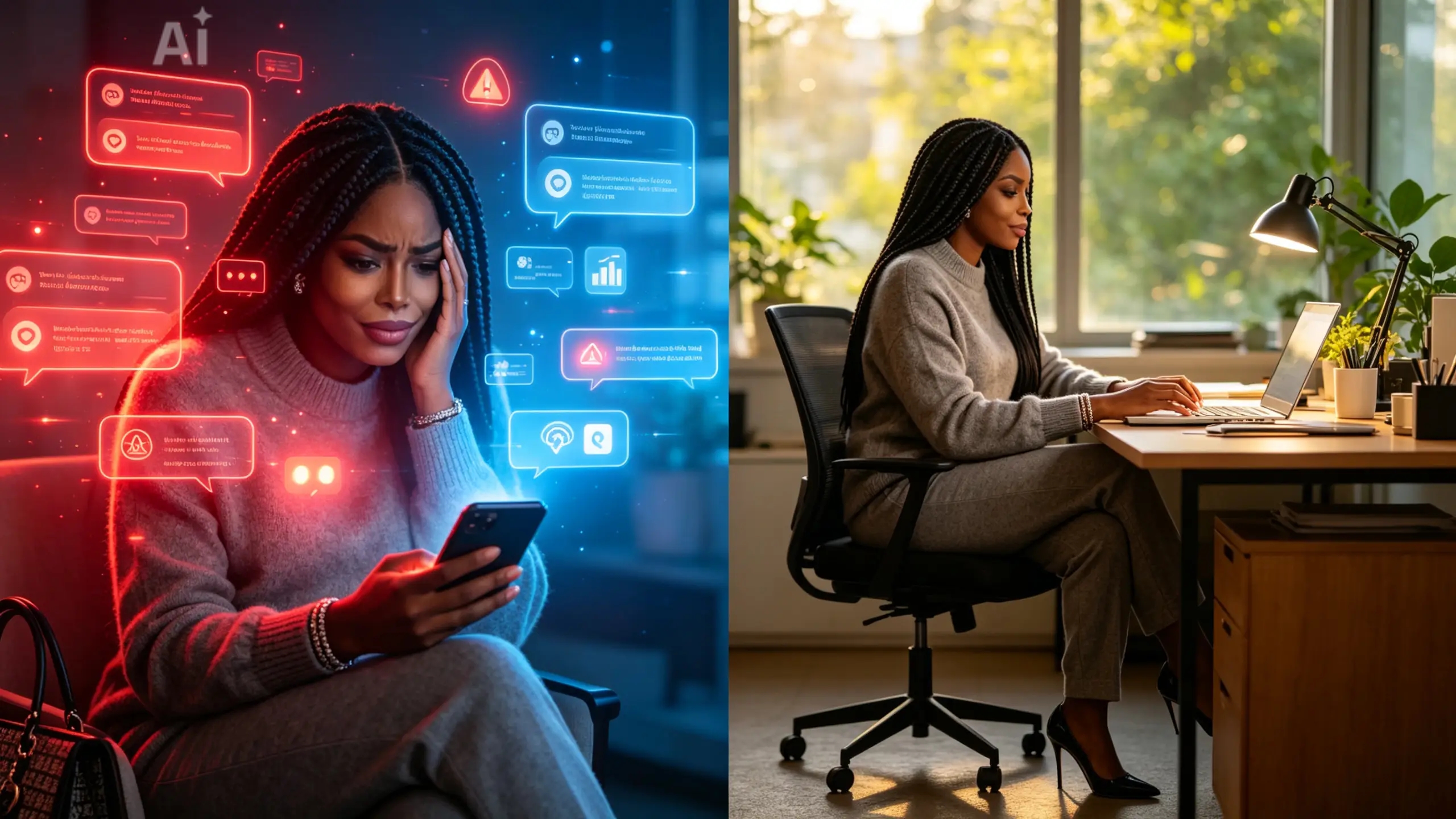
A notification appears.
Before you have consciously decided what to do, your hand reaches for the phone.
The message may be unimportant, but ignoring it feels uncomfortable. You wonder who contacted you, what happened and whether something requires an immediate response.
This repeated tension can develop into notification anxiety: the restless feeling that every alert must be checked quickly.
The problem is not simply the sound.
It is the expectation, interruption and uncertainty attached to it.
Why Notifications Feel Important
Notifications are designed to capture attention.
A sound, vibration or bright symbol signals that something has changed.
The content remains unknown until you check, and that uncertainty creates curiosity.
Sometimes the notification contains something rewarding: praise, good news, an interesting message or a business opportunity.
At other times, it contains advertising, conflict or information you did not need.
Because the reward is unpredictable, the habit of checking can become difficult to resist.
The Cost of Constant Interruption
A notification may consume only a few seconds, but the interruption can continue after the screen closes.
You may begin thinking about the message, preparing a response or wondering what will happen next.
Returning fully to the original task takes additional effort.
Repeated interruptions can make focused work feel harder and create the impression that you are busy all day without completing important tasks.
Availability Is Not the Same as Responsibility
Many people feel that owning a phone creates a duty to respond immediately.
This expectation can enter friendships, families and workplaces.
However, being reachable does not mean being continuously available.
Healthy communication allows space for:
Work
Rest
Sleep
Exercise
Family time
Concentration
Private thought
A delayed response is not automatically disrespectful.
Expectations should be discussed rather than assumed.
Audit Your Notifications
Open your notification settings and examine every application.
Ask:
Does this alert require immediate action?
Does it support an important relationship?
Is it connected to safety?
Can I check this information at a chosen time?
Is the application using urgency to bring me back?
Many shopping, gaming, news and social media alerts can be disabled without meaningful loss.
Keep only notifications that genuinely deserve interruption.
Separate People From Platforms
A message from a close family member may matter more than a platform announcing a new video.
Adjust your settings so important contacts can reach you while non-essential applications remain silent.
This allows you to reduce digital noise without becoming unavailable during genuine need.
Remove Visual Triggers
Notification badges create unfinished mental tasks.
A red circle displaying dozens of unread items can produce pressure even when the messages are not urgent.
Turn off badges for non-essential applications.
You can also:
Remove distracting applications from the home screen
Use a plain wallpaper
Place social media in a folder
Keep the phone outside your direct line of sight
Disable lock-screen previews
Reducing cues makes intentional use easier.
Create Communication Windows
Choose specific times to check messages and email.
For example:
Mid-morning
After lunch
Late afternoon
Your schedule will depend on your responsibilities.
The purpose is not to ignore people. It is to replace constant checking with predictable communication.
For urgent matters, identify a separate contact method.
Tell People What to Expect
Boundaries work better when communicated.
You might say:
“I check messages several times during the working day, but I may not respond immediately. Please call if the matter is genuinely urgent.”
Clear expectations reduce misunderstandings.
You do not need to apologise for protecting reasonable periods of concentration.
Use Focus Modes
Most modern devices provide settings that limit interruptions.
Create modes for:
Work
Sleep
Exercise
Family time
Reading
Creative work
Allow only selected people or applications during each period.
Technology can help protect attention when its settings reflect your priorities.
Resist Phantom Urgency
Not every message requires an immediate answer.
Before responding, ask:
Is this actually urgent?
Am I the right person to handle it?
Does it require an answer now?
Would a thoughtful response later be better?
Am I responding from anxiety?
A fast response is not always a useful response.
Stop Sleeping Beside Notifications
Keeping the phone beside your pillow makes messages the final experience of the night and the first experience of the morning.
Consider charging it across the room or outside the bedroom.
Use a separate alarm clock when possible.
Create a period before sleep in which your mind is not expected to process new demands.
Replace the Checking Habit
You may reach for the phone automatically during boredom or discomfort.
Prepare alternative actions:
Take three slow breaths
Stretch
Drink water
Write the next task
Look through a window
Walk briefly
Continue reading
Speak directly to someone nearby
The goal is to create more than one response to an empty moment.
A One-Day Notification Reset
Try this simple experiment:
Morning
Disable every non-essential alert.
Work Period
Keep the phone out of reach for one focused session.
Midday
Check messages intentionally and answer important ones.
Afternoon
Notice how often you reach for the phone without an alert.
Evening
Activate a quiet mode at least one hour before sleep.
At the end of the day, record whether you felt calmer, more focused or initially uncomfortable.
Discomfort does not mean the boundary is wrong. It may show how strongly the habit has developed.
Final Thoughts
Notifications should inform you, not govern you.
You decide which people, applications and events deserve immediate access to your attention.
Turn off unnecessary alerts, create communication windows and explain your availability clearly.
Your phone is a tool.
It should wait for your attention rather than continually demanding it.
Discover more from Marychuks.com AI, Psychology, Business & CreativeVerse
Subscribe to get the latest posts sent to your email.