A home blood-pressure monitor can reveal a pattern that a brief appointment misses. It can also produce misleading numbers when the cuff is wrong, the arm is unsupported or the result is treated as a verdict. The useful question is not merely, “What number appeared?” It is, “How trustworthy is the pattern?”
This guide explains how to turn home readings into organised evidence for a pharmacist, nurse or GP. It is educational, not a diagnosis or a substitute for individual medical advice.
Why one number can mislead
Blood pressure changes naturally during the day. Movement, conversation, pain, stress, caffeine and the simple act of hurrying to sit down can affect a reading. That does not make home monitoring pointless; it makes consistent conditions important.
The NHS explains that high blood pressure usually has no symptoms and that confirmation may involve several days of home readings, a later clinic check or a 24-hour ambulatory monitor. In UK guidance, readings are usually considered high at 140/90 mmHg or above in a healthcare setting, or 135/85 mmHg or above at home. Those are assessment thresholds, not permission to diagnose yourself from one result.
The first number is systolic pressure—the pressure while the heart is pumping. The second is diastolic pressure—the pressure while the heart relaxes between beats. Both matter, but their meaning depends on repeat measurements, your health history, medicines, age and clinical judgement.
Start with equipment you can trust
A neat-looking device is not automatically an accurate device. The British Heart Foundation recommends choosing a validated upper-arm monitor where possible and checking that the cuff is the right size. It points readers to devices validated by the British and Irish Hypertension Society.
- Prefer an upper-arm cuff. Wrist devices may be useful when an upper-arm cuff cannot be used, but positioning is easier to get wrong.
- Measure your arm. A cuff that is too small or too large can distort the result. Use the manufacturer’s sizing instructions rather than guessing.
- Check validation, not advertising. “Clinically tested” is vague. Look for the exact model on an independent validated-device list.
- Keep the instructions. Symbols for irregular pulse, movement or poor cuff fit vary between manufacturers.
- Ask about calibration. Follow the manufacturer’s service guidance and take the monitor to an appointment if your clinician wants to compare it with clinic equipment.
Build a repeatable measurement ritual
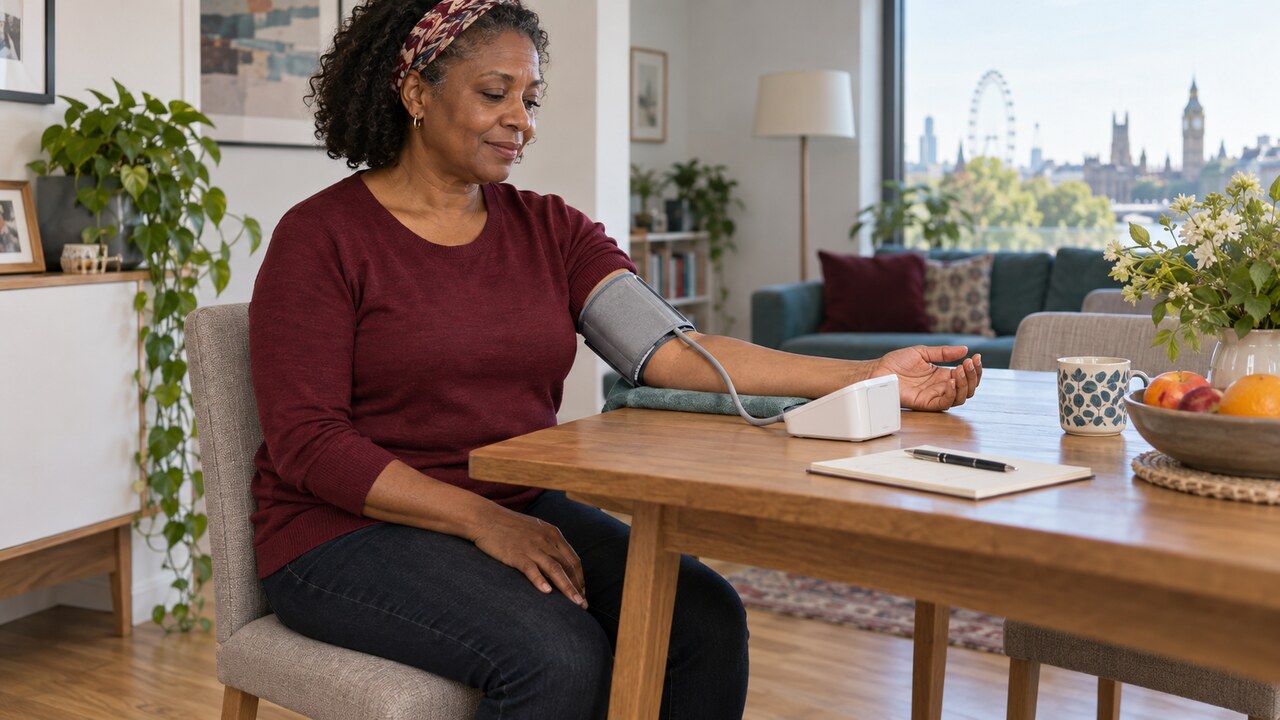
Accuracy is partly a property of the device and partly a property of the routine. Create the same calm setup each time:
- Pause first. Avoid measuring immediately after rushing, exercise or an upsetting conversation. Follow any timing instructions your healthcare professional has given you.
- Sit with support. Put your back against the chair, keep both feet flat on the floor and do not cross your legs.
- Support the arm. Rest it on a table so the cuff is roughly level with your heart. Keep the hand open and relaxed.
- Use bare skin. Do not place the cuff over clothing or roll up a tight sleeve that constricts the arm.
- Stay silent and still. Talking, texting or clenching the fist introduces avoidable variation.
- Repeat. The BHF advises checking again a few minutes later. If a clinician has requested home monitoring, follow their exact schedule rather than inventing one.
Consistency matters more than theatrical perfection. If one session happens under unusual circumstances—poor sleep, pain, illness or a missed medicine—record that context instead of deleting the result.
Turn readings into a useful diary
A diary should help a clinician see a pattern quickly. Record the date, time, first and second readings, pulse if shown, and any relevant context. Do not bury the evidence beneath a long lifestyle narrative.
| Date and time | Reading 1 | Reading 2 | Relevant note |
|---|---|---|---|
| Monday, 08:00 | Record result | Record result | Before breakfast; rested |
| Monday, 20:00 | Record result | Record result | Headache / pain / medicine change, if relevant |
Interpretation: a short, standardised series is usually more informative than checking repeatedly whenever anxiety rises. Repeated reassurance-seeking can create a loop: worry prompts another measurement, the measurement increases attention to bodily sensations, and normal variation creates more worry. If monitoring is becoming compulsive, agree a schedule with a healthcare professional and put the device away between planned sessions.
What the pattern can—and cannot—tell you
A home diary can show whether readings tend to be higher at particular times, whether apparently high clinic measurements persist at home, and how values change after a treatment plan is adjusted. It cannot, by itself, identify the cause, assess organ damage or decide which medicine is appropriate.
The NHS notes that persistent high blood pressure increases strain on blood vessels and organs, including the heart, brain, kidneys and eyes. That is why a pattern deserves follow-up even when you feel well. Conversely, feeling a headache does not prove that blood pressure caused it. Symptoms and numbers need clinical assessment rather than confident storytelling.
Know when not to wait for the diary
Do not use home monitoring to delay urgent care. The NHS advises calling 999 for sudden chest pain or discomfort that does not go away, particularly when it spreads to an arm, neck, jaw, stomach or back, or is accompanied by sweating, sickness, light-headedness or shortness of breath. For recurring headaches, blurred vision, chest pain that comes and goes, or other worrying symptoms, use NHS 111 or seek professional advice.
If a reading is unexpectedly very high but you have no emergency symptoms, sit quietly, check that the cuff and posture are correct, repeat the measurement after several minutes, and contact NHS 111, your GP or another appropriate clinical service for advice. Do not change prescribed medication, take an extra dose or stop treatment because of an isolated home result unless a qualified clinician has given you a specific action plan.
A five-question quality check
- Is this exact monitor model independently validated?
- Does the cuff fit my arm correctly?
- Was I seated, supported, silent and reasonably settled?
- Am I looking at a planned series rather than reacting to one reading?
- Have I agreed with a clinician what results or symptoms require action?
The useful takeaway
A home monitor is not a tiny doctor. It is a measurement tool. Used carefully, it can turn an invisible, changeable health signal into a clearer pattern. The goal is not to chase a perfect number every hour; it is to collect dependable evidence, recognise genuine warning signs and make better decisions with qualified care.
Sources and further guidance: NHS: High blood pressure; British Heart Foundation: High blood pressure explained; British Heart Foundation: Choosing and using a home monitor; NICE guideline NG136: Hypertension in adults. Guidance was checked on 21 September 2026. This article provides general information and does not replace medical advice.
Discover more from Marychuks.com AI, Psychology, Business & CreativeVerse
Subscribe to get the latest posts sent to your email.