Anthropic does not merely want to build smarter Claude models.
It wants to design the chips beneath them.
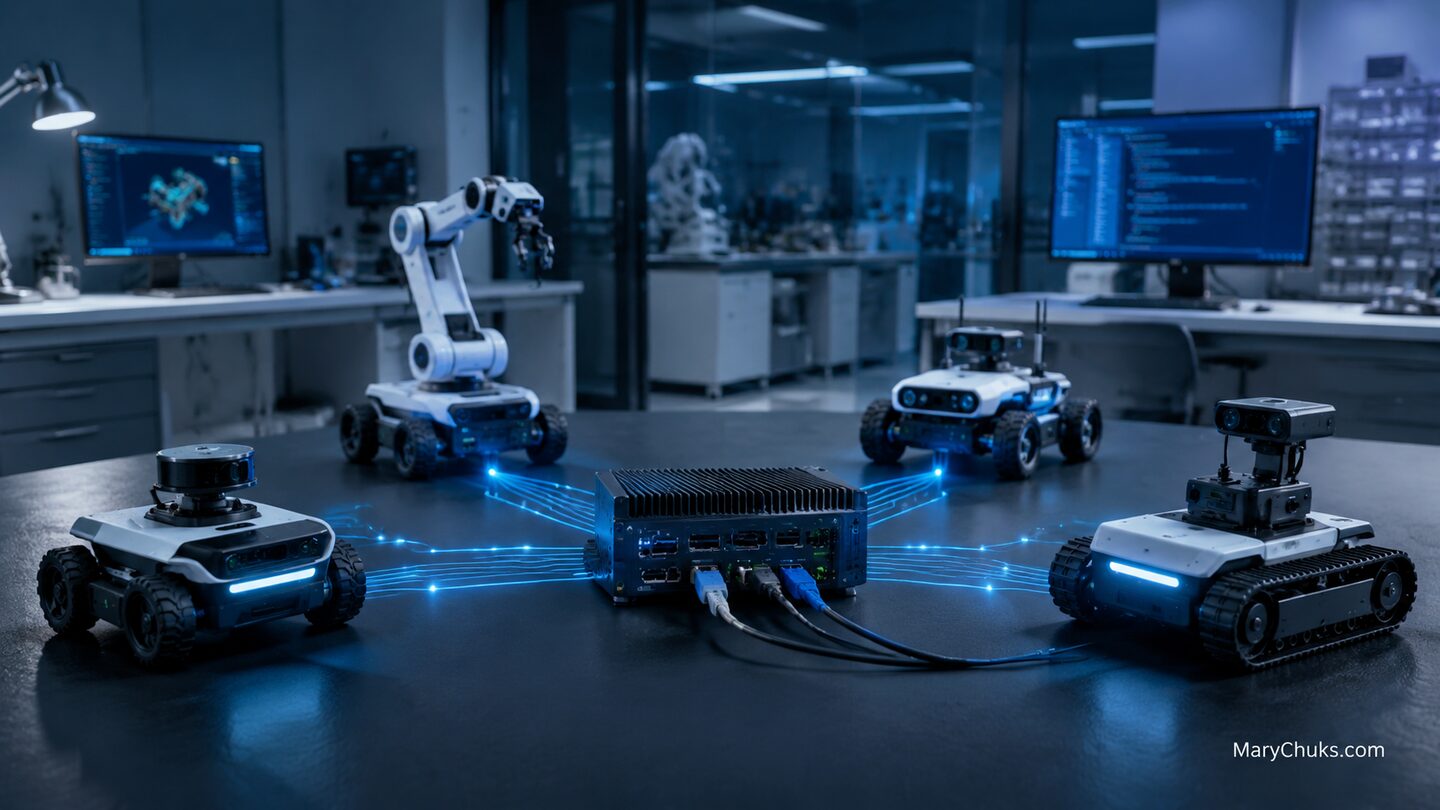
The artificial-intelligence company has announced that it is creating an internal semiconductor-design team to develop custom hardware optimised for training and operating Claude.
Anthropic is hiring specialists across both hardware and software so that future models and processors can be designed together rather than treated as separate products. The company says this could help Claude run faster and more efficiently at the scale demanded by customers. �
Reuters
The move places Anthropic inside an increasingly crowded AI hardware race involving Nvidia, Google, Amazon, Microsoft, Meta and several Chinese technology companies.
Why AI Companies Want Their Own Chips
Most advanced AI systems depend heavily on specialised processors.
Nvidia has dominated this market because its chips and software ecosystem are widely used to train and run large models.
That dominance creates several challenges for AI laboratories:
Limited chip availability
High purchasing costs
Dependence on one major supplier
Competition for data-centre capacity
Hardware that may not perfectly match one model’s architecture
A custom chip can be designed around the exact mathematical operations used most heavily by a company’s models.
This could potentially reduce energy use, improve performance and lower the cost of serving millions of users.
Anthropic Is Not Abandoning Other Suppliers
Anthropic says its custom-silicon programme will form part of a multi-chip strategy.
The company still plans to use technology from Nvidia, AMD, Amazon Web Services and Google.
That diversification matters because developing a serious AI chip is neither quick nor cheap.
Industry estimates suggest that creating an advanced processor can cost around $500 million, even before considering the expense of manufacturing it at scale. Anthropic has not announced when its first chip may become available or whether it will directly manage production. �
Reuters
In other words, Claude is not immediately packing its digital suitcase and leaving Nvidia.
Anthropic is building another house while continuing to rent several very expensive rooms. 🤣
Why Designing Chips and Models Together Matters
Traditional software is written for hardware that already exists.
Frontier AI companies increasingly want to reverse that relationship.
Engineers may study Claude’s workload and ask:
Which calculations occur most frequently?
Where does the model waste energy?
What slows down long-context reasoning?
Which memory systems create bottlenecks?
How can many processors communicate more efficiently?
They can then design both the model and chip around the answers.
This process is known as hardware-software co-design.
It may become one of the strongest competitive advantages in artificial intelligence because model quality alone is not enough. The company must also afford to run the model.
The Nvidia Question
Anthropic’s decision does not mean Nvidia is about to lose its position.
Custom AI-chip programmes frequently take years to mature.
Some fail to match the flexibility, reliability or developer support of established hardware.
Nvidia also continues improving its own systems and sells complete computing platforms rather than isolated chips.
The greater risk is gradual fragmentation.
Large AI companies may increasingly reserve their own chips for internal workloads while purchasing Nvidia hardware only for tasks requiring maximum flexibility or performance.
Why the Story Is Viral
The AI industry once appeared to revolve around models.
Now every model company is slowly becoming a data-centre, energy and semiconductor company too.
The Claude chatbot visible to users is merely the top layer.
Beneath it sits a physical empire involving:
Chips
Power
Cooling
Networking
Cloud contracts
Manufacturing capacity
Global supply chains
Anthropic’s announcement shows how deeply frontier AI companies must integrate vertically to remain competitive.
Mary Chuks’ Perspective
This is the ultimate form of orchestration.
Anthropic has realised that its intelligence is constrained by somebody else’s hardware.
So instead of merely requesting more capacity, it is considering building the frame itself.
But this frame may cost half a billion dollars before Claude even moves in. That is not an ordinary Scaler Bill. That is a semiconductor mortgage. 🤣
The business lesson is not that every company should manufacture chips.
It is that serious scaling eventually exposes the bottleneck beneath your product.
Sometimes the bottleneck is marketing.
Sometimes it is distribution.
For frontier AI, the bottleneck is increasingly physical computing.
Practical Takeaways
Businesses should:
Avoid depending entirely on one AI provider.
Monitor whether custom chips lower model prices.
Compare cost per successful task rather than model prestige.
Expect differences between models to include hardware efficiency.
Treat computing access as a strategic business resource.
Conclusion
Anthropic’s custom-chip programme marks a new stage in the AI race.
The laboratories are no longer competing only over who creates the smartest model.
They are competing over who controls the machinery required to keep intelligence affordable.
Original Sources and Further Reading
Reuters reported Anthropic’s confirmation that it is creating an internal chip-design team, while continuing to rely on hardware from AWS, Google, Nvidia and AMD. �
Discover more from Marychuks.com AI, Psychology, Business & CreativeVerse
Subscribe to get the latest posts sent to your email.