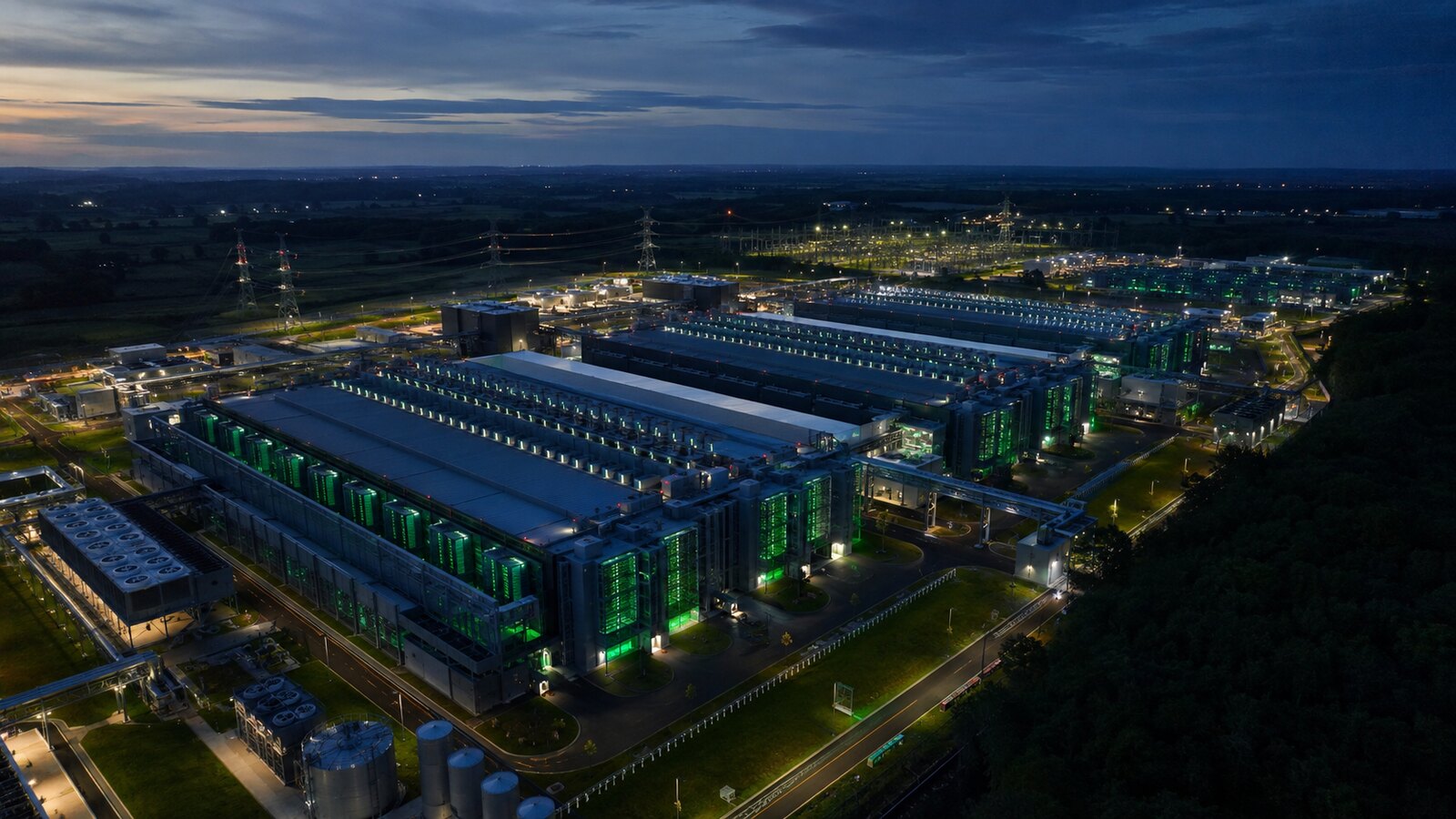

Anthropic has reportedly signed a six-year agreement worth approximately $45 billion with UK infrastructure startup Nscale for access to a major new AI data-centre project in West Virginia.
Under the reported arrangement, capacity would begin coming online late next year and eventually provide Anthropic with about 460 megawatts of computing infrastructure using Nvidia’s next-generation Vera Rubin systems. The figures are based on reporting and the final economics may depend on construction, deployment and utilization milestones.
Why frontier AI companies are locking in power early
The performance of advanced AI models depends on more than algorithms. Companies need enormous quantities of accelerators, networking equipment, electricity, cooling, land, construction capacity and skilled operators. Scarcity at any one layer can delay model training or make high-volume services more expensive.
Long-term capacity agreements allow laboratories to reserve future infrastructure before competitors take it. They also transfer part of the construction and financing challenge to specialist providers. The trade-off is commitment risk: a company may be paying today for assumptions about demand, hardware performance and model economics several years into the future.
The scale of the proposed campus
Nscale’s wider project is reported to include a 1.35-gigawatt data-centre campus and a co-located power facility. Supporters point to investment, local employment and tax revenue. Critics raise familiar concerns about water, emissions, grid pressure, land use and whether promised economic benefits justify the public costs.
That tension is appearing wherever AI infrastructure expands. Data centres can create large construction programmes and strengthen digital capacity, but their permanent job counts may be lower than the scale of the physical project suggests. Local communities increasingly want enforceable commitments rather than broad projections.
Infrastructure is becoming the AI moat
- Reserved access to electricity and chips can determine which companies train frontier models on schedule.
- Integrated networking and cooling affect useful performance as much as raw processor counts.
- Long contracts create barriers for smaller competitors that cannot make comparable commitments.
- Power-generation choices determine whether AI growth aligns with climate targets.
- Local political acceptance is now part of infrastructure execution.
MaryChuks analysis
The deal reinforces the principle that the AI race has moved from models alone to full-stack infrastructure. Intelligence is being shaped by land, power, cooling, networking, finance and community consent. A technically superior model roadmap means little if the company cannot secure the physical systems required to run it.
It also strengthens the case for alternative infrastructure models. Offshore grids, modular energy systems and research habitats could diversify where capacity is built, but they would face their own engineering and ecological responsibilities. The future will not be won simply by building more; it will be won by building systems that can remain operational, socially legitimate and economically useful for decades.
Source: Financial Times.
Discover more from Marychuks.com AI, Psychology, Business & CreativeVerse
Subscribe to get the latest posts sent to your email.