The internet has spent years asking whether viral images are real or generated by artificial intelligence.
Then Jimothy arrived.
Jimothy is an unusually compact, round raccoon filmed near a Goodwill store in Seattle.
His appearance looked so improbable that many viewers assumed the original footage had been created or altered by AI.
The surprising answer is that Jimothy is real.
The internet universe built around him, however, is increasingly synthetic.
How Jimothy Was Discovered
Seattle marketing specialist Kiana Hall filmed the animal near the Ballard Goodwill on 13 July 2026.
She initially thought she was looking at a cat beneath a vehicle. When the animal moved, she realised it was a raccoon with a distinctive compact appearance.
Hall named him Jimothy because she felt the name suited him.
The original video quickly accumulated millions of views and transformed the animal into an international internet celebrity.
Reports indicate that Jimothy’s appearance may be connected to short spine syndrome, a rare condition seen in some animals.
Then Generative AI Took Over
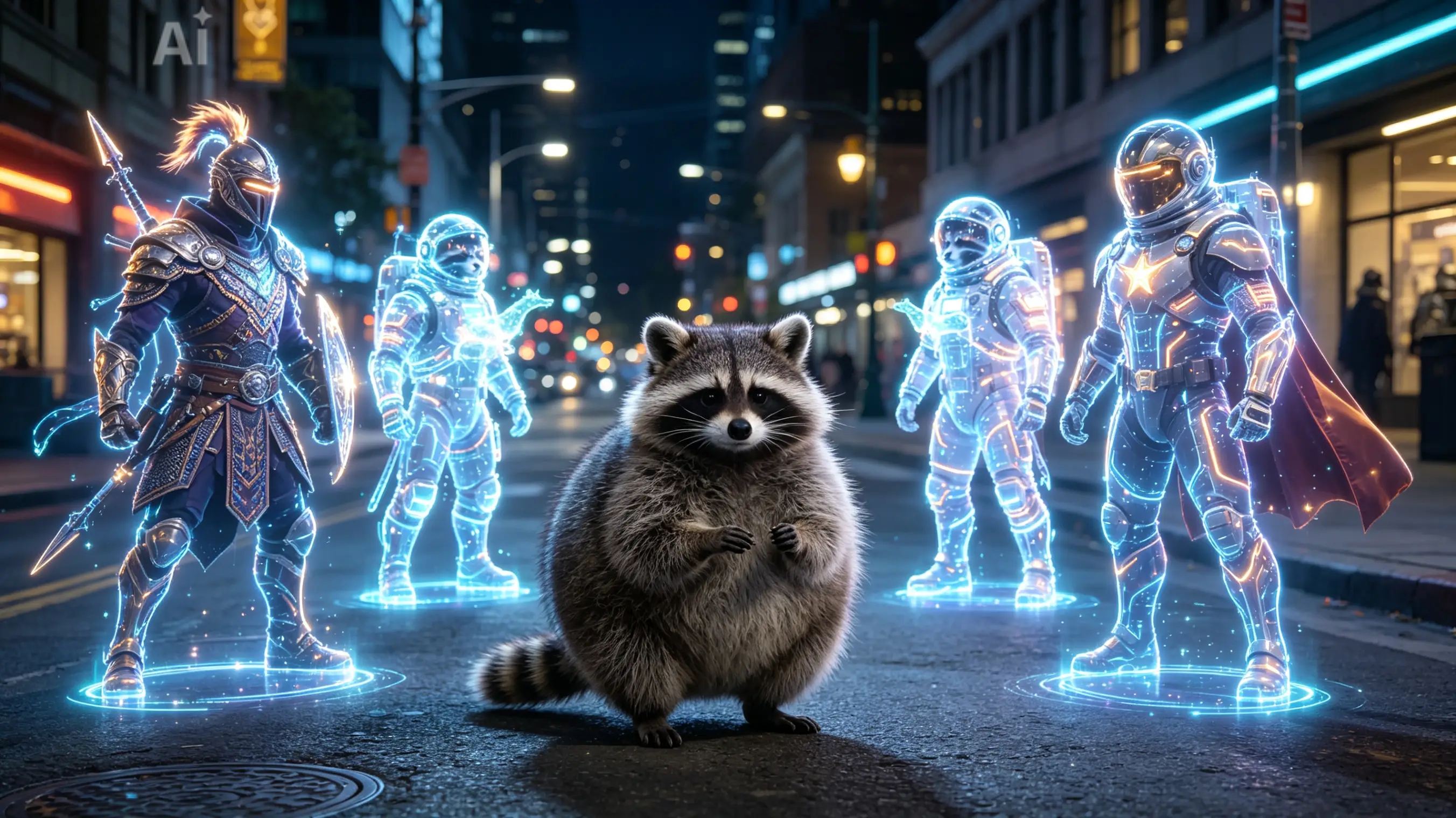
Once the original clip became popular, creators began feeding images of Jimothy into generative video and image systems.
AI-made versions placed him inside fantasy landscapes, cinematic adventures and popular gaming worlds.
Tributes reimagined Jimothy through the visual language of games including World of Warcraft and Old School RuneScape. A version of the animal also appeared in Roku City, while other users created increasingly imaginative videos and artwork.
The result was a strange new form of internet fame.
The original animal became only the starting point.
AI allowed thousands of people to build an expanding fictional universe around him.
Why the Story Went Viral
Jimothy possesses what might be called visual improbability.
He is real but looks generated.
That contradiction encourages people to stop scrolling, examine the footage and ask whether their eyes can be trusted.
His compact shape also makes him immediately recognisable. In an online environment filled with endless content, recognisability is a powerful advantage.
The story contains humour, affection, novelty and low-stakes mystery. Unlike many viral AI stories, it gives people something joyful to share.
What Is Real and What Is AI?
The original raccoon filmed by Kiana Hall is real.
The original Seattle footage is real.
Many of the later cinematic, gaming and fantasy depictions are AI-generated or digitally created.
This distinction is important because later viewers may encounter an AI-generated Jimothy video before seeing the original footage.
Once synthetic versions become more visible than the source, the fictional character can begin to overshadow the real animal.
The Bigger AI Lesson
Generative AI is changing the lifecycle of memes.
Previously, a viral animal might inspire captions, illustrations and merchandise.
Now, the same animal can become the star of hundreds of fully animated scenes within days.
A single image can be transformed into an expandable character, brand or fictional universe.
This creates opportunities for artists and storytellers, but it also raises questions about consent and ownership.
Who controls the commercial identity of a viral animal?
Does the original photographer retain meaningful influence after millions of AI derivatives appear?
Should companies be free to place a viral subject inside advertisements or branded content without permission?
Mary Chuks’ Perspective
Jimothy demonstrates that AI does not always invent virality.
Sometimes it scales virality.
The human eye noticed the animal.
A human recorded the original moment.
The internet responded emotionally.
AI then multiplied the possible stories that could be built around the moment.
This is the healthy version of AI scaling creativity: a real event inspires a participatory world of imagination.
The ethical line appears when creators conceal what is synthetic, remove credit from the original person or commercially exploit someone else’s discovery without permission.
Practical Takeaways
Credit the person who captured the original viral material.
Label AI-generated versions clearly.
Do not allow synthetic remixes to erase the authentic source.
Creators should consider permissions before commercialising viral subjects.
Brands should remember that community affection can quickly turn into criticism when a beloved meme is exploited carelessly.
Conclusion
Jimothy is not an AI raccoon.
He is a real raccoon who became the centre of an AI-expanded mythology.
That may be one of the clearest pictures of modern internet culture: reality provides the spark, humanity supplies the affection and artificial intelligence builds an entire universe around it.
Original Source and Further Reading
Original creator: Kiana Hall, who filmed and named Jimothy in Seattle in July 2026.
AI-focused report: Tom’s Guide, “Jimothy the Viral Raccoon Is 100% Real—Here’s What’s AI”, published 24 July 2026.
News verification: Reuters, “Jimothy the Seattle Raccoon Becomes Viral Sensation”, published 18 July 2026.
Discover more from Marychuks.com AI, Psychology, Business & CreativeVerse
Subscribe to get the latest posts sent to your email.