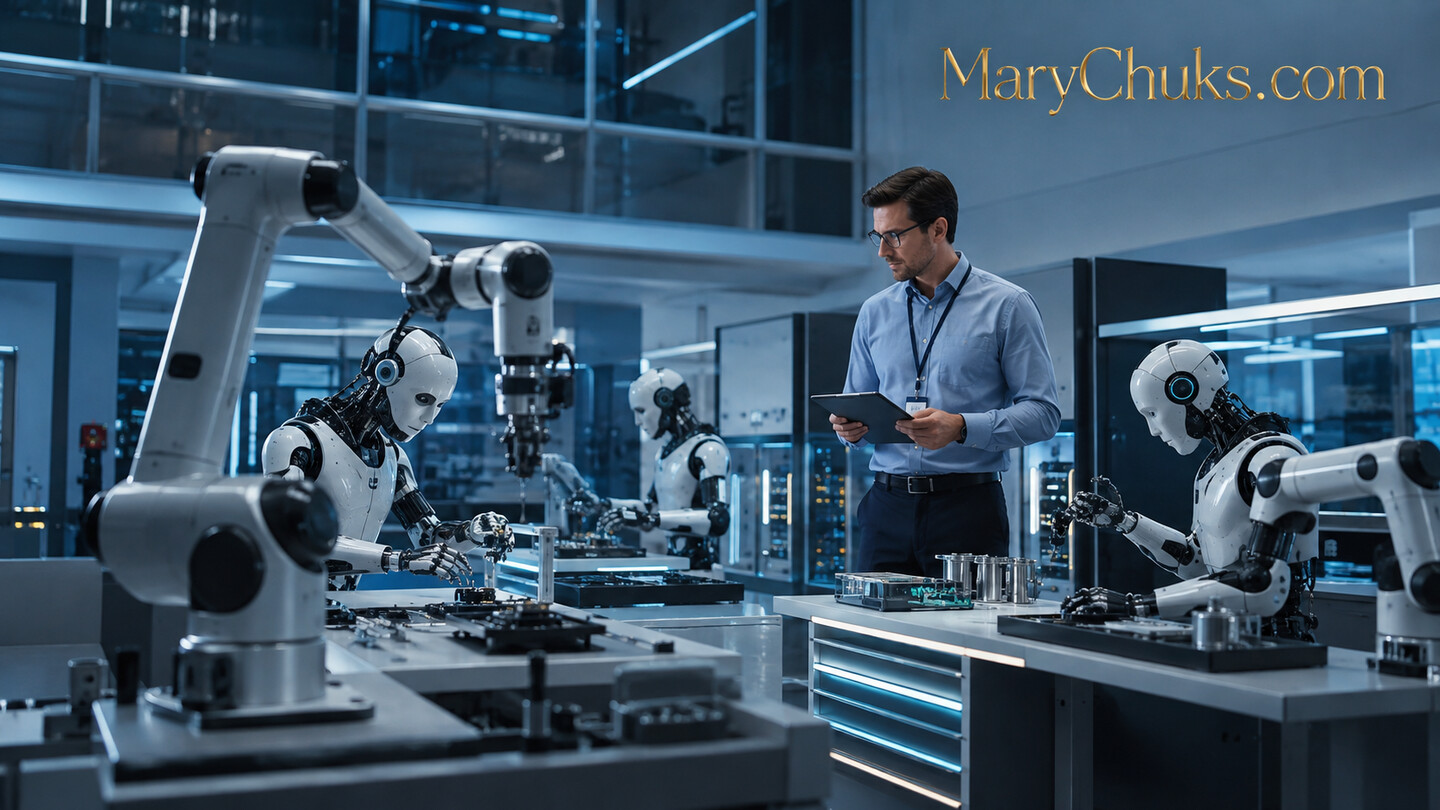
The AI boom is not only making software companies richer.
It is transforming the factories that build the machinery behind artificial intelligence.
Foxconn reported record monthly revenue for July, surpassing 900 billion Taiwan dollars for the first time.
The Taiwanese electronics manufacturer generated T$946.5 billion—approximately $27.93 billion—during the month, representing a 54.2% increase from the previous year. �
Reuters
The company said strong demand for AI products was a major driver of the record.
Foxconn Is More Than the iPhone Manufacturer
Many consumers associate Foxconn primarily with assembling Apple products.
The company is also a major manufacturer of the servers, networking systems, and infrastructure required by artificial-intelligence data centres.
Foxconn supplies companies, including Nvidia, and plays an important role in converting advanced chips into complete computing systems. �
Reuters
A powerful GPU can not operate alone.
It must be installed inside systems containing:
Memory
Power distribution
Networking
Cooling
Storage
Structural racks
Monitoring technology
Foxconn helps manufacture and assemble these complex systems at an industrial scale.
What Drove the Record
Foxconn said its cloud and networking division—including AI servers—experienced strong growth because of heavy demand for AI products.
Its smart-consumer-electronics division, including smartphones, also performed strongly.
The company expects AI rack shipments to continue growing during the third quarter, alongside the seasonal rise in ordinary information and communications technology products. �
Reuters
This suggests that the AI infrastructure cycle remains strong even as investors debate whether technology companies are spending too much on data centres.
Why AI Server Racks Matter
A frontier model may require thousands of specialised processors operating together.
Those processors must communicate at extremely high speed while consuming enormous amounts of electricity and producing substantial heat.
An AI rack is, therefore, not simply a shelf containing computers.
It is an engineered unit combining:
Processing
Memory
Networking
Power
Cooling
Physical stability
Monitoring
As models become larger and companies deploy AI more widely, demand for these systems increases.
Foxconn benefits, regardless of which individual chatbot becomes fashionable.
The model race changes quickly.
The need for hardware remains.
Why the Story Went Viral
The record provides physical evidence that AI demand is not merely online excitement.
Someone is buying real equipment.
Factories are building real servers.
Data centres are installing real racks.
Electricity companies are supplying real power.
Foxconn’s revenue shows where the intangible AI economy touches the industrial world.
The chatbot feels weightless on a phone.
Its infrastructure weighs tonnes.
The “Picks and Shovels” Strategy
During historical gold rushes, many prospectors failed.
Companies selling tools, clothing, and transport often made money regardless of who discovered gold.
Foxconn occupies a similar position in the AI boom.
It does not need to predict whether OpenAI, Google, Anthropic, Meta, or a Chinese laboratory ultimately leads the model race.
It can manufacture infrastructure for multiple customers.
This diversification can make hardware suppliers attractive—but it does not remove all risks.
If AI investment slows across the entire industry, server demand could weaken sharply.
The Supply-Chain Question
The AI boom depends on a complex international supply chain.
Design may occur in one country.
Chips may be manufactured in another.
Servers may be assembled elsewhere.
Data centres may operate on a different continent.
This creates vulnerabilities involving:
Trade restrictions
Geopolitical conflict
Shipping disruption
Component shortages
Export controls
Currency changes
Energy costs
Foxconn’s growth demonstrates the opportunity.
Its warning about volatile global political and economic conditions reflects the fragility beneath it. �
Reuters
The Employment Question
AI is often discussed as a threat to human jobs.
The infrastructure boom also creates work across:
Manufacturing
Construction
Electrical engineering
Cooling systems
Logistics
Network installation
Maintenance
Energy production
However, much of the manufacturing process is highly automated, and the quality, pay, and location of the new jobs matter.
Economic gains do not automatically reach every community equally.
Mary Chuks’ Perspective
AI is not merely a software revolution.
It is a complete industrial ecosystem.
The smartest businesses will look beyond building another interface and ask:
What infrastructure does AI require?
Which services become necessary?
Where are the bottlenecks?
Who maintains the system?
Who trains the workers?
Who provides energy?
Who handles compliance?
The largest opportunity may sit one layer behind the glamorous product.
The person chatting with AI sees the answer.
The business strategist sees the entire supply chain required to produce it.
Practical Business Lessons
Follow infrastructure spending, not only model announcements.
Identify businesses supplying several AI companies.
Examine energy, cooling, and networking opportunities.
Prepare for supply-chain and geopolitical risk.
Avoid assuming record growth continues permanently.
Measure whether infrastructure spending creates sustainable demand.
Consider workforce and community impacts alongside revenue.
Conclusion
Foxconn’s record month reveals the physical scale of the AI revolution.
Artificial intelligence may speak through software.
But it is manufactured through factories, server racks, chips, cables, cooling systems, and power.
The future may be intelligent.
It is also extremely industrial.
Original Source and Further Reading
Primary reporting: Reuters, “AI Demand Pushes Foxconn’s Monthly Revenue to Record in July,” published 5 August 2026. �
Reuters
Discover more from Marychuks.com AI, Psychology, Business & CreativeVerse
Subscribe to get the latest posts sent to your email.