Can AI Be Your Second Brain? Build Memory Without Losing Judgment
Learn how to use AI as part of a personal knowledge system while preserving privacy, critical thinking, context and human judgment.
Marychuks.com AI, Psychology, Business & CreativeVerse
Empowering Minds with AI, Psychology and Digital Innovation
Learn how to use AI as part of a personal knowledge system while preserving privacy, critical thinking, context and human judgment.
Reduce decision fatigue by designing your environment, defaults and routines so important choices receive more deliberate attention.
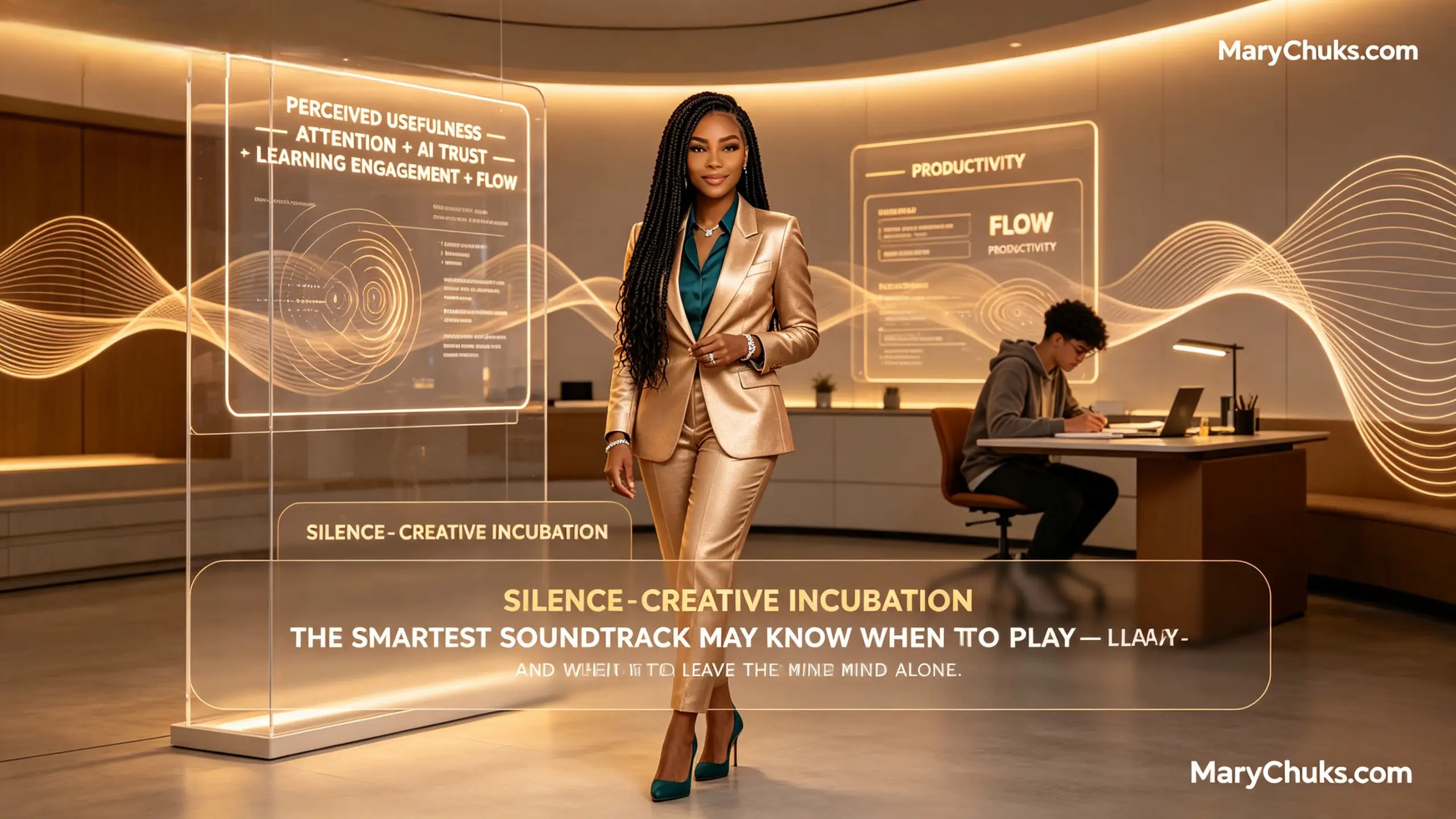
A new Scientific Reports study followed 407 university students after four weeks of AI-generated music listening. Students who perceived the music as useful reported stronger attention and AI trust, which were associated with greater learning engagement and flow—but the findings show association, not proof that AI music causes better learning.
Mary Oge Chuks introduces the Effects Analysis Framework (EAF), a psychological and systems-based method for analysing AI through signals, observable effects, framing shifts and institutional outcomes — and asks why humanity regulates the reflection without examining the signals it feeds into the mirror.
Developing the Effects Analysis Framework means examining counterexamples, comparing attention patterns and separating observed effects from claims of intent.
Design notifications around the user’s task: provide clear controls, reserve interruptions for useful moments and make quiet use possible.
Keep room for disagreement in AI-assisted decisions with a simple record of alternatives, missing evidence and the reasons behind your final choice.
A useful idea does not have to become today’s assignment. A practical reflection on keeping creative possibility without turning every thought into an obligation.
A real-life question about whether AI can distinguish one voice from household noise becomes a study of speaker identity, interruption, accessibility and human agency in conversational AI.
AI memory can support continuity, but people change. This conceptual essay asks how remembered context should remain visible, correctable and time-sensitive.