Physical AI Is Becoming an Infrastructure Industry, Not Just a Robotics Trend
Physical AI is turning robotics into an infrastructure industry spanning edge computers, simulation, cloud capacity, networking and safety systems.
Marychuks.com AI, Psychology, Business & CreativeVerse
Empowering Minds with AI, Psychology and Digital Innovation
Physical AI is turning robotics into an infrastructure industry spanning edge computers, simulation, cloud capacity, networking and safety systems.
NVIDIA says Vera Rubin NVL72 can deliver up to 30 times more AI work per watt, making energy efficiency central to the next AI infrastructure cycle.
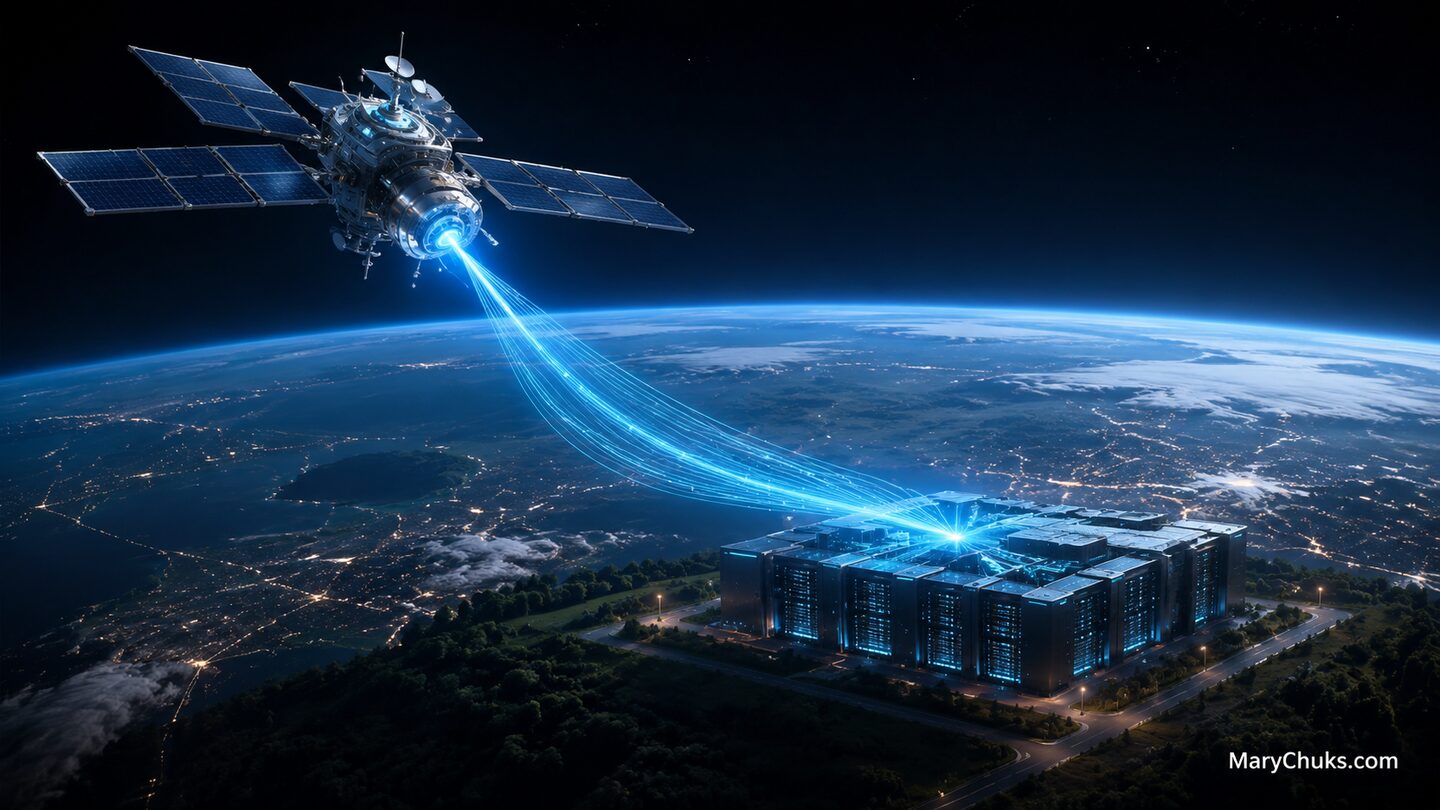
SpaceXAI plans to use NVIDIA Vera CPUs and extend accelerated computing toward orbital systems, linking agentic AI with space infrastructure.
OpenAI says its Jalapeño inference chip delivers higher throughput and lower latency while completing more AI work per unit of power.
OpenAI’s abundant-intelligence vision shows that frontier AI depends on an integrated stack of energy, chips, data centres, models and useful applications.
NVIDIA reported $96.2 billion in quarterly revenue and $89 billion from data centres, showing that AI infrastructure spending is still accelerating.
AWS and NVIDIA plan to deploy two million additional GPUs as demand for agentic and physical AI pushes cloud infrastructure to a new industrial scale.
Computing power is becoming expensive and strategically important enough to inspire a new financial market. That could help AI companies manage risk—but it also creates new complexity.
Brazil’s new AI supercomputer plan is not just an infrastructure project. It is a strategic attempt to build national capability while balancing rival technology ecosystems.
Alibaba’s reported $10.2 billion share sale is a reminder that the AI boom depends on vast and continuous capital—not only clever software.