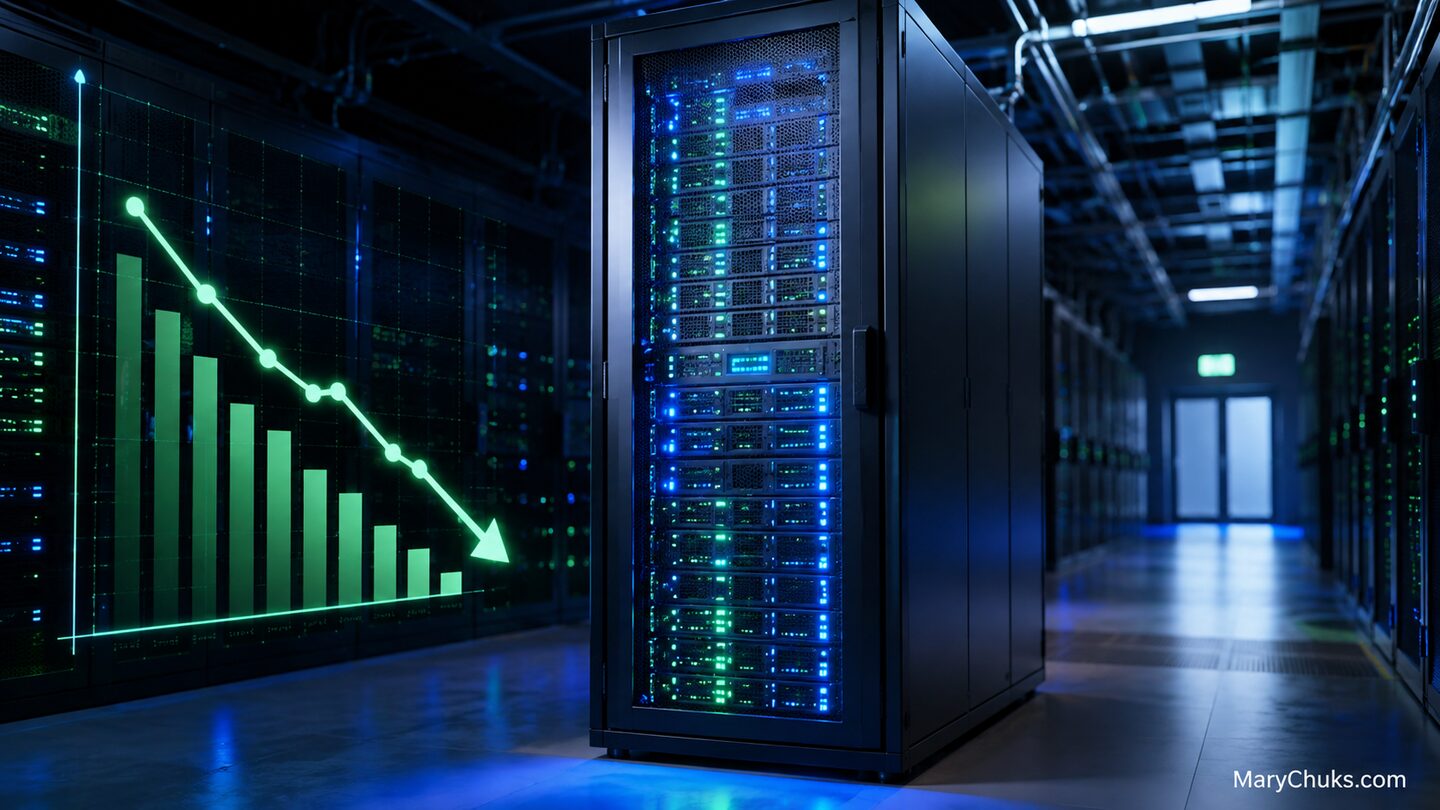
The AI industry has spent years celebrating larger models and faster chips. Energy efficiency is now becoming an equally important measure of progress.
Why This Matters
NVIDIA says its Vera Rubin NVL72 platform can deliver up to 30 times more AI work per watt for agentic workloads compared with earlier systems.
The Bigger Shift
Work per watt connects performance to a physical reality: every AI response requires electricity, and every data centre must remove the heat created by computation. Better efficiency can reduce cost and allow more useful work within the same power envelope.
What to Watch
The phrase “up to” matters. Real-world results depend on workload, software, utilisation and system configuration. Headline efficiency claims should therefore be tested under transparent and comparable conditions.
A Practical Perspective
Even dramatic chip-level improvements do not automatically reduce total energy consumption. If cheaper and faster computing causes demand to grow more quickly, overall electricity use may still rise—a pattern economists call the rebound effect.
Final Thoughts
The responsible goal is not efficiency alone, but efficient systems combined with cleaner power, thoughtful cooling, longer hardware life and applications valuable enough to justify their resource use.
Source and Further Reading
Read the official announcement.
Discover more from Marychuks.com AI, Psychology, Business & CreativeVerse
Subscribe to get the latest posts sent to your email.